

Feature Photo: Randy Miramontez / Shutterstock.com
Cover songs have long played a significant role in music history, giving artists the chance to reinterpret the work of their predecessors and sometimes carry those songs to a much larger audience. This article is not about arguing that the remakes are better or more artistically important than the originals. That is a matter of personal taste. Instead, these ten covers became more commercially successful, more culturally ingrained, or more widely associated with the song than the recordings that came first.
The success of these versions also reflects the era and audience in which each one appeared. The Beatles turned “Twist and Shout” into a defining burst of Beatlemania, Jimi Hendrix transformed Bob Dylan’s “All Along the Watchtower” into a psychedelic rock landmark, Aretha Franklin gave “Respect” an entirely new cultural force, and Led Zeppelin rebuilt “When the Levee Breaks” for a generation of hard rock listeners. The originals remain essential, but these later interpretations took on lives of their own.
# 10 – “Jersey Girl” – Bruce Springsteen

The first song on this list is Bruce Springsteen’s cover of Tom Waits’ “Jersey Girl.” Waits released the original on his 1980 album Heartattack and Vine, pairing his unmistakable voice with a romantic portrait of everyday life. Springsteen began performing the song live in 1981, and his July 9 performance at Brendan Byrne Arena in East Rutherford was released as the B-side of “Cover Me” in 1984 and later on Live/1975-85.
Springsteen stayed faithful to the heart of Waits’ song while adding a verse of his own, and the E Street Band gave the refrain a broader, communal sound. Waits’ original remains beloved, but Springsteen’s live rendition became deeply associated with the song among mainstream rock audiences and New Jersey fans.
Read More: Complete List Of Bruce Springsteen Albums And Songs
Read More: Complete List Of Tom Waits Albums And Songs

The original Tom Waits version was released on the 1980 album Heartattack and Vine.
# 9 – “Hard to Handle” – The Black Crowes

“Hard to Handle” was written by Otis Redding, Al Bell, and Allen Jones and recorded by Redding before his death. Released posthumously in 1968, it appeared on The Immortal Otis Redding and reached number 51 on the Billboard Hot 100. Redding’s original is a tight soul performance driven by his gritty, commanding vocal.
The Black Crowes brought the song to a much larger rock audience on their 1990 debut album Shake Your Money Maker. Their Southern rock treatment reached number 26 on the Billboard Hot 100 and helped turn the album into a multi-platinum success. The cover kept the swagger of Redding’s original while giving it the guitar-heavy attack that became one of the Crowes’ signatures.
Read More: Top 10 Black Crowes Songs We Love The Most
Read More: Top 10 Otis Redding Songs Loved By Fans

The original Otis Redding version was released on the 1968 album The Immortal Otis Redding.
# 8 – “I Love Rock ‘n’ Roll” – Joan Jett & The Blackhearts
“I Love Rock ‘n’ Roll” was written by Alan Merrill and Jake Hooker and first recorded by The Arrows in 1975. Joan Jett discovered the song while touring in the UK with The Runaways, recorded an early version in 1979, and then cut it again with The Blackhearts for her 1981 album I Love Rock ‘n’ Roll.
Released as a single in 1982, Jett’s version spent seven weeks at number one on the Billboard Hot 100. The Arrows’ glam-rock original remains an important piece of the song’s history, but Jett’s tougher vocal and enormous sing-along chorus made her recording the version known around the world.
Read More: Our 10 Favorite Joan Jett Songs
The original version was released by The Arrows in 1975.
# 7 – “Some Kind of Wonderful” – Grand Funk Railroad

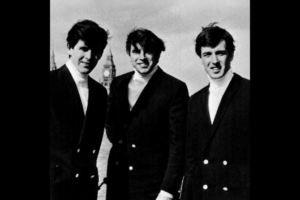
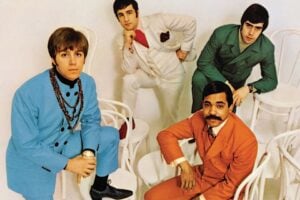
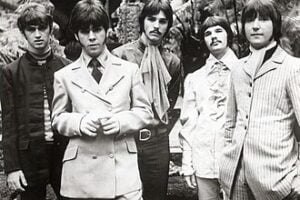
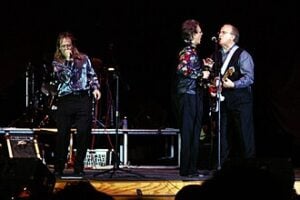
“Some Kind of Wonderful” was written by John Ellison and first recorded by the Soul Brothers Six in 1967, reaching number 91 on the Billboard Hot 100. The original is rooted in R&B and soul, with a relaxed groove and a direct message of love and admiration.
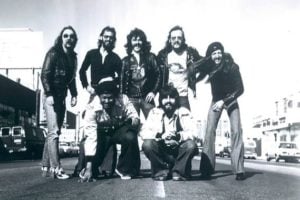
Grand Funk Railroad transformed the song into a much bigger pop and rock hit on All the Girls in the World Beware!!!. Their version reached number three on the Billboard Hot 100 in 1975, pushing the rhythm and vocals forward with the force of a 1970s rock band. The Soul Brothers Six introduced the song, but Grand Funk carried it to a far larger mainstream audience.
Read More: An Interview With Don Brewer Of Grand Funk Railroad
The original version was released by Soul Brothers Six in 1967.
# 6 – “All Along the Watchtower” – The Jimi Hendrix Experience
Bob Dylan wrote and first recorded “All Along the Watchtower” for his 1967 album John Wesley Harding. His original is compact and spare, built around acoustic instrumentation, harmonica, and the mysterious conversation between the joker and the thief.
Jimi Hendrix radically reimagined the song for Electric Ladyland in 1968, replacing the folk setting with layered electric guitars and one of the defining studio performances of his career. Hendrix’s version reached number 20 on the Billboard Hot 100 and entered the Grammy Hall of Fame in 2001. Dylan later adopted a more electric approach to the song in concert, while the Hendrix recording became a classic-rock standard.
Read More: Why Jimi Hendrix Called Chicago’s Terry Kath The Best Guitarist In The Universe
Read More: Best Bob Dylan Songs Of The 1980’s
# 5 – “Respect” – Aretha Franklin
Otis Redding wrote and recorded “Respect” in 1965 for Otis Blue/Otis Redding Sings Soul. His version reached number 35 on the Billboard Hot 100 and presented the song with the urgency and grit that defined his great Stax recordings.
Aretha Franklin transformed “Respect” in 1967 by changing the perspective, adding the famous spelling of the title, and bringing her sisters into the background vocals. Her recording reached number one on the Billboard Hot 100 and earned her first two Grammy Awards. It also became associated with the civil rights and women’s movements, giving the song a cultural meaning that extended far beyond its original setting.
Read More: 10 Essential Aretha Franklin Songs
Read More: Top 10 Otis Redding Songs Loved By Fans
# 4 – “When the Levee Breaks” – Led Zeppelin
The original “When the Levee Breaks” was recorded by Memphis Minnie and Kansas Joe McCoy in 1929 and drew on the devastation of the Great Mississippi Flood of 1927. Their recording is a raw country-blues performance rooted directly in the world that inspired the song.
Led Zeppelin radically rebuilt the piece for the band’s untitled fourth album in 1971. Recorded at Headley Grange, the new version retained elements of the original lyric while surrounding them with Jimmy Page’s production, Robert Plant’s harmonica and vocal, John Paul Jones’s bass, and John Bonham’s enormous drum sound. The result brought the song to a global rock audience and became one of the most influential recordings in Led Zeppelin’s catalog.
Read More: Our 10 Favorite Led Zeppelin Album Covers
# 3 – “Blinded by the Light” – Manfred Mann’s Earth Band
Bruce Springsteen wrote and first recorded “Blinded by the Light” for his 1973 debut album Greetings from Asbury Park, N.J.. The original single did not chart, but its dense rush of imagery and wordplay gave Manfred Mann’s Earth Band remarkable material to reshape.
The Earth Band transformed the song for the 1976 album The Roaring Silence, adding synthesizers, layered vocals, and a much more elaborate arrangement. Their version reached number one on the Billboard Hot 100 in February 1977, making it the only Springsteen composition to top that chart as a single. The familiar “revved up like a deuce” chorus also became one of rock radio’s most famously misheard lyrics.
Read More: Chris Slade of Manfred Mann’s Earth Band: The ClassicRockHistory.com Interview
Read More: Top 10 Bruce Springsteen Albums
# 2 – “Twist and Shout” – The Beatles

“Twist and Shout” was written by Phil Medley and Bert Berns and first recorded by The Top Notes in 1961. The Isley Brothers then recorded their own hit version in 1962, creating the arrangement that became the direct model for The Beatles.
The Beatles recorded “Twist and Shout” as the final song during their marathon February 11, 1963 session for Please Please Me. John Lennon’s shredded vocal was captured in one take, and the recording later reached number two on the Billboard Hot 100 in the United States during the explosion of Beatlemania. The Top Notes made the first recording and the Isleys established the song as a hit, but The Beatles carried it to its largest audience.
Read More: Top 10 Beatles Love Songs
The original version was recorded by The Top Notes in 1961.
# 1 – “Woodstock” – Crosby, Stills, Nash & Young

Joni Mitchell wrote “Woodstock” even though she did not attend the 1969 festival. With the area overwhelmed by traffic and logistics, Mitchell stayed in New York because of a scheduled appearance on The Dick Cavett Show. Her version, released on Ladies of the Canyon in 1970, is haunting and introspective, turning the festival into a meditation on spiritual and cultural transformation.
Crosby, Stills, Nash & Young transformed the song into a full-scale rock anthem on Déjà Vu. Stephen Stills took the lead vocal as the band’s electric arrangement pushed the song toward the sound and communal energy associated with the festival itself. Their version reached number 11 on the Billboard Hot 100 and became the more commercially successful interpretation, while Mitchell’s original remains the source of the song’s imagery and emotional core.
Read More: Top 10 Crosby, Stills, Nash & Young Songs
Read More: Top 10 Joni Mitchell Songs
Original Joni Mitchell version.
Check out more on ClassicRockHistory.com, including the Artists’ Interviews Directory At ClassicRockHistory.com and the Classic Rock Bands List And Directory.
Updated September 27, 2026
10 Rock Cover Songs More Popular Than the Originals Article Published on ClassicRockHistory.com © 2026















I agree with all of these. Would like to add one. Joan Osbourne’s live version of Son of a Preacher Man
Thats a great one. I have that on one of her live import CDs