

Feature Photo: The Everett Collection: Licensed From Shutterstock
Across decades and genres, artists have used accidents as a lens to examine fate, love, loss, and resilience, creating unforgettable narratives that resonate far beyond their immediate stories. This list brings together ten classic songs that capture the raw emotion and universal truth found in the aftermath of accidents, each with its own unique approach.
# 10 – Leader Of The Pack – The Shangri-Las
Few songs encapsulate teenage heartbreak and tragedy as vividly as “Leader of the Pack” by The Shangri-Las. Recorded in 1964 and produced by George “Shadow” Morton, the song was written by Morton, Jeff Barry, and Ellie Greenwich. Its dramatic soundscape blends spoken dialogue, girl-group harmonies, and motorcycle effects around the story of doomed young love. Released by Red Bird Records, “Leader of the Pack” reached number one on the Billboard Hot 100 in 1964. The fatal motorcycle crash at the center of the story made the song one of the defining teenage-tragedy records of its era.
Read More: Top 10 Songs From The Shangri-Las
# 9 – Kiss Them for Me – Siouxsie and the Banshees
Siouxsie and the Banshees delivered a haunting exploration of glamour and tragedy with “Kiss Them for Me,” a song inspired in part by actress Jayne Mansfield, who died in a 1967 car crash. Released on May 13, 1991, as the lead single from Superstition, the song was written by Siouxsie Sioux, Budgie, Martin McCarrick, and Steven Severin and produced by Stephen Hague. Its dreamy textures and hypnotic beat marked a polished turn in the band’s sound without losing its darker emotional edge. The single reached number 23 on the Billboard Hot 100, becoming the band’s highest-charting U.S. single. The song’s fascination with celebrity, death, and delayed arrival makes it a natural fit for this list.
Read More: Top 10 Siouxsie And The Banshees Songs
# 8 – Detroit Rock City – Kiss
The electrifying energy of Kiss’s “Detroit Rock City” is underscored by the fatal-car-crash story running through the song. Written by Paul Stanley and Bob Ezrin, the track opens the 1976 album Destroyer and was produced by Ezrin during the album’s New York sessions. Paul Stanley handles lead vocals, with Gene Simmons on bass, Ace Frehley on guitar, Peter Criss on drums, and Ezrin providing the spoken news voice heard in the introduction. The recording turns the excitement of driving to a rock concert into a sudden collision of celebration and tragedy. Although the original U.S. single did not become a major chart hit, “Detroit Rock City” grew into one of Kiss’s defining anthems.
Read More: Tommy Thayer of Kiss: The ClassicRockHistory.com Interview
# 7 – New York Mining Disaster 1941 (Have You Seen My Wife, Mr. Jones) – Bee Gees
The haunting “New York Mining Disaster 1941” marked the Bee Gees’ first major international breakthrough and established their gift for dramatic storytelling. Recorded in 1967 at IBC Studios in London and produced by Ossie Byrne, the song features Robin Gibb on lead vocal, Barry Gibb on guitar and harmony vocals, Maurice Gibb on bass and backing vocals, and Colin Petersen on drums. Its sparse acoustic arrangement and close harmonies heighten the claustrophobic tension of miners trapped underground after a disaster. Released in 1967, it reached number 14 on the Billboard Hot 100 and number 12 on the UK Singles Chart. The song’s imagined catastrophe gives it a timeless emotional weight despite its fictional setting.
Read More: Complete List Of The Bee Gees Songs From A to Z
# 6 – Accidents Never Happen – Blondie
Blondie’s “Accidents Never Happen” combines sharp lyrical insight with the rhythmic drive that defined the band’s late-1970s blend of punk, pop, and new wave. Written by keyboardist Jimmy Destri, the song appeared on the 1979 album Eat to the Beat and was produced by Mike Chapman. Debbie Harry handles lead vocals, with Chris Stein and Frank Infante on guitars, Nigel Harrison on bass, Clem Burke on drums, Destri on keyboards, and Lorna Luft contributing backing vocals. The album sessions took place at several New York studios, including Electric Lady, Mediasound, and the Power Station. Though not released as a single, “Accidents Never Happen” remains a strong album track built around the idea that chance may not be as accidental as it appears.
Read More: Complete List Of Blondie Band Members
# 5 – Wreck Of The Edmund Fitzgerald – Gordon Lightfoot
Few songs capture the raw power of nature and the fragility of human endeavor as poignantly as Gordon Lightfoot’s “The Wreck of the Edmund Fitzgerald.” Recorded in December 1975 at Eastern Sound Studios in Toronto and produced by Lightfoot and Lenny Waronker, the song recounts the sinking of the SS Edmund Fitzgerald on Lake Superior on November 10, 1975, with the loss of all 29 crew members. Lightfoot’s melody and narrative turn the maritime disaster into a somber memorial rather than a simple historical retelling. Released on Summertime Dream in 1976, the single climbed to number two on the Billboard Hot 100. The song remains inseparable from the public memory of the disaster itself.
Read More: Top 10 Gordon Lightfoot Songs
# 4 – Dead Man’s Curve – Jan & Dean
“Dead Man’s Curve” by Jan & Dean epitomizes the thrill and peril of 1960s car culture, telling the story of a street race that ends in a crash. Recorded in 1963 at United Western Recorders in Hollywood, the song was written by Jan Berry, Roger Christian, Brian Wilson, and Artie Kornfeld and produced by Berry. Released as a single in December 1963, it became a major hit in 1964 and later appeared on the album Dead Man’s Curve / The New Girl in School. The lush harmonies and California-pop arrangement contrast sharply with the fatal outcome of the race described in the lyric. “Dead Man’s Curve” reached number eight on the Billboard Hot 100 and became one of the most famous car-crash songs of its era.
Read More: Top 10 Jan & Dean Songs
# 3 – Wreck On The Highway – Bruce Springsteen
Bruce Springsteen’s “Wreck on the Highway” closes his 1980 double album The River with a quiet reflection on mortality and the emotional weight of witnessing tragedy. The song was recorded at the Power Station in New York City from April 10 through April 12, 1980, and produced by Springsteen, Jon Landau, and Steven Van Zandt. Roy Bittan’s piano and Danny Federici’s organ give the recording a subdued, mournful atmosphere behind Springsteen’s restrained vocal. The narrator comes upon the aftermath of a highway accident and carries the scene home with him, where it changes the way he thinks about love, family, and loss. Though never released as a single, “Wreck on the Highway” remains one of the most haunting closing tracks in Springsteen’s catalog.
Read More: Top 10 Bruce Springsteen Albums
# 2 – Accidents Will Happen – Elvis Costello
Elvis Costello’s “Accidents Will Happen” delivers a sardonic meditation on betrayal, guilt, and unintended consequences. Recorded in 1978 at Eden Studios in London, the song was produced by Nick Lowe and released as the opening track of Armed Forces in January 1979. Backed by the Attractions, with Steve Nieve on keyboards, Bruce Thomas on bass, and Pete Thomas on drums, Costello sets his uneasy lyric against a deceptively bright pop arrangement. Released as a single in 1979, “Accidents Will Happen” reached number 28 on the UK Singles Chart. The title may sound literal, but the song turns the idea of an accident into a much sharper examination of responsibility and excuse-making.
Read More: 25 Essential Elvis Costello Songs And Fan Favorites
# 1 – 30,000 Pounds of Bananas – Harry Chapin
Harry Chapin’s “30,000 Pounds of Bananas” is a darkly humorous yet profoundly tragic story song based on a real truck accident in Scranton, Pennsylvania. The incident occurred on March 18, 1965, when driver Eugene Sesky lost control of a truck carrying a large load of bananas while descending toward the city. Chapin reshaped that disaster into a dramatic narrative for his 1974 album Verities & Balderdash, with Paul Leka producing the recording. The song became a favorite in Chapin’s concerts, where his alternate endings added bursts of absurd humor to a story with a fatal real-world origin. “30,000 Pounds of Bananas” was not a major chart single, but its combination of storytelling, tension, tragedy, and dark comedy made it one of Chapin’s most memorable live pieces.
Read More: Top 10 Essential Harry Chapin Songs
Read More: Artists’ Interviews Directory At ClassicRockHistory.com
Read More: Classic Rock Bands List And Directory
Updated September 18, 2026
10 Classic Songs About Accidents article published on ClassicRockHistory.com © 2026



















Two more came to mind –
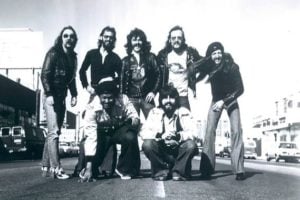
“Reflections” by the Charlie Daniels Band, a eulogy of the accidental deaths of Elvis Presley, Janis Joplin, and (closest to home, and a close friend of Daniels), Ronnie Van Zant, from the 1979 “Million Miles Reflections”
“James Dean” by the Eagles, from their 1974 “On The Border” LP.
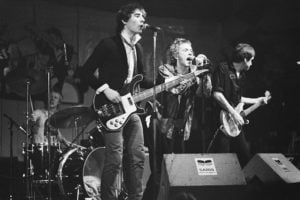
“Too fast to live, too young to die” – classic lyric.