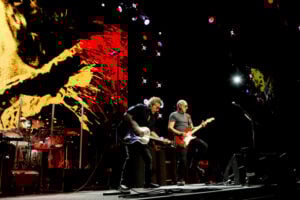
Feature Photo: Fotoburo De Boer, CC0, via Wikimedia Commons
Jefferson Airplane was formed in 1965 in San Francisco. They quickly became one of the premier acts of the burgeoning psychedelic rock scene. Known for their complex vocal harmonies and radical political lyrics, they were among the defining artists of the 1960s counterculture movement. The band’s debut performance was at the Matrix nightclub in San Francisco on August 13, 1965, marking the beginning of a significant journey in rock history. Jefferson Airplane played a vital role at key events of the 1960s, including the Monterey Pop Festival and Woodstock. Their 1967 album Surrealistic Pillow is considered a landmark psychedelic rock record and includes hits such as “Somebody to Love” and “White Rabbit.” Over the years, Jefferson Airplane underwent various lineup changes and experienced both critical and commercial success, with six of their studio albums reaching the top 20 of the Billboard album chart.
Jefferson Airplane’s original 1965 lineup consisted of Marty Balin, Paul Kantner, Jorma Kaukonen, Signe Toly Anderson, bassist Bob Harvey, and drummer Jerry Peloquin. Skip Spence soon replaced Peloquin, Jack Casady replaced Harvey, Grace Slick replaced Anderson in 1966, and Spencer Dryden replaced Spence. That Slick-Balin-Kantner-Kaukonen-Casady-Dryden lineup became the band’s best-known configuration and was inducted into the Rock and Roll Hall of Fame in 1996. Jefferson Airplane’s original run ended after its final 1972 tour, but five core members reunited for a self-titled album and tour in 1989.
Signe Toly Anderson
Signe Toly Anderson was one of the founding members of Jefferson Airplane, serving as their original female vocalist. She was with the band from its inception in 1965 until her departure in October 1966. Anderson’s contributions are prominently featured on the band’s debut album, Jefferson Airplane Takes Off, which includes tracks that showcased her powerful vocals suited to the band’s early folk rock and psychedelic sound. Her decision to leave the band was primarily due to the demands of touring after becoming a mother. Anderson’s replacement by Grace Slick marked a significant turning point in the band’s evolution toward a more psychedelic sound. Anderson died on January 28, 2016.
Grace Slick
Grace Slick joined Jefferson Airplane in 1966, replacing original vocalist Signe Toly Anderson. Her powerful voice and commanding stage presence quickly became central to the band’s identity. Slick brought with her two songs from her previous band, The Great Society: “Somebody to Love” and “White Rabbit.” Both tracks were included on Surrealistic Pillow, Jefferson Airplane’s breakthrough album, and became defining hits of the 1960s counterculture movement. Her intense, soulful vocals and bold persona helped catapult the band to international fame.
Grace Slick’s influence extended beyond her musical contributions; she became an iconic figure of the psychedelic rock era and a symbol of the 1960s rebellion against conventional norms. After Jefferson Airplane evolved into Jefferson Starship, Slick continued with that group for much of the 1970s and returned again in the early 1980s. She later participated in Jefferson Airplane’s 1989 reunion album and tour. Her work includes a substantial discography with Jefferson Airplane, Jefferson Starship, Starship, and as a solo artist. Her legacy in rock music remains profound, marked by her distinctive voice, charismatic performances, and a repertoire of songs that have stood the test of time.
Marty Balin
Marty Balin was a co-founder of Jefferson Airplane and one of its principal songwriters and vocalists. His tenor voice and songwriting contributed to much of the band’s early and later successes. Balin played a key role on albums like Surrealistic Pillow and Volunteers, with songs like “Today” and “Volunteers” showcasing his vocal prowess and lyrical depth. Balin left Jefferson Airplane in April 1971. He later became an important member of Jefferson Starship, returned for Jefferson Airplane’s 1989 reunion album and tour, and performed with his former bandmates at the group’s 1996 Rock and Roll Hall of Fame induction. Balin also had a successful solo career. He died on September 27, 2018, at the age of seventy-six.
Bob Harvey
Bob Harvey was the original bassist for Jefferson Airplane, playing upright acoustic bass with the band during its formative months in 1965. Harvey was part of the early configuration that leaned toward a folkier sound before the band fully embraced psychedelic rock. His tenure with the band was short-lived; he was replaced by Jack Casady in October 1965, before Jefferson Airplane recorded its debut album. Harvey’s brief time with the band is often overlooked due to the limited duration and the rapid stylistic changes that followed his departure.
Paul Kantner
Paul Kantner was one of the key architects of Jefferson Airplane’s iconic sound. As a rhythm guitarist, vocalist, songwriter, and founding member, his vision for the band’s musical and ideological trajectory significantly shaped their work. Kantner’s contributions spanned the band’s original studio catalog, where his use of electric twelve-string guitar added a distinctive richness to their music. He was particularly notable for his role in creating and steering works such as Surrealistic Pillow, After Bathing at Baxter’s, and Volunteers.
Kantner continued into Jefferson Starship and remained an important force in that group until leaving in the mid-1980s. After participating in Jefferson Airplane’s 1989 reunion, he revived the Jefferson Starship name in 1992 and continued performing with that incarnation for the rest of his life. Kantner died on January 28, 2016, at the age of seventy-four.
Jorma Kaukonen
Jorma Kaukonen served as the lead guitarist for Jefferson Airplane and was crucial in developing their distinctive psychedelic sound. His blues-inflected guitar playing is evident throughout their discography, especially on tracks like “Somebody to Love” and his own composition, “Embryonic Journey.” Kaukonen’s virtuosity provided much of the musical complexity for which the band is known. After his original time with Jefferson Airplane, he concentrated increasingly on Hot Tuna, the blues-oriented band he formed with fellow Jefferson Airplane member Jack Casady. Kaukonen returned for Jefferson Airplane’s 1989 reunion and its 1996 Rock and Roll Hall of Fame performance.
Jack Casady
Jack Casady is renowned for his innovative bass playing, which provided a rich foundation for Jefferson Airplane’s sound. Joining the band in October 1965, Casady’s style was characterized by fluid, melodic bass lines that were critical in the development of the band’s psychedelic and rock sound. His playing is prominent on albums like Surrealistic Pillow and Volunteers, helping to define the psychedelic rock era. Beyond Jefferson Airplane, Casady formed Hot Tuna with bandmate Jorma Kaukonen. He also returned for Jefferson Airplane’s 1989 reunion and 1996 Rock and Roll Hall of Fame performance.
Jerry Peloquin
Jerry Peloquin was Jefferson Airplane’s original drummer in the summer of 1965. He was part of the band’s foundational lineup assembled by Marty Balin and performed during its earliest period. Peloquin’s tenure was brief, and he was replaced by Skip Spence before Jefferson Airplane began recording its debut album. Although he never appeared on a Jefferson Airplane studio release, his place in the band’s original lineup makes him part of its earliest history.
Skip Spence
Skip Spence played drums for Jefferson Airplane during the recording of their debut album, Jefferson Airplane Takes Off. His involvement with the band was pivotal during its early evolution from folk-oriented styles toward psychedelic rock. Spence left in 1966 and became more widely known as a guitarist and songwriter with Moby Grape, another influential group in the San Francisco psychedelic rock scene. He later recorded the cult solo album Oar. Spence died on April 16, 1999.
Spencer Dryden
Spencer Dryden joined Jefferson Airplane in 1966 as a drummer, replacing Skip Spence. His drumming skills were a key element in the band’s most successful period, including albums such as Surrealistic Pillow, After Bathing at Baxter’s, Crown of Creation, and Volunteers. Dryden’s technique and timing were integral to the band’s sound during their most influential years. After leaving Jefferson Airplane in 1970, he continued his musical career with New Riders of the Purple Sage. Dryden did not participate in the 1989 Jefferson Airplane reunion, but he reunited with Balin, Kantner, Kaukonen, and Casady for the band’s 1996 Rock and Roll Hall of Fame induction performance. Dryden died on January 11, 2005.
Joey Covington
Joey Covington began contributing to Jefferson Airplane before becoming its full-time drummer. He added percussion to the 1969 album Volunteers while Spencer Dryden was still the band’s drummer, then replaced Dryden in 1970. Covington was the primary drummer on Bark and also played drums on two tracks from Long John Silver. His energetic playing fit the band’s move toward a harder rock sound, and he also contributed vocals and songwriting. Covington left Jefferson Airplane during the Long John Silver sessions in 1972 and did not continue into Jefferson Starship. He died on June 4, 2013.
Papa John Creach
Papa John Creach was a violinist who joined Jefferson Airplane in 1970 after being introduced to the group by Joey Covington. His jazz- and blues-influenced electric violin added a distinctive new element to the band’s sound. Creach appeared on Bark, Long John Silver, and the live album Thirty Seconds Over Winterland. He also played with Hot Tuna and continued with Paul Kantner, Grace Slick, David Freiberg, and John Barbata when Jefferson Starship took shape in the 1970s. Creach had a prolific solo career and collaborated with numerous other musicians. He died on February 22, 1994.
John Barbata
John Barbata joined Jefferson Airplane in 1972 after the departure of Joey Covington. Previously known for his work with The Turtles and Crosby, Stills, Nash & Young, Barbata brought a precise and dynamic drumming style to the final phase of Jefferson Airplane’s original run. He appeared on the band’s final original-era studio album, Long John Silver, and on the live album Thirty Seconds Over Winterland. Barbata continued into Jefferson Starship and played on several of that band’s major 1970s albums. He died on May 8, 2024, at the age of seventy-nine.
Read More: Complete List Of Jefferson Airplane Albums And Discography
David Freiberg
David Freiberg was a multi-instrumentalist and former co-founder of Quicksilver Messenger Service who joined Jefferson Airplane for its final 1972 tour. His contributions to Jefferson Airplane were primarily vocals and rhythm guitar, and he appears on the live album Thirty Seconds Over Winterland. Freiberg then became a founding member of Jefferson Starship, where his musical versatility as a vocalist, bassist, guitarist, and keyboardist became a significant asset. He later returned to Jefferson Starship and has remained associated with that band for many years.
Read More: Top 10 Jefferson Airplane Songs
Kenny Aronoff
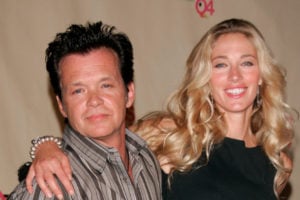
Kenny Aronoff was recruited to play drums and percussion when Jefferson Airplane reunited in 1989. Rather than bringing back one of the band’s original-era drummers, the reunited group brought in Aronoff, who was already widely known for his work with John Mellencamp. Aronoff played on the 1989 self-titled Jefferson Airplane album and joined the band on its reunion tour.
Peter Kaukonen
Peter Kaukonen, the younger brother of Jorma Kaukonen, contributed guitar to Jefferson Airplane’s 1989 reunion project and also joined the touring lineup. A guitarist and multi-instrumentalist with his own long career, Peter Kaukonen augmented the band’s live sound during the reunion rather than serving as one of its original-era core members.
Randy Jackson
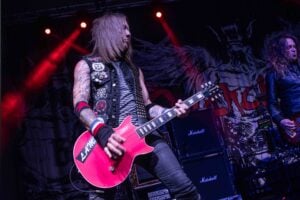
Randy Jackson, the guitarist from the rock band Zebra, joined Jefferson Airplane as an additional touring musician for the 1989 reunion tour. Jackson contributed guitar and keyboards onstage. He was part of the expanded touring lineup rather than the core five-member reunion group that recorded the album.
Tim Gorman
Tim Gorman played keyboards with Jefferson Airplane during the 1989 reunion tour. Gorman had previously worked with Paul Kantner, Marty Balin, and Jack Casady in the KBC Band. Like Randy Jackson, he augmented the reunited Airplane onstage but did not perform on the 1989 studio album.
JEFFERSON AIRPLANE STUDIO ALBUMS
Jefferson Airplane Takes Off (1966)
Surrealistic Pillow (1967)
After Bathing at Baxter’s (1967)
Crown of Creation (1968)
Volunteers (1969)
Bark (1971)
Long John Silver (1972)
Jefferson Airplane (1989)
Updated August 31, 2026.
Complete List Of Jefferson Airplane Band Members article published on ClassicRockHistory.com © 2026