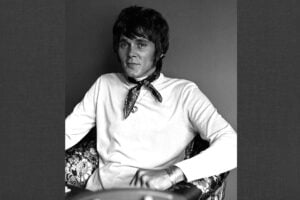
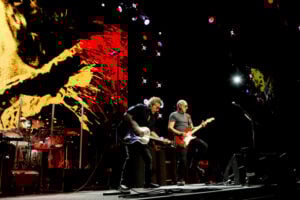
Feature Photo: Allan warren, CC BY-SA 3.0 <https://creativecommons.org/licenses/by-sa/3.0>, via Wikimedia Commons
Born Ronald Wycherley in April 1940, Billy Fury studied piano before his teenage years and had his first guitar by age 14. In 1955, he fronted his own group while also working full-time on a tugboat and later as a docker. A talent contest victory helped push him further toward music, and by 1958, he was writing his own songs. That same year, he went to the Essoldo Theatre in Birkenhead, hoping manager Larry Parnes might pass along some of his compositions to Marty Wilde, but the meeting changed his life when Parnes put him onstage instead, signed him, added him to his tour, and gave him the professional name Billy Fury.
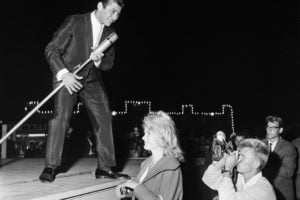
His earliest performances quickly drew attention, though not always the kind the establishment welcomed. Fury’s provocative stage style drew criticism, and he was pressured to tone it down, but the reaction also made clear that he had become impossible to ignore. His first hit for Decca, “Maybe Tomorrow,” arrived in 1959, and in 1960 his own composition “Colette” reached Number 9 on the UK Singles Chart. That run continued with “That’s Love” and his first album, The Sound of Fury, issued in 1960. The record featured Joe Brown on lead guitar and backing vocals by the Four Jays. Around this same period, Fury’s orbit briefly crossed with the Beatles, who auditioned for his backing band when they were still known as the Silver Beetles.
The chart years that cemented his fame came soon after, especially from 1961 through 1963. Fury moved away from a pure rock and roll image and into ballads that expanded his commercial reach. “Halfway to Paradise” reached Number 3 in the UK in 1961, and “Jealousy” climbed even higher to Number 2 that same year. Other major hits followed, including “It’s Only Make Believe,” “I Will,” and “In Thoughts of You.” Over the course of his career, he spent 332 weeks on the UK singles chart, a total that explains how deeply he connected with record buyers over an extended period. He never scored a Number 1 UK single, but his ability to remain a chart force for years made him one of the central British pop figures of the pre-Beatles and early Beatles era.
Albums remained an important part of his output, even though the singles had the greatest public impact. He released six studio and live albums named in the source: The Sound of Fury, Billy Fury, Halfway to Paradise, Billy, The Golden Years (later reissued as Memories), and The One and Only. One of the key records in that sequence was We Want Billy! from 1963, described as one of the first live albums in UK rock history, with performances of his hits alongside covers of R&B material such as “Unchain My Heart.” His recording career also continued across label changes, moving from Decca to Parlophone in 1966 and later to Polydor in the early 1980s, when he worked on a comeback album with producer Stuart Colman.
Film work gave Fury another public platform and broadened his career beyond records and concert halls. In 1962, he appeared in Play It Cool, a music-centered film that also featured Helen Shapiro, Danny Williams, Shane Fenton, Bobby Vee, and the Vernons Girls. The hit single tied to the film was “Once Upon a Dream.” In 1965, he appeared in I’ve Gotta Horse with his backing group, the Gamblers, the Bachelors, Amanda Barrie, Michael Medwin, and Jon Pertwee. He returned to the screen again in 1973 as Stormy Tempest in That’ll Be the Day, starring David Essex and Ringo Starr. That film linked Fury to a later generation of British pop cinema and reminded audiences that his presence extended beyond the recording studio.
Health problems repeatedly interrupted his momentum, yet they never fully erased his popularity. He underwent surgery for heart problems in 1972 and again in 1976, and those operations eventually forced him to abandon touring. In 1978, he was declared bankrupt over unpaid taxes dating back to 1962 and had to sign over his royalties and publishing income. In 1981, he collapsed while working on his farm and almost died, but he still returned to touring later that year. His final phase included recordings for Polydor, the comeback album The One and Only, and a last public appearance at the Sunnyside pub in Northampton on 4 December 1982. A few days before his death, he recorded a live television performance in which he revisited several of his old hits.
What he did outside music was specific, personal, and closely tied to his private interests. Fury focused on wildlife preservation in the mid-1970s, and he was also a keen birdwatcher. He lived for a time with businesswoman Lee Everett Alkin, later known as Lady Lee Middleton, and later with heiress Lisa Voice, dividing life between London and his farm in Wales. After his death from a heart attack in London on 28 January 1983, his reputation only grew. A bronze statue was unveiled in Liverpool in 2003, Camden Council named an alleyway Billy Fury Way in 2010, and releases from his estate helped support a memorial fund that finances equipment purchases for hospital heart units.
# 10 – Run to My Lovin’ Arms
We open our Billy Fury set with a tune that has a unique Righteous Brothers feel and sound. This is a big, orchestrated song with a huge finish. On September 3, 1965, Decca released “Run to My Lovin’ Arms” with Neil Diamond and Joyce Posner’s “Where Do You Run” on the B side. Recorded in 1965 at Decca Studios in London, the 2:51 track was written by Tony Powers and George Fischoff and produced by Billtone. The record reached Number 25 on the Record Retailer Top 50, Number 23 on the Disc Top 30, Number 24 on the Melody Maker Top 50, and Number 23 on the New Musical Express Top 30.
# 9 – Once Upon A Dream
Film and record release moved together in the summer of 1962 when Billy Fury issued “Once Upon a Dream” on July 13, 1962, one week before the release of Play It Cool, the musical film from which the song was drawn. Recorded on June 5, 1962, at Decca Studios in London, the 1:55 track was released by Decca with “If I Lose You” on the B side in the United Kingdom, Ireland, Denmark, France, and India, while other territories received alternate flips.
The music was composed by Norrie Paramor, the lyrics were written by Dick Rowe, and the single was produced by Mike Smith. Fury also performed the song in the film at Gatwick Airport, giving it a direct connection to his screen career at the same moment it entered the charts. The record reached Number 7 on the Record Retailer Top 50, Number 6 on the Disc Top 20, Number 7 on the Melody Maker Top 30, and Number 7 on the New Musical Express Top 30.
# 8 – “It’s Only Make Believe”
Billy Fury turned “It’s Only Make Believe” into another major hit in 1964, taking the song into the top 10 in both the United Kingdom and Ireland while also reaching Number 1 in Singapore. Written by Jack Nance and Conway Twitty, the song had already established a strong international reputation before Fury recorded it, and his successful version extended that run by placing his name alongside one of the era’s most widely traveled pop compositions. The song’s history also included a Number 1 American hit for Conway Twitty in 1958, later successful versions by Glen Campbell and Child, and recordings by artists including the Hollies, Ronnie McDowell, Robert Gordon, Carroll Baker, Brian May, Sam Moore, and the Misfits, which places Fury’s rendition within a long line of notable covers built around the same durable melody and title.
# 7 – In Summer
“In Summer” was released by Decca on July 12, 1963, with “I’ll Never Fall in Love Again” on the B side. Recorded on June 6, 1963, at Decca Studios in London, the 2:43 single was written by Valerie Murtagh, Elaine Murtagh, and Ray Adams, and produced by Dick Rowe. The record reached Number 5 on the Record Retailer Top 50, Number 4 on the New Musical Express Top 30, Number 5 on the Disc Top 30, Number 6 on the Melody Maker Pop 50, Number 4 in Ireland, and Number 7 in New Zealand. Contemporary reviews emphasized the change in mood, describing it as a lighter, lilting ballad with simple appeal, while also noting that Fury handled the song without leaning into the deeper vocal style that had marked some of his earlier releases.
# 6 -Collette
The Buddy Holly groove is all over this one. Billy Fury’s “Colette” became his first top ten hit when Decca released it on January 29, 1960, with “Baby How I Cried” on the B side. Recorded on January 8, 1960, at Decca Studios in London, the 1:50 single was written by Fury himself and produced by Jack Good. The song paired Fury with Ann O’Brien of the Vernons Girls in close harmony, giving the record a vocal blend that drew comparison to the Everly Brothers and added a brighter pop dimension to his early rock and roll sound.
Its commercial rise was gradual rather than immediate, entering the charts in the second week of March before climbing to Number 9 on the Record Retailer Top 50 and spending ten weeks on the chart, while also reaching Number 18 on the Disc Top 20, Number 15 on the Melody Maker Top 20, Number 19 on the New Musical Express Top 30, and Number 18 on the Record Mirror Top 20. The success of “Colette” helped prompt Decca to move Fury into the sessions for his debut album, The Sound of Fury, later that spring.
# 5 – Last Night Was Made for Love
Strings and drums drove “Last Night Was Made for Love” into one of Billy Fury’s strongest 1962 singles when Decca released it on April 27, 1962, with “A King for Tonight” on the B side. Recorded on March 30, 1962 at Decca Studios in London, the 2:15 song was written by Alan Fielding and produced by Dick Rowe and Mike Smith. It reached Number 4 on the Record Retailer Top 50, Number 5 on the Melody Maker Top 30, Number 6 on the New Musical Express Top 30, Number 6 on the Disc Top 20, and Number 6 in Ireland, confirming it as another major British hit during Fury’s peak chart period.
# 4 – Like I’ve Never Been Gone
What I love about this one is the Latin vibe that opens the track. On February 8, 1963, when Decca issued “As I’ve Never Been Gone,” backed with “What Do You Think You’re Doing?” The song had been recorded on December 14, 1962, at Decca Studios in London, written by Paul Hampton and Camille Monte, and produced by Mike Smith with orchestral backing directed by Ivor Raymonde. The recording quickly became another major British hit, reaching Number 3 on the Record Retailer Top 50, Number 3 on the Disc chart, Number 3 on the Melody Maker Pop 50, and Number 3 on the New Musical Express Top 30.
# 3 – When Will You Say I Love You
Billy Fury kept his early 1963 momentum going with “When Will You Say I Love You,” a Decca single released on May 10, 1963, with “All I Wanna Do Is Cry” on the B side. Recorded on September 26, 1962, at Decca Studios in London, the 2:24 track was written by Alan Fielding and produced by Mike Smith. The song became another major British hit for Fury, reaching Number 3 on the Record Retailer Top 50, Number 4 in Ireland, Number 5 on the Disc Top 30, Number 4 on the Melody Maker Pop 50, and Number 5 on the New Musical Express Top 30.
# 2 – Halfway to Paradise
Billy Fury’s “Halfway to Paradise” became one of the defining records of his career when it was released on April 28, 1961, as a Decca single backed with “Cross My Heart.” Recorded on April 9, 1961, at Decca Studios in London, the 2:24 performance was written by Carole King and Gerry Goffin and produced by Dick Rowe and Mike Smith. Fury’s version reached Number 3 on the British singles chart, remained there for 23 weeks, finished as the tenth best-selling single of 1961 in the United Kingdom, and became closely associated with his shift into large-scale ballad recordings. The session was built around a full orchestra conducted by Ivor Raymonde, giving the record the broader, more dramatic sound that helped establish it as one of his most popular singles and a central title in his catalog.
# 1 – Jealousy
Billy Fury’s “Jealousy” turned a 1925 Jacob Gade composition into one of the biggest records of his career when he released it as a single on September 1, 1961, through Decca, backed with “Open Your Arms.” Recorded on July 19, 1961, at Decca Studios in London, the performance ran 2:49, carried English lyrics by Winifred May, and was produced by Dick Rowe and Mike Smith. Coming directly after the success of “Halfway to Paradise,” the single became Fury’s highest charting song, reaching Number 2 on the Record Retailer chart, Number 1 in Ireland, Number 7 in New Zealand, Number 4 in Disc, Melody Maker, New Musical Express, and Record Mirror, and Number 86 in Australia. The composition has established a long cultural life through its use in films including Don Q, Son of Zorro, Anchors Aweigh, Conflict, Painting the Clouds with Sunshine, Silent Movie, Death on the Nile, Schindler’s List, The Man Who Cried, and Fargo.
Check out similar articles on ClassicRockHistory.com Just click on any of the links below……
Read More: Artists’ Interviews Directory At ClassicRockHistory.com
Read More: Classic Rock Bands List And Directory
Read More: 100 Essential Albums From The 1960s That Everyone Should Own
Top 10 Billy Fury Songs article published on ClassicRockHistory.com© 2026
Classicrockhistory.com claims ownership of all its original content and Intellectual property under United States Copyright laws and those of all other foreign countries. No one person, business, or organization is allowed to republish any of our original content anywhere on the web or in print without our permission. All photos used are either public domain Creative Commons photos or licensed officially from Shutterstock under license with ClassicRockHistory.com. All photo credits have been placed at the end of the article. Album Cover Photos are affiliate links and the property of Amazon and are stored on the Amazon server. Any theft of our content will be met with swift legal action against the infringing websites.