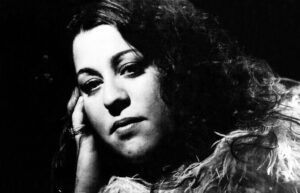
Feature Photo: RCA Records, Public domain, via Wikimedia Commons
Cass Elliot’s professional life began in Washington, D.C., where her early focus on acting gradually gave way to singing as she became active in the local folk scene during the early nineteen sixties. After moving to New York City, she worked within the Greenwich Village folk circuit and became part of the Mugwumps, a short-lived but influential group that also included John Phillips and Denny Doherty. That association proved decisive, leading directly to the formation of the Mamas & the Papas in 1965, a group that would quickly reshape American pop music with its vocal arrangements and songwriting discipline.
With the Mamas & the Papas, Elliot became internationally known between 1965 and 1968, appearing on a run of hit singles that included “California Dreamin’,” “Monday, Monday,” “I Saw Her Again,” and “Dedicated to the One I Love.” The group released four studio albums during that period, all of which charted strongly in the United States and abroad. Their second album, If You Can Believe Your Eyes and Ears, reached number one on the Billboard album chart, while “Monday, Monday” became the group’s only U.S. number one single. Elliot’s vocal presence was central to the group’s sound, particularly on harmony-driven material that required range and control rather than solo spotlighting.
Following the group’s initial breakup in 1968, Elliot moved into a solo career that emphasized contemporary pop standards and carefully selected covers rather than self-written material. Her debut solo album, Dream a Little Dream, was released in 1968 and produced the hit single “Dream a Little Dream of Me,” which reached the U.S. Top Twenty. Over the next several years, she released four additional studio albums.
Elliot’s solo recordings were produced by a range of established figures, including John Phillips, Steve Barri, and Dunhill Records staff producers, with session musicians mainly drawn from the Los Angeles studio scene. Her albums featured orchestral arrangements, pop rhythm sections, and backing vocals consistent with late 1960s West Coast production standards. While her solo albums did not match the commercial scale of her group work, they maintained consistent chart presence and positioned her as a viable headlining performer.
Television and live performance became a significant part of Elliot’s professional life during her solo years. She hosted two network television specials in 1969 and 1973 and made frequent appearances on variety programs throughout the early 1970s. She also undertook extended live engagements, including a well-documented run at Caesars Palace in Las Vegas in 1973, reflecting her transition into adult contemporary performance spaces rather than youth-oriented pop venues.
Outside of recording and performance, Elliot was active in stage work and film-related projects, appearing in musical theater productions and contributing to soundtracks. She was also involved in benefit concerts tied to civil rights and anti-war causes during the late nineteen sixties, participating in events organized by industry peers rather than operating through formal foundations or named charities. Her advocacy was primarily expressed through appearances and public alignment rather than through institutional leadership.
Recognition for Elliot’s work came both during her lifetime and posthumously. As a member of the Mamas & the Papas, she received multiple Grammy Awards, including Best Contemporary Folk Performance for “Monday, Monday.” In 1998, the group was inducted into the Rock and Roll Hall of Fame, cementing its place in American popular music history. Her solo recordings have remained in circulation through reissues and compilations, maintaining a documented commercial and cultural presence decades after their original release.
Cass Elliot’s career encompassed five solo studio albums, extensive group work, major chart success in both singles and albums, multiple Grammy Awards, network television exposure, and sustained live performance activity across the United States. Her professional record reflects a continuous presence in mainstream popular music from the early nineteen sixties through the early nineteen seventies, with documented achievements across recording, touring, and broadcast media.
# 10 – Don’t Call Me Mama Anymore
Don’t Call Me Mama Anymore was recorded live over the course of two nights on July 20 and July 22 of 1973 at Mister Kelly’s in Chicago, capturing Cass Elliot performing songs from her cabaret act with backing vocalists and musicians assembled for the show; Walter Earl Brown wrote the title track, and the live album was released in September of 1973 on RCA Victor as Elliot’s third release for the label, following earlier studio albums with RCA. The recording sessions at Mister Kelly’s were part of a set that also included songs such as “Extraordinary,” “I Think a Lot About You,” “My Love,” and a torch song medley drawn from standards, reflecting the repertoire she performed during that period.
Elliot worked with Allan Carr as her manager in preparation for the cabaret circuit performances that led to the live recording project. There were no singles released from the album itself, though a studio version of “I Think a Lot About You” had been issued earlier in 1973 with “Listen to the World” as its B side. Don’t Call Me Mama Anymore marked her move away from strictly pop-oriented material into a live performance format, which also coincided with a television special broadcast in September of that year.
The title song originated amid her desire to distance herself from the Mama Cass nickname that had followed her since her time with The Mamas and the Papas, and the live recording captures the set as performed at Mister Kelly’s before audiences during the summer of 1973.
# 9 – California Earthquake
“California Earthquake” was recorded during the 1968 sessions for the album Dream a Little Dream. The album was recorded at Wally Heider Studios in Hollywood, California, and was completed in approximately ten days. The song was written by John Hartford. John Simon produced the recording and also contributed piano and arrangements on the album. Personnel on the album included Cass Elliot on lead vocals, Stephen Stills on guitar and vocals, John Sebastian on guitar and harmonica, James Burton on guitar and dobro, Cyrus Faryar on guitar and ukulele, Harvey Brooks on bass guitar, Paul Harris on organ and piano, Plas Johnson on saxophone, Jim Gordon on drums, and Reinol “Dino” Andino on congas. “California Earthquake” was released in 1968 as the second single from the album, with “Talkin’ to Your Toothbrush” as the B side. The single reached number 67 on the Billboard Hot 100 chart.
# 8 -Don’t Let The Good Life Pass You By
This one makes you feel good. It’s great advice!
# 7 – It’s Getting Better
“It’s Getting Better” was written by Barry Mann, Cynthia Weil, and Cass Elliot, who released the song as a solo single in 1969. Dunhill Records issued the track, and Steve Barri produced the recording. The song appeared on the albums Bubblegum, Lemonade, and…Something for Mama. The recording took place in Los Angeles, with studio musicians who regularly appeared on Dunhill sessions during that period. The single reached number 42 on the Billboard Hot 100 in the United States and climbed to number sixteen on the UK Singles Chart.
# 6 – Too Much Truth, Too Much Love
While Cass Elliot is more of a backing vocalist on this album, you can’t deny the harmonies that she adds each and every song and on this one, she just takes the music to a whole other level which is exactly what she did in The Mamas and the Papas. Written by Dave Mason, “Too Much Truth, Too Much Love” was the second single released from the collaborative album Dave Mason & Cass Elliot, issued in February 1971, following “Something to Make You Happy” which had been released in January. The track appeared as the eighth song on the album with a length of 3:49. Recorded at Record Plant West in autumn of 1970 with producers Dave Mason and Cass Elliot, the recording featured Mason on guitar and vocals, Elliot on vocals, Bryan Garofalo on bass, Paul Harris on keyboards and strings, and Russ Kunkel on drums and percussion, with engineer Gary Kellgren managing the sessions. The album was released in March 1971 by Blue Thumb Records and peaked at number 49 on the Billboard Top 200 chart.
# 5 – Move in a Little Closer, Baby
Recorded during sessions for Cass Elliot’s second solo album, “Move in a Little Closer, Baby” was released as a single in 1969 on the Dunhill label. John Hartford wrote the song, and Elliot recorded it in Los Angeles with producer John Boylan overseeing the session. The track appeared on the album Bubblegum, Lemonade, and… Something for Mama, which featured Elliot backed by studio musicians including Larry Knechtel on keyboards, Joe Osborn on bass, Hal Blaine on drums, and Dennis Budimir on guitar. The single reached No. 8 on the U.S. Billboard Hot 100 and climbed to No. 5 on the Billboard Adult Contemporary chart, making it Elliot’s highest-charting solo hit. The song also charted in Canada, where it peaked at No. 3, and it became closely associated with Elliot’s post–Mamas and the Papas recording career through its commercial performance and release timing in 1969.
# 4 – Baby I’m Yours
Released in February 1972 concurrent with its parent album Cass Elliot, Elliot’s version of “Baby I’m Yours” was produced by Lewis Merenstein and arranged and conducted by Benny Golson. The track marked Elliot’s debut album for RCA Victor, who insisted on “Baby I’m Yours” as the lead single over Elliot and Merenstein’s choice, “That Song,” a new composition by Bill Dean. “That Song” was subsequently released as a single in April 1972. Neither “Baby I’m Yours” nor “That Song” afforded Elliot an appearance on the Billboard Hot 100 chart. Elliot’s “Baby I’m Yours” charted on the Canadian Adult Contemporary hitlist, peaking at number 18.
# 3 – New World Coming
This one always reminded me of a Laura Nyro song. Released in 1970, “New World Coming” was written by Barry Mann and Cynthia Weil and issued as a single credited to Cass Elliot. The recording appeared on the compilation album Mama’s Big Ones. Steve Barri produced the track. The single reached number forty two on the U.S. Billboard Hot 100 and climbed to number five on the Billboard Easy Listening chart. The song also charted in Canada, where it reached the Top Fifty. Barry Mann and Cynthia Weil received the songwriting credit, continuing their established partnership on the composition. The release marked Elliot’s final appearance on the U.S. pop singles chart under her solo name.
# 2 –Dream a Little Dream of Me
Recorded for the Mamas & the Papas’ April 1968 album The Papas & the Mamas with lead vocals by Cass Elliot, “Dream a Little Dream of Me” originated as a 1930 song with music by Fabian Andre and Wilbur Schwandt and lyrics by Gus Kahn. The group had often performed the song for fun, having been familiarized with it through band member Michelle Phillips, whose father had been friends with co-writer Fabian Andre in Mexico City where Phillips’ family had resided. Following Andre’s death, the group recorded the track, with Elliot on lead vocals and performing her own whistling heard before the song’s fade. John Phillips provided the introduction heard on the recording.
Released as a single in June 1968 by Dunhill Records with artist credit reading “Mama Cass with the Mamas & the Papas” in the US and “Mama Cass” in the UK, the track was promoted with photographs of Elliot lying in a bed of daisies. The single peaked at number 12 on the Billboard Hot 100 in August 1968, reached number 10 on the Cash Box chart and number 8 on the Record World chart, and reached number 2 on the Easy Listening chart.
# 1 – Make Your Own Kind Of Music
Written by Barry Mann and Cynthia Weil and produced by Steve Barri, “Make Your Own Kind of Music” was released in September 1969 by Dunhill Records as a single by Mama Cass Elliot. The recording featured Ben Benay and Mike Deasy on guitar, Red Rhodes on steel guitar, Joe Osborn on bass, Larry Knechtel on keyboards, Hal Blaine on drums, Steve Barri and Phil Kaye on percussion, and Ben Benay on harmonica. The track peaked at number 36 on the Billboard Hot 100 and reached number 6 on the Easy Listening chart. Released in October 1969, the single swiftly ascended the Hot 100, and in November 1969, Dunhill reissued Elliot’s second solo album, reformatted to include the song, with the album’s title changed to Make Your Own Kind of Music/It’s Getting Better. Steve Barri considered it a guaranteed Top Ten hit despite its heavy radio airplay, generating comparatively meager sales.
Check out similar articles on ClassicRockHistory.com Just click on any of the links below……
Read More: Top 10 Mamas And The Papas Songs
Read More: Artists’ Interviews Directory At ClassicRockHistory.com
Read More: Classic Rock Bands List And Directory
Read More: Top 200 Songs About Food
Read More: 25 Best Classic Rock Live Albums Of All Time
Top 10 Mama Cass Elliot Songs article published on ClassicRockHistory.com© 2025
Classicrockhistory.com claims ownership of all its original content and Intellectual property under United States Copyright laws and those of all other foreign countries. No one person, business, or organization is allowed to republish any of our original content anywhere on the web or in print without our permission. All photos used are either public domain Creative Commons photos or licensed officially from Shutterstock under license with ClassicRockHistory.com. All photo credits have been placed at the end of the article. Album Cover Photos are affiliate links and the property of Amazon and are stored on the Amazon server. Any theft of our content will be met with swift legal action against the infringing websites.