

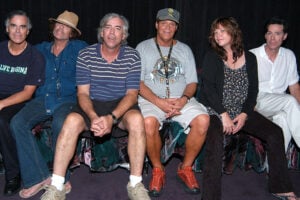
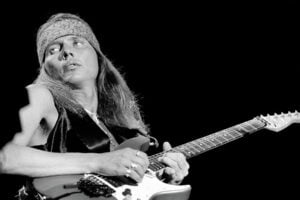
Feature Photo: Nick contador, CC BY-SA 4.0 <https://creativecommons.org/licenses/by-sa/4.0>, via Wikimedia Commons
When Fleetwood Mac was founded as a British blues rock group in 1967, Peter Green was part of the original lineup. He, Mick Fleetwood, and Jeremy Spencer started off as a trio before John McVie joined as their bassist. At the time, Peter Green was one of the band’s lead vocalists, playing a key role in popularizing the band in the UK. The top ten songs with Peter Green as lead vocalist for Fleetwood Mac include “Albatross” and “Black Magic Woman.” As a singer and songwriter, Green’s influence in the music industry led several recording artists to cover some of his best material, even after his run with Fleetwood Mac ended in 1970.
About Peter Green
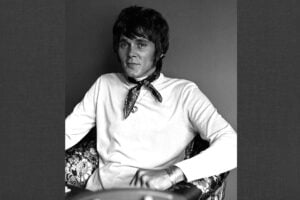
Born on October 29, 1946, Peter Allen Greenbaum was raised in a Jewish household in London, England. While growing up, his older brother, Michael, introduced him to the guitar. By the time Peter Green was eleven, he was learning to compose his own material. By the time he was 15, he was performing music professionally. This eventually led him to play bass guitar with a band called the Dominoes. This was the same group that had produced a series of favorite pop-rock covers before Green met Mick Fleetwood.
At the time, Peter Green and Fleetwood were part of Peter B’s Looners, a musical group founded by Peter Bardens. While with Peter B’s’ Looners, Green made his recording debut before the band changed its name to Shotgun Express. The new name also adopted a new musical style, featuring Motown. This was the band that featured Rod Stewart. Shortly after the name change, Green left, along with Mick Fleetwood, to form a new band, Peter Green’s Fleetwood Mac, featuring Jeremy Spencer.
Fleeting
As Peter Green’s Fleetwood Mac featuring Jeremy Spencer, the original lineup technically began with Bob Browning on bass guitar before John McVie joined them in 1968. At the time, Green’s group was making a name for themselves by covering old blues favorites and a series of original tunes that became fan favorites. Most of the original material was written by Peter Green, though Jeremy Spencer sometimes contributed. The tracks making up the group’s recording debut featured Spencer’s first single, “I Believe My Time Ain’t Long.” Although it failed to make an impression on the charts, the album did very well on the British Albums chart. Not until after this album’s release did McVie replace Brunning as the band’s bass guitarist.
Since releasing their eponymous album, Peter Green’s Fleetwood Mac, featuring Jeremy Spencer, has focused more on producing original music that has drifted away from the bluesy material it started with. Mr. Wonderful was a 1968 album featuring the group’s new musical venture, which would win them a new fan base and critical acclaim. This was just the start for Peter Green’s group as Fleetwood Mac’s popularity rose, and their music reached the North American audience. They were privileged to work with some of their favorite blues artists, such as Willie Dixon, Buddy Guy, and Big Walter Horton.
At the time, Peter Green’s Fleetwood Mac was enjoying the fruit of success as a band that specialized in a brand of music that won over the favor of blues-loving fans who also appreciated the unique sounds the band brought to the studio and the stage. However, Green’s dependency on narcotics at the time began to impact his mental stability, which would ultimately lead to a parting of ways between himself and his bandmates. This was made evident after recording and releasing “Man of the World” as a single in 1969. That, combined with sporting a beard, a crucifix, and robes, had Mick Fleetwood and the rest of the band worried about Peter Green and his unusual behavior.
At the time, Green became addicted to LSD, which would alter his frame of thinking. It was enough to cause conflict within the ranks that would cause Green to go his own way while Mick Fleetwood and the rest of the band went theirs. There was a brief reunion in 1971, when Green replaced Jeremy Spencer as Fleetwood Mac embarked on a U.S. concert tour. However, at that time, he performed as a guitarist under the name of Peter Blue. In 1973, Green also contributed to Fleetwood Mac’s album, Penguin, namely the song “Night Watch.” After this, Green’s substance abuse issues were taking a toll on the man’s mental health that would plunge him into obscurity.
Green Legacy
As a performer, Peter Green established himself as one of the legends behind the British blues musical movement. Aside from his popularity as Fleetwood Mac’s lead singer, other legendary greats such as B.B. King noted him for his guitar talent. Green trademarked the string-bending sound, along with vibrato and other guitar styles, that earned him the right to be regarded as a guitar hero. If you’ve never heard his instrumental masterpiece, “The Super-Natural,” then you’ve missed out. It is a true gem of a tune that never gets old.
After Green was no longer part of Fleetwood Mac’s lineup, he teamed up with former bandmate Peter Bardens, and together they recorded music for The Answer. As a solo artist or collaborator, Green continued to record music and perform in concert. Going into the mid-1970s, he was diagnosed with schizophrenia, which resulted in therapeutic treatment and psychiatric care. During this time frame, Green had to contend with a condition that played a factor in his unusual behavior while part of Fleetwood Mac’s lineup. Granted, the abuse of LSD didn’t help, but it did play a role in what became Green’s downfall at the time.
However, 1979 marked the beginning of a new era for Peter Green, as he conquered the demons that had messed with his state of mind throughout the 1970s. In fact, Tusk’s “Brown Eyes” was his uncredited contribution to Fleetwood Mac’s double album that was released in October 1979. Then, in 1981, he worked with Mick Fleetwood again when his former bandmate embarked on a solo project. “Rattlesnake Shake” and “Super Brains” featured Peter Green on guitar for Fleetwood’s album, The Visitor.
In 2009, a documentary, Peter Green: Man of the World, covered the ups and downs Green experienced before, during, and after his time with Fleetwood Mac. On July 25, 2020, Peter Green passed away at the age of 73. This came just a few months after a tribute concert, organized by Mick Fleetwood and featuring a star-studded lineup, that paid homage to the man.
Top 10 Peter Green Fleetwood Mac Songs
# 10 – Need Your Love So Bad
Little Willie John’s 1955 hit, “Need Your Love So Bad,” was initially recorded as a mix of blues, gospel, and R&B. Fleetwood Mac’s 1968 version featured Peter Green as the lead vocalist, who also turned it into a hit as the blues musical movement began to make an impact in the UK and Europe.
On the UK Singles Chart, it peaked at 31; in the Netherlands, it reached number 7. The plan was to release this song in America, but that never materialized. This lyrical plea for love, delivered as a bluesy ballad, featured Green as both lead singer and guitarist, with a string section that added extra flair to an already fantastic song.
# 9 – If I Loved Another Woman
Before “Black Magic Woman” was “If I Loved Another Woman.” Performed as Fleetwood Mac’s lead vocalist, Peter Green gave the audience a glimpse of his Latino-flavored blues music that would become a big part of his career. This slower number oozes perfectly as a song played right before “Black Magic Woman.” On its own, “If I Loved Another Woman” is a Peter Green gem. Pair it up as a one-two punch with his “Black Magic Woman” performance, which is quite a listening experience.
# 8 – Love That Burns
The impact of “Love That Burns” by Peter Green from the Fleetwood Mac album, Mr. Wonderful, was enough to inspire Eric Clapton to come up with his long list of bluesy hits. This song had Peter Green at his finest, as a mournful man singing the blues as he strummed his guitar in perfect harmonious matrimony. Released in 1968, it did more than influence fellow countryman and musician Eric Clapton in shaping his musical career. It significantly influenced many fans and recording artists within the British blues movement.
#7 – Stop Messin’ Round
“Stop Messin’ Round” was a song featured on the B-side of a record that released the hit single “Need Your Love So Bad.” Fleetwood Mac’s Peter Green often sang with intense emotion as he seemed to pour as much of his own soul as possible into each song he performed. As a guitarist and a vocalist, it seemed the man could do no wrong when delivering a world-class tune. “Stop Messin’ Round” was a Fleetwood Mac original, which Peter Green wrote as a song that confronted a love interest’s unfaithfulness. This was an upbeat blues shuffle that tapped into the electric blues style the group adopted as part of its musical repertoire.
This song was featured in a shortened version in Fleetwood Mac’s second UK-released studio album, Mr. Wonderful, 1968. It was also included in Fleetwood Mac’s second US-released studio album, English Rose. That one was released in 1969. The true highlight behind ‘Stop Messin’ Round” was Peter Green’s performance on guitar. It inspired Aerosmith to cover this version in 2004 for their blues tribute album Honkin’ on Bobo.
#6 – The Green Manalishi (With the Two Prong Crown)
“The Green Manalishi (With the Two Prong Crown)” was released as a non-album single in 1970. This beautifully ominous song demonstrated Peter Green’s talent as a singer-songwriter. This was his final hit while still part of Fleetwood Mac’s lineup. At the time, Green saw money as the devil. This was expressed in the song, as Green’s dream about a green dog influenced the lyrics he wrote.
At the time, Peter Green developed a strong criticism against money and how it has been the root of evil practices carried out by people he felt should know better. Shortly after this song was released, he left Fleetwood Mac, as it was clear he was no longer on the same path as his bandmates. Over time, the popularity of “The Green Manalishi” inspired upcoming recording artists such as Judas Priest to develop their own version.
#5 – Rattlesnake Shake
Released from the 1969 album Then Play On, Fleetwood Mac’s Peter Green sang as the lead vocalist to a tune that became a crowd-pleasing favorite. “Rattlesnake Shake” was released as a single in the US, hoping it would become a hit. Unfortunately, it failed to chart then and was followed by “Oh Well,” which was already a hit in the UK. In 1981, it was re-released in remastered form, with Peter Green returning as a recording artist. This time, “Rattlesnake Shake” finally earned a place on the US Billboard Mainstream Rock chart. It peaked at number thirty.
# 4 – Man of the World
If there were a signature song belonging to Peter Green, “Man of the World” would be it. Whether part of the Fleetwood Mac lineup or on his own, this was unmistakably Green’s swan song as a performer. Released in 1969, it became a number-two hit in the UK and Norway. On the Irish Singles Chart, it peaked as high as number five. It was at least a top twenty hit in the Netherlands, South Africa, and Sweden. It was eventually released as a single in the US in 1976, but didn’t chart then.
However, it became a fan favorite and an all-time timeless classic. In many ways, “Man of the World” felt like an autobiography coming straight from Green. At the time of recording, he was already dealing with a mental illness that was amplified by drug abuse. However, nobody knew exactly what was going on with Green until he was finally diagnosed with schizophrenia shortly after he left Fleetwood Mac.
#3 – Oh Well
“Oh Well” became the first song recorded by Peter Green’s Fleetwood Mac, featuring Jeremy Spencer. This took place in 1969 as the group produced its first studio album. Technically, this is a two-piece song. The first part was recorded as a fast-paced electric blues song with Peter Green’s vocals. The second part was strictly an instrumental piece, featuring hints of classical music. “Oh Well, Part I” became a Fleetwood Mac staple that other lead vocalists performed after Peter Green left.
When the original “Oh Well” was released, it became a number two hit on the UK Singles Chart. It was a number-one hit on the Dutch Top 40 chart and a number-five hit in France, Ireland, New Zealand, and Norway. When released in North America, it became a number fifty-five hit on the US Billboard Hot 100 and a number fifty-four hit in Canada. “Oh Well, Part 1” became one of the earliest crossovers between blues rock and heavy metal, inspiring Green’s genius-inspired songs, such as Led Zeppelin’s “Black Dog.”
#2 – Albatross
Released in 1969, “Albatross” showed off just how talented Peter Green was with the guitar. His magic fingers strummed the lead guitar that would turn “Albatross” into a number-one hit on the UK Singles Chart. It was also a number-one hit in the Netherlands. It was at least a top-20 hit throughout Europe, including Belgium, Germany, Ireland, Norway, Sweden, and Switzerland. It also peaked at number forty-five in Canada.
Regarding some of the greatest hits coming from Fleetwood Mac’s discography, “Albatross” is it, and this is 100% Peter Green at his all-time best. This song is ideal for relaxation, with a seascape feel in the imagery that influences the mood. It influenced the Beatles enough to record and release “Sun King” from their 1969 album, Abbey Road. Over 400,000 copies of “Albatross” were sold, giving it a gold certification from the British Phonographic Industry. “Albatross” remains a legendary musical piece that deserves to be called an all-time classic.
#1 – Black Magic Woman
Originally performed by Peter Green while part of Fleetwood Mac’s lineup, “Black Magic Woman” became so much more than a hit in the UK. This was the same song Santana would turn into a big hit in the US in 1970. Both versions became global favorites. Green’s version was the first to make an impression after being released as a non-album single in 1968. Written by Peter Green, this was a song that used Otis Rush’s song, “All Your Love,” as a source of inspiration.
Before joining Fleetwood Mac, Green was part of John Mayall & the Bluesbreakers, and it was with them that “All Your Love” was recorded. According to Green, when there’s a favorite song in mind when creating a new one, at least take the first few lines and make something up from that. This is how “Black Magic Woman” became a song while Green experimented with Latino-based music. The experiment paid off as it became a number thirty-seven hit on the UK Singles Chart.
Updated January 15 2026
Check out similar articles on ClassicRockHistory.com Just click on any of the links below……
Top 10 Fleetwood Mac Songs
Top 10 Fleetwood Mac Love Songs
Top 10 Fleetwood Mac Songs Sung By Christine McVie
Top 10 Lindsey Buckingham Fleetwood Mac Songs
Top 10 Stevie Nicks Fleetwood Mac Songs
Top 10 Bob Welch Fleetwood Mac Songs
Complete List of Fleetwood Mac Albums And Songs
Top 10 Fleetwood Mac Album Covers
Top 10 Fleetwood Mac Albums
Fleetwood Mac: All You Need To Know, History And Directory
Christine McVie Of Fleetwood Mac Dies At 79
10 Most Rocking Fleetwood Mac Songs
Complete List Of Fleetwood Mac Band Members
What It Was Like Seeing Fleetwood Mac’s 1977 Rumours Tour
Complete List Of Fleetwood Mac Songs From A to Z
Read More: Artists’ Interviews Directory At ClassicRockHistory.com
Read More: Classic Rock Bands List And Directory
Top 10 Peter Green Fleetwood Mac Songs article published on Classic RockHistory.com© 2026





















good day