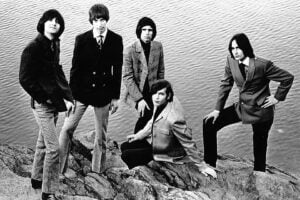
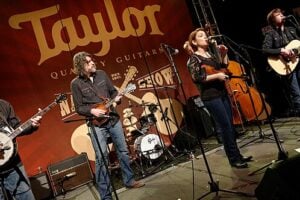
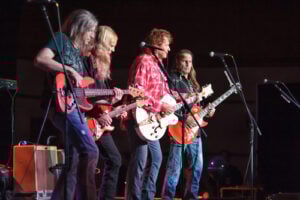
Our Top 10 Songs By The Sonics list presents the best Sonics songs, including “The Witch,” “Skinny Minnie,” “Have Love, Will Travel,” and more. The musical genre known as garage punk is also called garage rock. The Sonics were among the pioneers of this musical style after forming in 1960. Known for their influential, aggressive sound, punk music, which has since been enjoyed worldwide, found inspiration in The Sonics’ energetic contribution to the music industry.
For The Sonics, while the era of beat rock and surf-style hits dominated the charts throughout much of the 1960s, this group was busy catering to an audience favoring psychedelic music. After 1968, however, the sophistication of rock music began to win over radio stations and recording studios, leaving garage-style rock in virtual obscurity before it would see a revival during the mid-1980s.
At first, the groups catering to garage rock mimicked the 1960s influence, including material by The Sonics. By the 1990s, the garage rock genre further developed its fusion of punk and rock, which would serve as a new wave of inspiration leading into the turn of the twenty-first century. To this day, The Sonics are still referred to as one of the godfathers of the garage punk rock genre, and deservedly so. Founder Larry Parypa was just a teenager when The Sonics was founded in Bremerton, Washington, in 1960. Parypa’s parents were music fans and served as key influences on the young man to pursue a career as an entertainer.
Lineup Issues
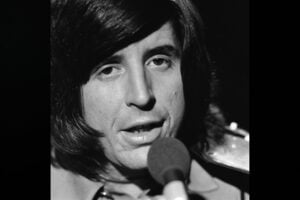
The Sonics’ lineup originally featured Larry Parypa as the frontman, with his brother, Jerry, on saxophone. Mitch Jaber was the drummer, and Stuart Turner was the guitarist. In the beginning, Parypa’s mother would fill in on bass during rehearsals before Parypa’s older brother, Andy, took over in 1961. Replacing Jerry on the saxophone that year was Tony Mabin. When Turner joined the army, he was replaced by Rich Koch. Up until lead singer Marilyn Lodge joined the group, The Sonics were primarily an instrumental band. By 1963, additional lineup changes occurred, including the replacement of Lodge as lead singer by Ray Michelsen, who was then replaced by Gerry Roslie in 1964.
In 1965, The Sonics released their debut album, Here Are The Sonics!!!, and were followed by the 1966 release of Boom. These two albums did very well, serving as the pioneering musical influence that sparked the garage rock genre. Before 1966 was over, The Sonics moved to Hollywood after signing with Jerden Records. Unfortunately, the third studio album, Introducing the Sonics, served as a commercial flop. The decision to follow the newer influences of what was considered modern music at the time served as a dismal contrast to the previous recordings that had earned The Sonics their fan base. This was also a period when The Sonics underwent additional lineup changes between 1966 and 1968, as members left to pursue other interests. Over time, the original roster of The Sonics was gone, only to be replaced with new talent that simply kept the band’s name going until it was changed to Jim Brady and the Sonics in 1980.
Today’s Sonic
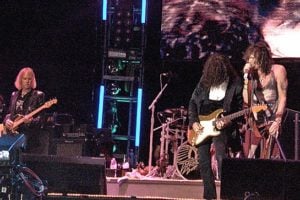
In 1972, the original lineup of The Sonics briefly reunited for a live show in Seattle. In 1980, the new Sonic lineup featuring its frontman, Gerry Roslie, recorded and released the album, Sinderella. It featured versions of the material performed by the original lineup during their heyday, making good use of the punk rock genre, which was gaining popularity in the 1970s. Now known as grunge music during the 1990s, there was a renewed interest in The Sonics that would give Larry and Andy Parypa cause to perform with the group again. The revolving door of The Sonics’ lineup still continues to this day.
In total, The Sonic has recorded and released five studio albums, two extended plays (EPs), twelve compilation/live albums, and twenty-four singles. Of all the material released by The Sonics as a group, only This is the Sonics, released in 2015, appeared on the official US Billboard albums charts, namely at number twenty-one on the US Billboard Heatseekers and at number twenty-five on the US Billboard Tastemakers.
Top 10 Songs By The Sonics
#10 – Cinderella
“Cinderella” was the lead track to the 1966 album, Boom. Sticking with the success formula that made The Sonics’ debut so popular, the energetic impact of this song was what made the group such a favorite among fans who enjoyed heavier sounds than the beachy, pop-rock sounds that seemed to be becoming too generalized for an audience that was starting to want more. According to The Sonics, “Cinderella” was a love interest met at the bar that mysteriously disappeared, giving the screaming vocalist cause to pursue her even further.
#9 – Boss Hoss
“Boss Hoss” served as inspiration for the formation of a German country music band, which adopted the title of this song as its name. Founded in 2004 in Berlin, The BossHoss has made a career out of covering famous pop, punk, and rock songs with their brand of honky tonk country music. “Boss Hoss” was a single released in 1965 from the album Etiquette, which revolved around a special car the vocalist couldn’t stop raving about.
#8 – Shot Down
From Boom, “Shot Down” was an explosive Gerry Roslie original that was released with the album in 1966. In this song, the lyrically expressed disappointment of a woman’s refusal to give the vocalist the time of day was brought to life with a mix of heavy guitar riffs and background claps, resulting in a highly energetic number. Seemingly shocked, The Sonics laid out all the qualities that should have made the woman reconsider her decision, as it was relayed that the vocalist’s interest in her was genuine enough to deserve a chance.
#7 – Dirty Robber
“Dirty Robber” was a song first recorded in 1955 by The Fabulous Wailers as an R&B number. Performed as a wilder version, this song featured screaming vocals, piano progressions, and saxophone solos, making it a highly energetic number that earned The Sonics a fan base that loved every heavy beat. From the album, Here Are The Sonics!!!, “Dirty Robber” was also released in 1955, winning over a fan base that maybe didn’t connect as well with the Wailers’ R&B version.
Both The Sonics and The Fabulous Wailers were from the Pacific Northwest, but only The Sonics remain active to this day, while The Wailers officially disbanded in 1969. Sung as a jilted lover whose significant other ran off like a bandit, where the Wailers laid it out as a bluesy number, The Sonics did so as an expression of jet-fueled, finger-in-the-face disbelief that made it a fast dance favorite.
#6 – Strychnine
What made The Sonics so awesome as breakthrough artists of the garage-rock genre were the ability to take classical instruments and turn them into mean musical machines. At the same time, still manage to slip in bluesy accents and lose vocals to an otherwise heavy and energetic progressive “Strychnine.” The album, Here Are The Sonics!!!, served as more than merely a debut album for this amazing rock group but as a needed burst of refreshment to a music scene that had seemed to become too generic. What “Strychnine” did, thanks to The Sonics, was serve as yet another fantastic song that broke the mold of what energetic music should sound like. In the song, “Strychnine” was a beverage of choice, while, as a song, it was a sound preference for fans who loved this heavy-hitting number.
#5 – Have Love, Will Travel
The edgy “Have Love, Will Travel” was originally recorded by Richard Berry in 1959, before The Sonics recorded a harder-hitting version for their 1965 album, Here Are The Sonics!!!. The fuzz guitar, paired with screaming vocals, big drum sounds, and a fantastic saxophone solo, was a key reason The Sonics were so popular with a fan base that loved this edgier approach to cult favorites. Among the many artists who have since covered this song, The Sonics’ version is most often copied. When Toyota ran a commercial in 2004 for its Land Rover, it used The Sonics’ version of “Have Love, Will Travel,” which helped fuel a resurgence of garage-style music and the pioneering group behind it.
#4 – Louie Louie
As an R&B song, “Louie Louie” was first recorded by Richard Berry in 1957, before becoming a big hit for the Kingsmen in 1963. Since then, it has become a pop and rock standard, covered by several artists over the years. For The Sonics, their 1965 cover version of this all-time favorite can be found on their 1966 album, Boom, as well as newer versions on 1980’s Sinderella, and 2016’s Live at Easy Street. Their approach to “Louie Louie” was an abrasive, hard-edged approach that was regarded as a considerably fiercer and more ominous sound. This version may have added a bit more fuel to the fire behind its classification as a cosmically crude number that featured a Jamaican returning to the island to reunite with his lover.
#3 – Skinny Minnie
Originally released in 1958 by Bill Haley and his Comets, “Skinny Minnie” was covered by The Sonics on their 1966 album, Boom. The Sonics made a career out of covering pop standards, turning most of them into edgier versions that would appeal to a different breed of rock fans. “Skinny Minnie” was one of many garage-style rock songs that caught the attention of aspiring musicians, who found this group’s take on a cult classic more psychedelic than the original.
#2 – Psycho
As a song, “Psycho” perfectly reflected what made The Sonics tick as a psychedelic band, serving as the godfathers of garage punk rock. The circular brass riff, along with the drumming, seemed to add even more energy to the screaming vocals. The Sonics were clearly ahead of their time as musicians, but this was a good thing, as their influence sparked the onslaught of fantastic rock groups that strove to follow in their footsteps, one “Psycho” move at a time. Here Are The Sonics!!! featured the original recording of “Psycho” while Boom‘s live performance version is nothing short of musical genius itself.
#1 – The Witch
Immensely popular with the kids, “The Witch” was the first single released by The Sonics in 1964. On the local scene, it became the biggest-selling single, despite Pacific Northwest radio stations giving it little airtime because of the musical content that fueled it. The guitar riffs that highlight “The Witch” played a huge role in its popularity and in convincing the group to sign with Etiquette Records. The original intent behind “The Witch” was to serve as a composition about a local dance craze, but it was later reimagined to tell a tale of a female antagonist.
At the time, this aggressive song was played only after the kids were released from school and became the lead track on the group’s debut album, Here Are The Sonics!!!. Despite the fact that “The Witch” received limited airplay and failed to chart nationally, it remains one of the most important songs in rock history. So many punk rock groups, both nationally and internationally, credit “The Witch” and The Sonics for creating the garage rock subgenre, as well as perhaps inspiring other rock bands to step up their sound.
Feature Photo: Donutte, CC BY-SA 3.0 <https://creativecommons.org/licenses/by-sa/3.0>, via Wikimedia Commons
Updated January 24, 2026
Check out similar articles on ClassicRockHistory.com Just click on any of the links below……
Read More: Artists’ Interviews Directory At ClassicRockHistory.com
Read More: Classic Rock Bands List And Directory
Top 10 Songs By The Sonics article published on Classic RockHistory.com© 2026
Classicrockhistory.com claims ownership of all its original content and Intellectual property under United States Copyright laws and those of all other foreign countries. No one person, business, or organization is allowed to re-publish any of our original content anywhere on the web or in print without our permission. All photos used are either public domain, Creative Commons photos, or licensed officially from Shutterstock under license with ClassicRockHistory.com. All photo credits have been placed at the end of the article.