

Feature Photo: Christian-Bertrand – Shutterstock.com
From tender ballads to raucous rock anthems, these tracks show how the word “more” can drive a song, whether it reflects the pursuit of love, the ache of loss, or the thrill of rebellion. Across genres and decades, these ten songs prove that “more” is not just a word in a title but a powerful idea that has inspired some unforgettable music.
# 10 – No More Lonely Nights – Paul McCartney
Paul McCartney’s “No More Lonely Nights” is a lush ballad that blends one of his strongest 1980s melodies with a beautiful arrangement. Written by McCartney for Give My Regards to Broad Street, the song was released as a single in 1984. George Martin produced the ballad version and arranged it with McCartney. McCartney sings and plays piano, Herbie Flowers plays bass, Anne Dudley adds synthesizer, Stuart Elliott plays drums, and Linda McCartney and Eric Stewart provide backing vocals. David Gilmour’s soaring guitar work gives the recording one of its most memorable musical moments. The song reached number six on the Billboard Hot 100 and number two in the United Kingdom.
# 9 – It Doesn’t Matter Anymore – Linda Ronstadt

Linda Ronstadt’s version of “It Doesn’t Matter Anymore” turns Paul Anka’s song into a graceful country-rock statement about finally letting go. Buddy Holly had famously recorded the song in 1958, while Ronstadt included her interpretation on the 1974 album Heart Like a Wheel. Peter Asher produced the recording at the Sound Factory in Los Angeles. Bob Warford plays acoustic guitar, Kenny Edwards plays bass, Andrew Gold handles drums and percussion, Sneaky Pete Kleinow adds steel guitar, and Jimmie Fadden plays harmonica. Ronstadt’s vocal keeps the sadness intact while giving the song a sense of strength and resolution. The performance is a perfect example of her ability to take an established song and make it sound completely natural in her own voice.
# 8 – No More “I Love You’s” – Annie Lennox

Annie Lennox’s “No More ‘I Love You’s'” turns a cult 1980s song into one of the defining recordings of her solo career. David Freeman and Joseph Hughes wrote the song and originally recorded it as the Lover Speaks in 1986. Lennox revisited it for her 1995 album Medusa. Stephen Lipson produced the track, which was recorded and mixed at the Aquarium in London. Lennox’s vocal moves between intimacy, drama, and something almost dreamlike as the arrangement grows around her. Her version reached number two in the United Kingdom and won the Grammy Award for Best Female Pop Vocal Performance.
# 7 – No More Mr. Nice Guy – Alice Cooper

Alice Cooper’s “No More Mr. Nice Guy” is one of the great rock songs about deciding that being polite has gotten you nowhere. Alice Cooper and Michael Bruce wrote the song for the band’s 1973 album Billion Dollar Babies. Bob Ezrin produced the album during sessions that included Morgan Studios in London, the Record Plant in New York, and the Galasi Estate in Connecticut. The classic Alice Cooper lineup of Cooper, Bruce, Glen Buxton, Dennis Dunaway, and Neal Smith gives the track its sharp and theatrical attack. The song turns public outrage over Cooper’s image into a chorus that is funny, defiant, and impossible to forget. It remains one of the essential songs from the original Alice Cooper band’s peak period.
# 6 – More Than Words – Extreme
“More Than Words” showed that Extreme could step completely away from electric hard rock and still make an enormous record. Nuno Bettencourt and Gary Cherone wrote the song for the band’s 1990 album Extreme II: Pornograffitti. The recording is built around Cherone’s lead vocal and Bettencourt’s acoustic guitar and harmony vocal. Michael Wagener and Bettencourt are credited with production on the track. The stripped-down arrangement leaves nowhere for the melody or vocal blend to hide, which is exactly why the performance works so well. Released as a single in 1991, “More Than Words” reached number one on the Billboard Hot 100.
# 5 – One More Time – Joe Jackson

Joe Jackson’s “One More Time” opens his debut album Look Sharp! with the nervous energy that defined his earliest records. Jackson wrote the song and recorded it with guitarist Gary Sanford, bassist Graham Maby, and drummer Dave Houghton. David Kershenbaum produced the album, which was recorded at Eden Studios in London in 1978. Jackson’s piano and vocal push against Sanford’s angular guitar while Maby’s bass keeps the track moving at full speed. The lyric looks at a collapsing relationship with the sharpness and frustration that became a hallmark of Jackson’s early writing. It remains one of the strongest opening statements on any debut album of the new-wave era.
# 4 – No More Tears – Ozzy Osbourne

Ozzy Osbourne’s “No More Tears” is one of the most ambitious tracks of his solo career. The title song from his 1991 album was written by Osbourne, Zakk Wylde, Randy Castillo, Mike Inez, and John Purdell. Duane Baron and John Purdell produced the recording, with Michael Wagener handling the mix. The performance features Wylde on guitar, Bob Daisley on bass, Randy Castillo on drums, John Sinclair on keyboards, and Osbourne on vocals. Its massive bass line, shifting dynamics, and long instrumental passages give the song a scale that separates it from a conventional metal single. “No More Tears” reached number five on Billboard’s Mainstream Rock chart and remains one of Osbourne’s signature recordings.
# 3 – Ain’t Wastin’ Time No More – The Allman Brothers Band

“Ain’t Wastin’ Time No More” opens the Allman Brothers Band’s 1972 album Eat a Peach with grief, determination, and a refusal to stand still. Gregg Allman wrote the song during the period surrounding the death of his brother Duane Allman. Tom Dowd produced the recording, which was made during the band’s sessions at Criteria Studios in Miami. Gregg’s vocal and organ carry much of the emotional weight while the band turns loss into forward motion. The song became one of the clearest statements of resilience in the Allman Brothers catalog. More than five decades later, its message about refusing to waste the time we have left still hits hard.
# 2 – How Many More Times – Led Zeppelin

“How Many More Times” closes Led Zeppelin’s 1969 debut album with more than eight minutes of blues, improvisation, and raw power. The band recorded the album at Olympic Studios in London during September and October 1968. Jimmy Page produced the record and drives the song with guitar and a bow section that became a dramatic feature of early Zeppelin concerts. Robert Plant’s vocal moves through a series of blues-derived passages while John Paul Jones and John Bonham keep the arrangement grounded. The original album credited Page, Jones, and Bonham, with Plant later added to the songwriting credit. As the final track on Led Zeppelin, it announced just how far the band intended to stretch the boundaries of heavy blues-rock.
# 1 – More Than a Feeling – Boston

Boston’s “More Than a Feeling” is one of the defining records of 1970s classic rock. Tom Scholz wrote the song and built much of the recording at his Foxglove studio in Massachusetts before Boston’s debut album was released in 1976. Scholz handled guitars, bass, organ, engineering, and production, with John Boylan also receiving a production credit. Brad Delp’s soaring lead vocal became the human center of Scholz’s meticulously layered sound. Sib Hashian plays drums, while the finished recording combines studio precision with the emotional rush of remembering a song, a person, and another time. Released as Boston’s debut single, “More Than a Feeling” reached number five on the Billboard Hot 100.
Updated September 21, 2026
Check out more similar articles on ClassicRockHistory.com Just click on any of the links below……
Read More: Artists’ Interviews Directory At ClassicRockHistory.com
Read More: Classic Rock Bands List And Directory
10 Best Songs With The Word ‘More’ In The Title article published on ClassicRockHistory.com © 2026



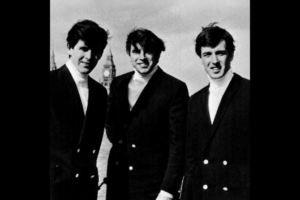
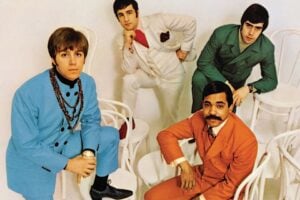
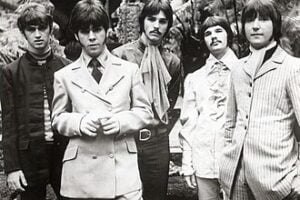
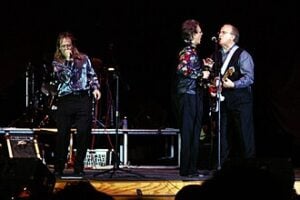
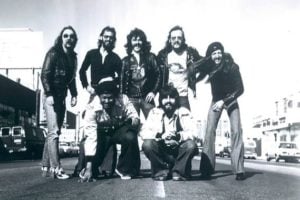






Two terrific songs of the exact same title, but totally different – Chicago’s “Now More Than Ever” from their sophomore album “Chicago” from 1970, and John Mellencamp’s “Now More Than Ever” from his 1991 album “Whenever We Wanted”.
Also, a nod to my disco days, the Bee Gees “More Than A Woman” from the “Saturday Night Fever” l.p.