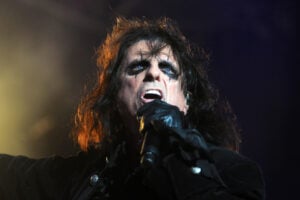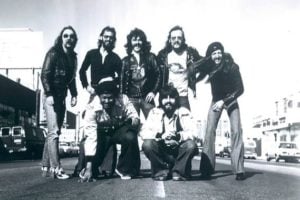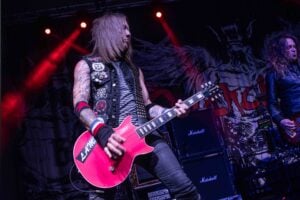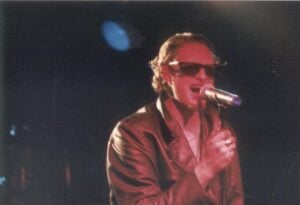
Feature Photo: Rex Aran Emrick, CC BY-SA 3.0 <https://creativecommons.org/licenses/by-sa/3.0>, via Wikimedia Commons
Layne Staley carried a voice that sounded wounded, powerful, haunted, and deeply human all at once, and that voice became one of the defining sounds of the Seattle rock explosion of the 1990s. He was born Layne Rutherford Staley on August 22, 1967, in Bellevue, Washington, and was raised primarily in the Seattle area after his parents divorced when he was young. Music became an early part of his life, especially after he developed a fascination with hard rock and heavy metal bands, including Black Sabbath, Deep Purple, and Judas Priest. Before Alice in Chains existed, Staley played drums in several local groups before shifting his focus to singing. He eventually fronted a glam-influenced band called Sleze, which later evolved into Alice N’ Chains before transforming into Alice in Chains after guitarist Jerry Cantrell joined the lineup.
Alice in Chains officially formed in 1987 with Staley, Cantrell, bassist Mike Starr, and drummer Sean Kinney. The band quickly distinguished itself from many of Seattle’s contemporaries because of its darker lyrical themes, crushing guitar work, and the unmistakable vocal chemistry between Staley and Cantrell. Their debut album, Facelift, released in 1990, became the first grunge-era album to achieve gold certification, largely due to the success of “Man in the Box.” Staley’s voice immediately became central to the band’s identity, balancing aggression with vulnerability in a way that connected deeply with listeners. Songs such as “We Die Young,” “Sea of Sorrow,” and “Bleed the Freak” established Alice in Chains as one of the heaviest and most emotionally intense bands emerging from Seattle at the time.
The group’s commercial and artistic breakthrough exploded with Dirt in 1992, an album that became one of the defining hard rock records of the decade. Tracks including “Would?,” “Rooster,” “Them Bones,” “Angry Chair,” and “Down in a Hole” turned the band into international stars while also exposing the darkness that increasingly surrounded Staley’s personal life. Dirt eventually sold millions of copies and remains one of the most influential albums of the grunge era. Staley’s songwriting contributions, especially on “Angry Chair” and “Hate to Feel,” revealed deeply personal themes involving addiction, isolation, fear, and self-destruction. His performances carried an emotional realism that fans immediately recognized as authentic rather than theatrical.
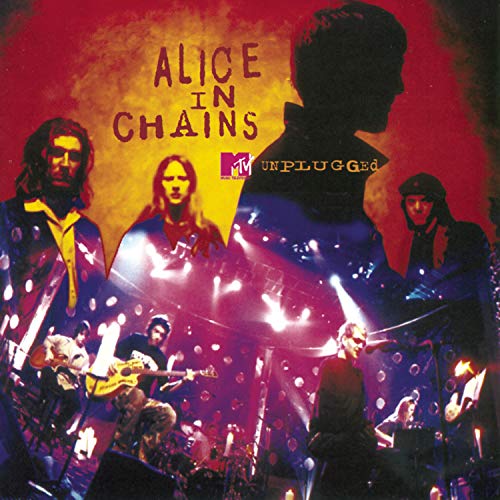
Alice in Chains continued building their legacy with the acoustic EP Jar of Flies in 1994, which became the first EP in music history to debut at number one on the Billboard 200. Songs such as “No Excuses,” “I Stay Away,” and “Nutshell” showcased a more restrained, melodic side of the band while maintaining the emotional heaviness that defined their music. The self-titled album Alice in Chains, released in 1995, produced songs including “Grind,” “Again,” and “Heaven Beside You.” By that point, Staley’s struggles with heroin addiction had become increasingly severe, limiting the band’s touring activity and public appearances. Despite those difficulties, the group’s 1996 performance for MTV Unplugged became one of the most celebrated live recordings of the era. Staley’s appearance and performance during that concert remain emotionally powerful for many fans because of the visible contrast between his physical condition and the strength of his voice.
Outside Alice in Chains, Staley also joined Mad Season, a Seattle supergroup formed in 1994 with Mike McCready of Pearl Jam, Barrett Martin of Screaming Trees, and John Baker Saunders. The band released Above in 1995, featuring songs such as “River of Deceit” and “Long Gone Day.” The project allowed Staley to explore more blues-influenced, introspective songwriting while collaborating with musicians outside the Alice in Chains framework. His work on Above further strengthened his reputation as one of the most emotionally compelling vocalists of his generation.
Throughout his career, Staley recorded three full studio albums with Alice in Chains, along with the EPs Sap and Jar of Flies, the live album Unplugged, and the Mad Season album Above. His biggest songs included “Man in the Box,” “Would?,” “Rooster,” “Them Bones,” “Down in a Hole,” “No Excuses,” and “Nutshell.” Alice in Chains received multiple Grammy nominations during Staley’s lifetime, including nominations connected to Dirt, Jar of Flies, and several individual songs. Fans connected deeply to Staley because his performances felt painfully honest. He never sounded detached from the material he was singing. The emotional weight inside the lyrics and vocals felt real, and that sincerity became central to the band’s legacy.
Outside of music, Staley quietly participated in several charity and benefit performances connected to the Seattle music community during the 1990s, including events supporting local musicians and community causes. Friends and collaborators frequently described him as shy, generous, and deeply caring despite the darkness surrounding his addiction struggles. His relationship with other Seattle musicians remained strong throughout his career, particularly with members of Pearl Jam, Screaming Trees, and the broader grunge community. After the death of his former fiancée, Demri Parrott, in 1996 from complications connected to drug addiction, Staley became even more isolated, appearing publicly far less often during the final years of his life.
Layne Staley died on April 5, 2002, in Seattle at the age of 34. Even decades later, his influence continues to reach new generations of listeners discovering Alice in Chains and Mad Season for the first time. His voice remains one of the most instantly recognizable sounds in rock music, capable of conveying pain, anger, sorrow, and beauty within the same line of a song. That emotional honesty is why fans continue returning to his music long after the era that first made him famous ended.
With Alice In Chains
Facelift (1990)

We Die Young EP (1990)

Live Facelift (1991)

Sap (1992)

Dirt (1992)

Jar of Flies (1994)

Alice in Chains (1995)

Unplugged (1996)
Nothing Safe: Best of the Box (1999)

Music Bank (1999)

Live (2000)

With Mad Season
Mad Season (1995)

With Class Of 99
The Faculty: Music from the Dimension Motion Picture (1999)
![The Faculty (Music From The Dimension Motion Picture) [Explicit]](https://m.media-amazon.com/images/I/51fQb8hEH0L._SL500_.jpg)
Check out similar articles on ClassicRockHistory.com
Complete List Of Alice In Chains Songs From A to Z
Alice In Chains Best Song On Each Of Their Studio Albums
Top 10 Alice In Chains Songs
Complete List Of Alice In Chains Band Members
Complete List Of Alice In Chains Albums And Discography
Alice In Chains Albums Ranked
Classic Rock Bands List And Directory
Artists’ Interviews Directory At ClassicRockHistory.com
Complete List Of Layne Staley Bands article published on ClassicRockHistory.com© 2026
Classicrockhistory.com claims ownership of all its original content and Intellectual property under United States Copyright laws and those of all other foreign countries. No one person, business, or organization is allowed to republish any of our original content anywhere on the web or in print without our permission. All photos used are either public domain Creative Commons photos or licensed officially from Shutterstock under license with ClassicRockHistory.com. All photo credits have been placed at the end of the article. Album Cover Photos are affiliate links and the property of Amazon and are stored on the Amazon server. Any theft of our content will be met with swift legal action against the infringing websites.