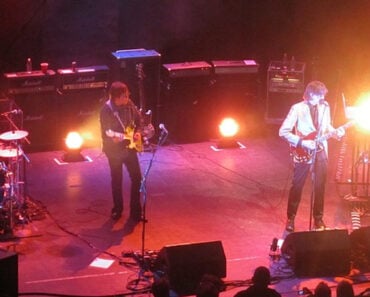
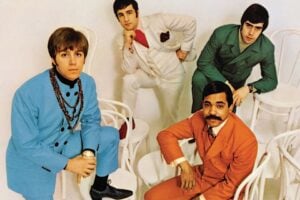
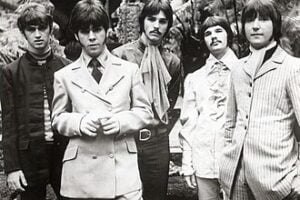
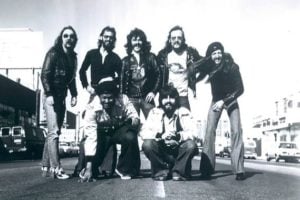
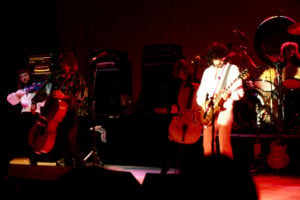
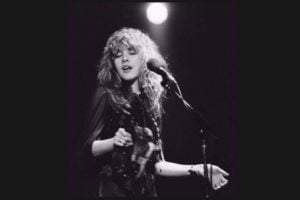
Feature Photo: Lynn Goldsmith; Distributed by Warner Bros. Records, Public domain, via Wikimedia Commons
Do you remember the first time you heard the song “Rock Lobster,” especially if you were around when it first was released? When singers try to mimic the sounds of lobsters and they do it in a punk New Wave manner, it definitely turns heads. This was one of the most unique bands to come out of the late 1970s rock and roll new wave movement.
There has never been another band like them. They remain one of my all-time favorites.
The B-52s formed after Cindy Wilson, Ricky Wilson, Kate Pierson, Keith Strickland, and Fred Schneider held an impromptu jam session after sharing drinks at a Chinese restaurant in Athens, Georgia, in October 1976. The band played its first concert with Ricky Wilson on guitar at a Valentine’s Day house party for friends on North Milledge Avenue in Athens on February 14, 1977.
The B-52s have released a total of seven studio albums: The B-52’s (1979), Wild Planet (1980), Whammy! (1983), Bouncing Off the Satellites (1986), Cosmic Thing (1989), Good Stuff (1992), and Funplex (2008). The B-52s achieved significant chart success, particularly with their fifth studio album, Cosmic Thing, which reached number four on the Billboard 200.
They have received three Grammy nominations: for Best Pop Performance by a Duo or Group with Vocal in 1990 and 1991, and Best Alternative Music Album in 1993 for Good Stuff.
The B-52s performed the last concert of their farewell tour, “The Final Tour Ever on Planet Earth,” in Athens on January 10, 2023. The band has sold over 20 million albums worldwide and went on to perform select concerts and Las Vegas residencies after the farewell tour. They joined Devo on the Cosmic De-Evolution Tour in 2025 and returned for concerts in London and Manchester in June 2026, demonstrating that they were not done playing together.
Fred Schneider
Fred Schneider (vocals, percussion) joined the B-52s as a founding member in 1976 and remains with the band today. Schneider’s distinctive vocal style, described as sprechgesang, contrasted with the melodic harmonies of his female bandmates and became a trademark of the group’s sound.
Throughout the band’s seven studio albums, Schneider provided lead vocals on many of their most memorable tracks, including the spoken-word segments in “Rock Lobster” and his characteristic vocal delivery on songs like “Love Shack” and “Private Idaho.”
Schneider’s contributions have been significant across the band’s catalog. On their 1979 debut album, he provided his unmistakable vocals on the breakthrough hit “Rock Lobster” and other tracks. His vocal work continued to define the band’s sound on Wild Planet (1980), including “Private Idaho” and “Strobe Light,” while Cindy Wilson took the lead on “Give Me Back My Man.”
On Whammy! (1983), Schneider’s vocals appeared prominently, and he continued this pattern through Bouncing Off the Satellites (1986), an album overshadowed by Ricky Wilson’s death during its creation.
Outside the B-52s, Schneider pursued solo work that showcased his unique artistic vision. His 1984 album Fred Schneider and the Shake Society featured songs including “Monster,” “Summer in Hell,” “I’m Gonna Haunt You,” and “Boonga (The New Jersey Caveman).” The album was repackaged and re-released in 1991 under the title Fred Schneider, and “Monster” became his first Hot 100 single, peaking at number 85.
He followed it with Just Fred (1996), a solo album produced by Steve Albini.
Schneider’s career highlights beyond the band include various television and film appearances. He and Kate Pierson recorded vocals for a version of the theme song for the Nickelodeon cartoon Rocko’s Modern Life. The vocalist has remained a constant presence through the band’s lineup changes, continuing to perform with Cindy Wilson and Pierson at select concerts and on the group’s 2025 and 2026 dates.
Kate Pierson
Catherine Elizabeth Pierson (born April 27, 1948) is an American singer, lyricist, and founding member of the B-52s. She plays guitar, bass and various keyboard instruments. Pierson joined the band as a founding member in 1976 and continues with the group today.
In the early years, as well as being a vocalist, Pierson was the main keyboard player and performed on a keyboard bass during live shows and on many of the band’s recordings, taking on a role usually filled by a bass guitar player, which differentiated the band from their contemporaries.
Pierson’s distinctive vocal range and keyboard skills were central to every B-52s album. On their debut album The B-52s (1979), her vocals on “Planet Claire” and harmonies throughout the record helped establish the band’s signature sound. She continued as a primary vocalist and keyboardist on Wild Planet (1980), contributing to hits like “Private Idaho.”
On Whammy! (1983), Pierson switched to a mainly vocal role in the studio, but remained behind the keyboards on tour. Her contributions were essential to the band’s comeback album Cosmic Thing (1989), where her vocals on “Love Shack” and “Roam” helped propel the band to mainstream success.
Pierson’s career outside the B-52s has been extensive and varied. She collaborated with artists including the Ramones, Iggy Pop, and R.E.M. Around the time of Cosmic Thing’s breakthrough, Pierson became an in-demand duet partner, joining Iggy Pop on his Top 40 hit “Candy” and fellow Athens musicians R.E.M. on their Top 10 single “Shiny Happy People.” She also appeared with Cindy Wilson and Debbie Harry on the Ramones song “Chop Suey,” subsequently issued on expanded editions of Pleasant Dreams.
Her solo career began in earnest decades after the band’s formation. In February 2015, Pierson released her first solo album, Guitars and Microphones, featuring material co-written by Sia. Although she had written songs on her own since she was a teenager, Pierson delayed making a full solo album partly out of loyalty to her bandmates.
A 1999 stint in the international project NiNa, featuring musicians from Japan’s the Plastics and art-rock bassist Mick Karn, had opened another creative direction for her.
Pierson’s entrepreneurial ventures include hospitality businesses. Pierson and Monica Coleman developed Kate’s Lazy Meadow motel complex in Mount Tremper, New York, in 2003. They also established Kate’s Lazy Cabin in nearby Lake Hill, New York, Kate’s Lazy Desert in Landers, California, and Kate’s Lazy Cape on Cape Cod, Massachusetts.
Pierson released her second solo album, Radios & Rainbows, in September 2024, continuing to explore her individual artistic vision while remaining committed to the B-52s.
Keith Strickland
Julian Keith Strickland (born October 26, 1953) is an American singer-songwriter, composer, musician, multi-instrumentalist, and one of the founding members of the B-52s. Strickland joined as a founding member in 1976 and remains with the band, though he retired from touring in 2012. Originally the band’s drummer, Strickland switched to guitar after the death of guitarist Ricky Wilson in 1985.
Strickland’s role evolved significantly across the band’s albums. As the original drummer, he supplied the rhythmic foundation for The B-52’s (1979) and Wild Planet (1980), while synthesizers and drum machines assumed an increasingly important role on Whammy! (1983). According to Kate Pierson, Strickland wanted to move away from drumming.
He and Ricky Wilson handled much of the instrumental work on Whammy!, with the other members providing vocals. Strickland and Wilson were also deeply involved in the music for Bouncing Off the Satellites (1986).
Strickland’s guitar work became central to the band’s most successful period. On Cosmic Thing (1989), his guitar arrangements helped create the band’s biggest hits, including “Love Shack” and “Roam.” He continued as the band’s primary guitarist and composer through Good Stuff (1992) and Funplex (2008). Strickland also plays keyboards and bass guitar on many of the B-52s recordings, and has occasionally provided backing vocals.
In December 2012, Strickland announced that he would retire from touring with the B-52s, although he would remain a member. Fred Schneider said the band had known about the decision for some time.
“We had known about Keith’s decision for a while but we just didn’t want to think about it. Keith will probably still be available for special shows but he wanted to get off the road. Keith will always be able to work with us whenever he wants. He’s a best friend.”
Greg Suran subsequently took over the band’s live guitar duties. Strickland has continued pursuing musical composition, including instrumental electronic music.
Outside music, Strickland publicly came out as gay in 1992 and married Mark Hayda in 1996, becoming an important figure in LGBTQ+ representation in rock. He also attended high school with actress Kim Basinger, a connection to another prominent figure from Athens, Georgia. Although he left regular touring, his songwriting and recordings remain central to the band’s history.
Cindy Wilson
Cindy Wilson was a founding member of the B-52s in 1976, serving as one of the band’s primary vocalists and contributing percussion. She temporarily left the band from 1990 to 1996 to focus on family life, then returned and continues with the group today. Wilson’s distinctive vocal style, combined with Kate Pierson’s harmonies, created one of the most recognizable vocal sounds in new wave music.
Wilson contributed vocals to all of the band’s major albums and hits during her original tenure. Her voice was prominent on The B-52’s (1979), including “Rock Lobster” and “Dance This Mess Around.” She remained a primary vocalist through Wild Planet (1980), Whammy! (1983), and Bouncing Off the Satellites (1986).
The latter album was particularly poignant because it was recorded while her brother Ricky was seriously ill, something he largely kept private from his bandmates. After the success of Cosmic Thing (1989), Cindy stepped away from the band in 1990 to focus on her family.
Wilson returned to the group during the 1990s and contributed new vocals to Time Capsule: Songs for a Future Generation (1998) and the studio album Funplex (2008). She was absent from the 1992 studio album Good Stuff, which was recorded during her break from the band. Her return restored the classic vocal interplay with Kate Pierson and Fred Schneider and contributed to the band’s continuing live success.
Like her bandmate Kate Pierson, Wilson eventually pursued solo work that showcased an individual musical vision apart from the B-52s. She released the EPs Sunrise and Supernatural, followed by her first solo album, Change, in 2017 and her second album, Realms, in 2023. She later released the Second Sight EP in 2025.
Wilson’s temporary departure and subsequent return demonstrated the band’s resilience and her ability to balance family life with professional commitments. Her career highlights include helping shape one of the most influential bands in new wave and alternative music history, with worldwide album sales exceeding 20 million.
Ricky Wilson
Ricky Wilson, the founding lead guitarist responsible for much of the band’s unique vision, died from AIDS-related illness on October 12, 1985, at age 32. Wilson had been a founding member of the B-52s since 1976, serving as their primary guitarist and a key creative force. His innovative guitar style, including unusual open tunings and missing strings, became a defining characteristic of their sound.
Wilson’s guitar work was central to the band’s first four studio albums. On The B-52’s (1979), his distinctive style powered songs such as “Rock Lobster” and “Planet Claire,” helping establish the group’s unique sonic identity. His contributions continued on Wild Planet (1980), where “Private Idaho” featured his characteristic percussive technique.
On Whammy! (1983), Wilson and Keith Strickland handled much of the instrumental recording, making Wilson’s guitar work even more prominent. His final recording sessions were for Bouncing Off the Satellites (1986), completed before his death.
In an interview, fellow member Kate Pierson stated that Wilson kept his illness secret because he “did not want anyone to worry about him or fuss about him.” Tragically, he died on October 12, 1985, leaving the other members devastated and unsure whether they could continue.
“He really had a vision…,” said his sister Cindy Wilson. “He was one of the strongest elements of the B-52s from the beginning.” His passing came after the recording sessions for Bouncing Off the Satellites, which was released in 1986.
Wilson’s influence on the band’s sound cannot be overstated. His open-tuned guitar style was so distinctive that when Keith Strickland took over guitar duties, he had to learn Wilson’s specific approach to maintain the band’s sound. Wilson had no significant solo career or projects outside the B-52s, as his entire professional focus was devoted to the band from its formation until his death.
His legacy lives on through the band’s continued use of his innovative guitar techniques and the lasting impact of his contributions to their most foundational recordings.
Tracy Wormworth
Tracy Wormworth has served as the touring bass player for the B-52s from 1992 to the present. She joined the band’s touring lineup during their comeback period following Ricky Wilson’s death and Keith Strickland’s transition from drums to guitar. As a touring member rather than a core band member, Wormworth provides the bass foundation for the band’s live performances while the original members focus on their primary instruments and vocals.
Wormworth’s tenure spans multiple significant periods in B-52s history. She has been part of the touring band for all major tours supporting Good Stuff (1992), various greatest hits tours, the Funplex (2008) tour, and their recent farewell tour that concluded in Athens, Georgia in 2023. Her bass playing has been essential to recreating the band’s classic sound in live settings, particularly the keyboard bass parts originally played by Kate Pierson.
Outside the B-52s, Wormworth has maintained an active career as a session musician and touring bassist. She has worked with a range of artists and recording projects beyond her B-52s commitments. She also co-wrote “Dream On” with Kate Pierson, guitarist and keyboardist Ken Maiuri, and drummer Sterling Campbell.
The song appears on Pierson’s solo album Radios & Rainbows, illustrating how members of the extended touring ensemble have collaborated creatively beyond concerts.
Her role as a long-term touring member represents the band’s evolution from their original five-piece formation to their current model of core members supported by skilled touring musicians. Wormworth’s consistency over three decades has provided stability as the band’s membership and roles have shifted, particularly with Keith Strickland’s retirement from touring in 2012.
Sterling Campbell
Sterling Campbell has served as the B-52s’ touring drummer across two periods, beginning in 1992 and returning in 2007 after several years away. He joined after Keith Strickland’s switch from drums to guitar following Ricky Wilson’s death. Campbell’s drumming has been integral to the band’s live sound during decades of touring.
Campbell’s first period with the band in the 1990s coincided with tours supporting Good Stuff and various compilation releases. His drumming style complemented the existing catalog while adapting to the band’s evolving sound. After time away, he returned for the Funplex era in 2007 and remained a central touring drummer through the farewell tour and subsequent concerts.
Outside the B-52s, Campbell has maintained an extensive career as one of the music industry’s most sought-after session and touring drummers. His resume includes work with major artists such as David Bowie, where he served as Bowie’s drummer for significant tours and recording sessions. He has also worked with Duran Duran, Soul Asylum, and numerous other prominent acts, establishing himself as a versatile and reliable musician capable of adapting to different musical styles.
Campbell also joined bassist Tracy Wormworth and guitarist and keyboardist Ken Maiuri as a co-writer of “Dream On” for Kate Pierson’s solo project. That collaboration demonstrates his contributions to the extended B-52s musical family beyond touring duties. He also played drums on Cindy Wilson’s 2023 solo album Realms, further demonstrating his continuing connection with his bandmates.
Greg Suran
Greg Suran joined the B-52s as touring guitarist at the end of 2012 and became their regular live guitarist in 2013, taking over the stage role of Keith Strickland after Strickland retired from touring. Suran stepped into the challenging position of recreating both Strickland’s guitar work and the earlier innovative guitar style established by Ricky Wilson.
Suran’s tenure began during a transitional period for the band as they adapted to performing without one of their founding members on stage. His guitar work has been featured on tours supporting the band’s catalog spanning their entire career, from early hits like “Rock Lobster” to later successes like “Love Shack.” He has had to master the distinctive open-tuning guitar style that was central to the B-52s’ sound.
Veteran studio and touring guitarist Greg Suran stepped into the lineup for a New Year’s Eve performance following Strickland’s retirement. Schneider was impressed with Suran’s preparation and ability to recreate the band’s distinctive guitar sound.
“It’s going to sound a little different,” Schneider said. “I mean, you can’t replace Keith or Ricky, especially with all the years Keith wrote and played his music and perfected it the way he did. But we hired Greg and he sounds really good. We rehearsed him in New York and he pulled it off. He knew the material inside and out. It still sounds like The B-52’s.”
Suran’s role represents the band’s evolution into its current form, where original members are supported by skilled touring musicians who help maintain the integrity of their classic sound. His guitar work has been essential to the band’s continued touring success, including their farewell tour and Las Vegas residency performances.
While specific details about his career outside the B-52s are not extensively documented in available sources, his ability to seamlessly integrate into such an iconic band demonstrates significant musical skills and adaptability.
Ken Maiuri
Ken Maiuri joined the B-52s as a touring member in 2016, serving as keyboardist and guitarist. His role became particularly important as the band continued touring with a reduced core member presence on stage, especially after Keith Strickland’s retirement from touring in 2012. Maiuri’s contributions help recreate the layered keyboard textures that have always been central to the B-52s’ sound.
As a multi-instrumentalist, Maiuri provides both keyboard and guitar parts that support Kate Pierson’s vocals and primary keyboard work while filling in instrumental gaps left by the reduced core member touring lineup. His work has been featured in the band’s recent touring activities, including their farewell tour and Las Vegas residency performances. The complexity of the B-52s’ arrangements requires skilled musicians who can handle multiple instrumental parts, making Maiuri’s versatility valuable to the band’s live presentations.
Maiuri also contributed to Kate Pierson’s solo music, co-writing “Dream On” with Pierson, bassist Tracy Wormworth, and drummer Sterling Campbell. This collaboration demonstrates Maiuri’s integration into the extended B-52s musical community and his contributions as a performer and creative participant. His role in developing new material shows that the touring musicians have also become collaborators rather than simply recreating established songs.
Maiuri represents the current generation of touring musicians who help legacy acts maintain their sound while adapting to changing circumstances. His ability to contribute both instrumentally and creatively suggests a deep understanding of the B-52s’ musical approach and aesthetic. While specific details about his career outside the B-52s are not extensively documented, his collaborative role indicates significant musical experience and compatibility with the band’s unique style.
Pat Irwin
Pat Irwin served as keyboardist and guitarist for the B-52s from 1989-2007, spanning nearly two decades as a crucial touring member. He joined during the band’s most commercially successful period, contributing to tours supporting Cosmic Thing, Good Stuff, and various compilation releases. Irwin’s tenure represents the longest-serving touring musician in the band’s history.
Irwin’s keyboard and guitar work helped recreate the band’s classic sound during live performances while supporting the core members’ primary roles. His contributions were particularly important during the Cosmic Thing era, when the band was experiencing their greatest mainstream success with hits like “Love Shack” and “Roam.” His multi-instrumental abilities allowed the band to present full arrangements of their complex catalog in live settings.
Outside the B-52s, Irwin has maintained an active career in music that demonstrates his versatility beyond his touring member role. He has worked as a composer, particularly in television and film scoring. His experience includes work on soundtracks and background music for various media projects, showcasing his ability to create music across different contexts and styles.
Irwin’s nearly two-decade tenure with the B-52s provided stability during multiple transitions in the band’s history. He performed through the period when Cindy Wilson left and returned, various lineup adjustments, and the band’s evolution from alternative darlings to mainstream icons and back to legacy act status. His long service demonstrates both his musical compatibility with the band and their satisfaction with his contributions to their live sound.
Zack Alford
Zack Alford served as the B-52s’ touring drummer during two separate periods: 1989-1992 and 2000-2007. He joined the band during their commercial peak, providing drums for tours supporting their breakthrough album Cosmic Thing. Alford’s drumming was essential during some of the band’s most high-profile performances and tours during their mainstream success period.
Alford’s first tenure (1989-1992) coincided with the band’s most successful commercial period. His drumming supported live performances of hits like “Love Shack” and “Roam” as the band transitioned from cult favorites to mainstream stars. After a period away from the band, he returned (2000-2007) for tours supporting various compilations and the lead-up to their comeback album Funplex.
Outside the B-52s, Alford has established himself as a highly respected session and touring drummer. His resume includes work with major artists such as Bruce Springsteen, for whom he served as drummer for significant tours and recordings. He has also worked with David Bowie, Sheryl Crow, and numerous other prominent musicians, demonstrating his versatility across different musical styles and his reputation as a reliable, skilled musician.
Alford’s two separate periods with the B-52s suggest both his compatibility with their musical approach and the band’s satisfaction with his contributions. His experience with major acts like Springsteen brought professional expertise to the B-52s during their period of greatest visibility and commercial pressure. His drumming style adapted well to the band’s danceable rhythms while providing the solid foundation necessary for their energetic live performances.
Sara Lee
Sara Lee served as bass player for the B-52s during two separate touring periods: 1989-1992 and 1998-2002. She joined the band during their commercial breakthrough period, providing bass for tours supporting Cosmic Thing and Good Stuff. Her bass playing was integral to recreating the band’s studio sound in live settings during some of their most important touring years.
Lee’s first period with the band coincided with their greatest mainstream success, when songs like “Love Shack” and “Roam” required solid bass foundations for arena-sized audiences. Her playing helped translate Kate Pierson’s keyboard bass parts from the studio recordings into powerful live arrangements. She returned for a second period that included various touring activities and compilation album support.
Outside the B-52s, Lee has maintained a significant career as a session bassist and member of other notable bands. She was a member of Gang of Four, the influential post-punk band, where her bass playing was central to their sound. Her work with Gang of Four demonstrated her ability to handle complex, rhythm-driven material that required both technical skill and musical sensitivity.
Lee’s two periods with the B-52s suggest her effectiveness as a touring musician and the band’s appreciation for her contributions. Her experience with Gang of Four brought credibility and musical sophistication to the B-52s’ touring lineup during their period of greatest commercial visibility. Her bass style proved adaptable to the band’s evolution from underground favorites to mainstream icons while maintaining the integrity of their distinctive sound.
Julee Cruise
Julee Cruise served as a touring vocalist and percussionist for the B-52s from 1992-1994. She joined during the Good Stuff touring period, contributing additional vocals and percussion during live performances. Her tenure was relatively brief but occurred during an important transitional period for the band as they adapted to their post-Cosmic Thing identity.
Cruise’s contributions helped fill out the band’s vocal arrangements during live performances, supporting Kate Pierson and Fred Schneider at a time when Cindy Wilson was taking a break from the group. Her voice supplied a contrasting, ethereal quality, while she also contributed percussion. Her role was especially important during the Good Stuff era as the band explored different musical directions and new vocal textures.
Outside the B-52s, Cruise had established herself as a distinctive artist before joining the band’s touring lineup. She was best known for her work with composer Angelo Badalamenti and director David Lynch, particularly her haunting theme song “Falling” for the television series Twin Peaks. Her ethereal vocal style and association with Lynch’s surreal aesthetic brought a different artistic sensibility to her collaboration with the B-52s.
Cruise’s career highlights include multiple collaborations with Lynch and Badalamenti that helped define the atmospheric sound of Twin Peaks and related projects. Her distinctive vocal style, characterized by dreamy, floating melodies, made her a unique addition to the B-52s’ touring lineup. Julee Cruise died in 2022 at age 65, leaving a lasting impact on alternative music and television soundtrack composition.
Check out similar articles on ClassicRockHistory.com Just click on any of the links below……
Complete List Of The B-52’s Albums And Songs
The B-52’s Albums Ranked
Top 10 B-52’s Songs
Read More: Artists’ Interviews Directory At ClassicRockHistory.com
Read More: Classic Rock Bands List And Directory
Updated October 12, 2026
Complete List Of The B-52s Band Members article published on ClassicRockHistory.com © 2026