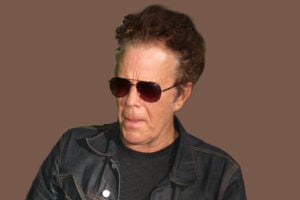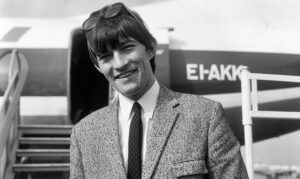
Feature Photo: Joop van Bilsen for Anefo, CC0, via Wikimedia Commons
Born David Holgate Grundy on February 6, 1939, in Woodhouse, Sheffield, Yorkshire, Dave Berry grew up with music in the house because his father, a bricklayer by trade, was also a professional jazz drummer and taught him the instrument. Berry attended Woodhouse County Council School, left at 16, and worked as a welder before moving into music full time. His first group was the Cruisers, and his admiration for Chuck Berry led him to adopt the surname Berry. That decision helped define the public identity he carried into the 1960s when Decca signed him and the Cruisers after he was spotted performing at a ballroom in Doncaster.
The first national breakthrough arrived in 1963 when his debut Decca single, “Memphis, Tennessee,” reached Number 19 in the United Kingdom. He moved higher the following year with “The Crying Game,” then climbed further in 1965 with “Little Things,” a song that reached Number 5 in the UK and Number 1 in the Netherlands. Another major record followed that same year with “This Strange Effect,” written by Ray Davies, which became a Number 1 hit for him in both the Netherlands and Belgium. In 1966, “Mama” added another notable success to his catalog. Those songs remain the core of his chart legacy, with “Memphis, Tennessee,” “The Crying Game,” “Little Things,” “This Strange Effect,” and “Mama” standing as his best remembered hits.
His music drew from R&B, rock and roll, and pop balladry, but his public image mattered just as much as the records. Berry’s all-black stage wardrobe and restrained, theatrical presentation gave him a style that stood apart from many of his British contemporaries. He often performed partially hidden behind the raised collar of his leather jacket or behind the microphone lead, turning concealment into a stage signature. That visual approach, along with the influence of Elvis Presley and Gene Vincent, later helped inspire Alvin Stardust. In Britain, he became a successful teen idol, but his popularity also extended strongly into continental Europe, especially the Netherlands and Belgium, where he remained a celebrity well beyond his first run of hits.
The musicians around him also played a key role. His early backing band, the Cruisers, first included John Fleet on bass and piano, Roy Barber on rhythm guitar, Frank Miles on lead guitar, and Kenny Slade on drums. Around the time of “The Crying Game,” Berry shifted to a second generation of Cruisers, including Frank White, Johnny Riley, and Pete Cliff, with White later replaced by Roy Ledger. He also worked regularly with major session players such as Jimmy Page, John Paul Jones, Big Jim Sullivan, and Bobby Graham. That combination of local band loyalty and top session talent helped give his singles both consistency and polish during the height of the British beat era.
His studio album catalog is smaller than his reputation as a singles artist might suggest, but it still stretches across decades. Berry released his first studio album, Hostage to the Beat, in 1987, his first in 19 years. He later added Memphis…In The Meantime in 2004, which remains his sixth and latest studio album. Between those records, he continued issuing singles through the 1970s and into the 1980s, including “Change Our Minds,” “Chaplin House,” “Moving On (Turning Around),” “I Can Make You Cry,” “Night of the Fly,” “Anyone Else but You for Me,” and a cover of the Rolling Stones’ “Out of Time.” Though his later recordings did not match the chart impact of the 1960s hits, they showed that he never fully stepped away from recording.
Berry’s name returned to wider public attention in later decades through film, television advertising, live work, and archival releases. “The Crying Game” reached a new international audience in 1992 when it was used as the theme song of the film The Crying Game. “Little Things” later found another audience when it was used in a British television advertising campaign for Andrex in 2010. In 1995, he regained visibility as a surprise success at the annual Alexis Korner Tribute. In 2009, RPM Records issued the double CD anthology This Strange Effect (The Decca Sessions 1963–1966), and in 2011 another double compilation, Picture Me Gone – The Decca Sessions 1966–1974, followed. He was still touring as of 2023 and remained a recurring act on the Sixties Gold tour.
Outside music, Berry built a second business life in antiques. He has run an antique business specializing mainly in small furniture and rock memorabilia, and he opened two antique shops, one in Sheffield and another near his home in Derbyshire. His personal life has also remained stable for decades. He lives in Dronfield, Derbyshire, with his wife Marthy, who is from Amsterdam, and they have been married for more than 50 years. That Dutch connection fits naturally with the strong support he received in the Netherlands throughout his career.
He did not accumulate a long list of formal awards as some later stars did, but the honors he received were directly tied to his strongest markets. In the Netherlands, Radio Veronica awarded him the title of best-selling pop single of all time, reflecting the extraordinary success of “This Strange Effect” there. Dave Berry remains loved because his voice was distinctive, his image was memorable, and his records carried both vulnerability and style. He built a career from strong singles, an unusual stage presence, and a lasting bond with audiences in Britain and continental Europe, especially in the Netherlands and Belgium, where his popularity never fully disappeared.
# 10 – Stranger
On many of our top 10 song lists, we tend to open up with the artist’s first hit single, but we’re doing it a little differently with this one. Dave Berry’s “Stranger” would be the last song he ever released as a single to chart on the UK music charts. “Stranger” was released in 1967 and was a minor hit, peaking at number 57.
# 9 – One Heart Between Two
Dave Barry’s ” One Heart Between Two ” was his fifth single release. The song was released in 1964 and just missed the UK Top 40, peaking at number 41. This wonderful slow ballad was his lowest charting single release since he began his career. But he turned it around pretty quickly as his next single release “Little Things” went all the way to number five.
# 8 – I’m Gonna Take You There
Dave Berry’s “I’m Gonna Take You There” was his last single release of 1965. The song was written by Graham Gouldman, who would later form the band 10cc. Of course, Graham Gouldman had also written hits for some of the most popular 1960s acts such as the Yardbirds and The Hollies.
# 7 – My Baby Left Me
If you recognize that guitar sound, you’re probably a big-time Led Zeppelin fan. Yes, that’s the legendary Jimmy Page on guitar. Dave Berry’s version of “My Baby Left Me” carried Arthur Crudup’s 1950 rhythm and blues song into the British charts in 1964, giving Berry a Number 37 hit on the UK Singles Chart. By the time Berry recorded it, the song already had a strong performance history through versions by Elvis Presley, Wanda Jackson, and others.
# 6 – This Strange Effect
Dave Berry’s “This Strange Effect” gave him one of his strongest continental European successes when Decca released the single on July 2, 1965, with “Now” on the B side; it later appeared in the United States in September 1965 on London. Written by Ray Davies and produced by Mike Smith, the 2:28 recording became a major hit in the Netherlands, reaching Number 1 on both the Dutch Top 40 and the Dutch Single Top 100, while also reaching Number 4 in Belgium’s Flanders chart, Number 33 in Belgium’s Wallonia chart, and Number 37 on the UK Singles Chart.
# 5 – Mama
Dave Berry’s version of “Mama” brought a polished pop treatment to Mark Charron’s song when Decca released it on June 17, 1966, with “Walk, Walk, Talk, Talk” on the B side. Recorded at Decca Studios in London, produced by Mike Smith, and running 2:46, the single was featured on the album The Special Sound of Dave Berry. Berry also performed the song in the film The Ghost Goes Gear. On the charts, the record became his final top ten UK hit, reaching Number 5 on the Record Retailer Top 50.
# 4 – Baby It’s You
Dave Berry covered this classic song written by Burt Bacharach and Luther Dixon when he released it as his third single in 1964. It peaked at number 24 on the UK music charts. The song was made famous by The Shirelles and has been covered by countless artists over the years. Such a great song.
# 3 – Memphis, Tennessee
Most of us know this one as a classic Chuck Berry tune. One of my favorite versions of this song was George Thorogood’s cover in the 1980s. However, for Dave Barry, this would become his first hit single when he recorded it with his group, the Cruisers, in 1963. It would become a top 20 hit in the United Kingdom peaking at number 19.
# 2 – The Crying Game
Dave Berry’s “The Crying Game” turned a Geoff Stephens composition into his first top ten UK hit when Decca released the single on July 17, 1964, with “Don’t Gimme No Lip Child” on the B side. The track featured Dave Berry on vocals, Big Jim Sullivan on electric guitar, Vic Flick on acoustic guitar, Reg Guest on piano, Alan Weighell on bass, and Bobby Graham on drums. The song was also included on Berry’s self-titled debut album, and its distinctive guitar sound came from Sullivan’s use of a DeArmond wah-wah pedal, a touch that has been identified as the first appearance of that effect on a UK hit. On the charts, the record reached Number 5 on the Record Retailer Top 50, Number 4 on the Melody Maker Top 50, Number 5 on the Disc Top 30, Number 6 on the New Musical Express Top 30, Number 7 in Ireland, and Number 73 in Australia.
# 1 – Little Things
We close out our Dave Berry songs list with his monster hit “Little Things.” The song was written by Bobby Goldsboro, who also released it as a single in 1965, where it reached number 13 on the US Billboard Hot 100. Dave Berry’s version reached number 5 in the United Kingdom when he recorded it in 1965.
Check out similar articles on ClassicRockHistory.com Just click on any of the links below……
Read More: Artists’ Interviews Directory At ClassicRockHistory.com
Read More: Classic Rock Bands List And Directory
Read More: 100 Essential Albums From The 1960s That Everyone Should Own
Top 10 Dave Berry Songs article published on ClassicRockHistory.com© 2026
Classicrockhistory.com claims ownership of all its original content and Intellectual property under United States Copyright laws and those of all other foreign countries. No one person, business, or organization is allowed to republish any of our original content anywhere on the web or in print without our permission. All photos used are either public domain Creative Commons photos or licensed officially from Shutterstock under license with ClassicRockHistory.com. All photo credits have been placed at the end of the article. Album Cover Photos are affiliate links and the property of Amazon and are stored on the Amazon server. Any theft of our content will be met with swift legal action against the infringing websites.