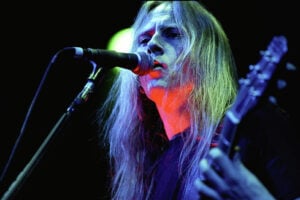
Feature Photo: Jean-Pierre Jeannin, CC BY-SA 2.0 <https://creativecommons.org/licenses/by-sa/2.0>, via Wikimedia Commons
Born on March 6, 1946, he grew up surrounded by intellectual and artistic influences that would later inform his unique approach to music. Before his rise to international fame, Gilmour was active in several local bands in the early 1960s, including Jokers Wild. His early work honed both his technical skill and his deep understanding of blues and jazz phrasing, which would become hallmarks of his guitar style. In December 1967, he was invited by Pink Floyd’s drummer Nick Mason to join the band, initially to support founding member Syd Barrett. By early 1968, Gilmour had officially become a full-time member, and his presence would forever alter the creative direction of Pink Floyd.
If you are reading this article on any other site besides ClassicRockHistory.com, then you are reading stolen work. The writers, editors, and publishers at ClassicRockHistory.com are the original creators of this article. Any website reposting this material without our consent is committing intellectual property theft.
Gilmour’s first major recording with Pink Floyd came with the album A Saucerful of Secrets in 1968, which featured both Barrett and Gilmour. Following Barrett’s departure, Gilmour assumed a central role in shaping the group’s sound, merging his lyrical guitar tone with Roger Waters’ conceptual vision and Richard Wright’s atmospheric keyboards. Through the 1970s, Gilmour’s musicianship and voice became defining elements of Pink Floyd’s identity. His guitar work on albums such as Meddle (1971), The Dark Side of the Moon (1973), and Wish You Were Here (1975) was deeply expressive, characterized by soaring bends, sustained notes, and a profound emotional resonance. The Dark Side of the Moon became one of the best-selling and most influential albums in history, while Gilmour’s composition and guitar work on “Shine On You Crazy Diamond” served as a powerful tribute to Syd Barrett.
As Pink Floyd continued to evolve, Gilmour’s role expanded beyond that of guitarist and vocalist. On Animals (1977) and The Wall (1979), he co-wrote some of the band’s most memorable material, including “Comfortably Numb,” which featured one of the most celebrated guitar solos ever recorded. His distinctive tone, achieved through his precise phrasing and mastery of effects, became a benchmark for countless guitarists around the world. After The Final Cut (1983), tensions within the band led to Roger Waters’ departure, leaving Gilmour to guide Pink Floyd forward. Under his leadership, the band released A Momentary Lapse of Reason in 1987 and The Division Bell in 1994, both of which achieved worldwide success and reaffirmed Pink Floyd’s status as one of rock’s most enduring acts.
Parallel to his work with Pink Floyd, Gilmour launched a solo career that reflected his personal musical vision. His debut solo album, David Gilmour, was released in 1978 and reached the Top 30 on the UK Albums Chart. His second album, About Face (1984), further demonstrated his skill as both a songwriter and producer. After a long period devoted primarily to Pink Floyd projects, Gilmour returned to his solo career with On an Island in 2006, an album that debuted at number one in the United Kingdom and showcased a reflective, mature sound enriched by his trademark guitar work. His 2015 release, Rattle That Lock, continued this trend.
# 10 – Welcome To The Machine
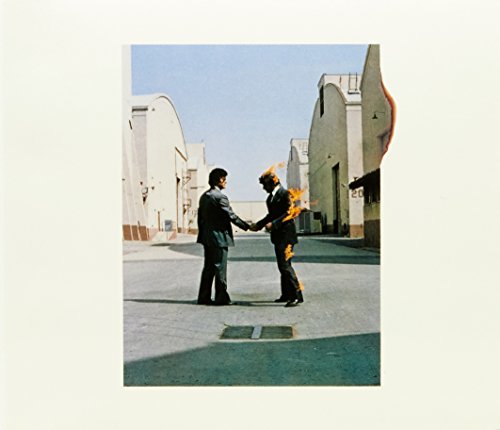
“Welcome to the Machine” was written by Roger Waters and recorded by Pink Floyd between February 25 and July 28, 1975, at Abbey Road Studios in London. Produced by the band and released on September 12, 1975, as the second track on Wish You Were Here, the piece blends synthesizers, acoustic guitars, and tape effects to create a mechanized soundscape. The recording features David Gilmour on six and twelve-string acoustic guitars and lead vocals, which is why we included the song on this list. It also features Roger Waters on bass guitar, and vocals, Richard Wright on Hammond organ, ARP String Ensemble, Minimoog, and EMS VCS 3, and Nick Mason on timpani and cymbals.
Built around a pulsing EMS VCS 3 tone processed with one-repeat echo, the track segued directly from “Shine On You Crazy Diamond” and closed side one of the original LP. A music video animated by Gerald Scarfe served as a visual backdrop during the band’s 1977 In the Flesh tour, which we called the Animals Tour back then. “Welcome to the Machine” became a staple of Pink Floyd’s live performances, appearing in concert tours from 1977 through 2018, often synchronized with the original animation and backing film.
Read More: A Look Back At Pink Floyd’s Wish You Were Here Album
# 9 – Breathe

“Breathe” was composed by David Gilmour and Richard Wright, with lyrics by Roger Waters, and captured by Pink Floyd between June 22, 1972 and January 27, 1973 at Abbey Road Studios, London. The track appears on the album The Dark Side of the Moon, released March 1, 1973 under the Harvest label. Personnel on the recording include Gilmour on electric guitar, pedal steel guitar, lead and backing vocals; Roger Waters on bass guitar; Richard Wright on Hammond organ and Fender Rhodes electric piano; and Nick Mason on drums. While not issued as a conventional single, “Breathe” has been performed live by the band in later years and appears as part of the combined track with “Speak to Me” in various re-issues.
Read More: Top 25 Pink Floyd Songs
# 8 – Fat Old Sun

“Fat Old Sun” was written and sung by David Gilmour and appears on Pink Floyd’s 1970 album Atom Heart Mother. Recording for the track took place at Abbey Road Studios in London from June 11 to June 13, 1970, with mixing completed on July 5. Gilmour played most of the instruments including acoustic and electric guitars, bass guitar, and drums, while Richard Wright contributed Hammond organ. The song opens with bell sounds at the beginning and the end, and employs a pastoral folk rock and psychedelic atmosphere. It was performed live by Pink Floyd during 1970-71 in an extended electric arrangement lasting up to fifteen minutes, and later adopted by Gilmour for his solo tours after 2006.
Read More: Complete List Of Pink Floyd Band Members
# 7 -What Do You Want from Me
“What Do You Want from Me” was recorded in 1993 at the Astoria studio in London and released on May 6 1994 as the second track on Pink Floyd’s album The Division Bell. Composed by David Gilmour, Richard Wright, and Polly Samson with Gilmour and Samson on lyrics, the track was produced by Bob Ezrin and David Gilmour. The recording features David Gilmour on guitars and lead vocals, Richard Wright on wah-wah Wurlitzer piano, Hammond organ, and backing vocals, Nick Mason on drums, with Jon Carin on synthesizers, Guy Pratt on bass guitar, and Sam Brown, Durga McBroom, Carol Kenyon, Jackie Sheridan, and Rebecca Leigh-White on backing vocals. A live version captured at Cinecittà Studios in Rome on September 21 1994 was released as a promotional single in Canada, reaching number 28 on the Canadian Top Singles chart.
Read More: 10 Pink Floyd Album Covers We Love
# 6 – Hey You
“How You Feel” was the early working title of Hey You, recorded by Pink Floyd in 1979 and released on their double album The Wall. The track features acoustic and electric guitars, bass, and drums with lead vocal parts handled by both David Gilmour and Roger Waters, and keyboards by Richard Wright. It opens with an arpeggiated acoustic guitar riff followed by fretless bass, Fender Rhodes piano and arrival of vocals. In its recorded form the piece conveys the voice of the isolated character “Pink” calling out from behind his metaphorical wall. The song was issued as the B-side to the “Comfortably Numb” single in 1980 and was omitted from the 1982 film version of The Wall for reasons of film length. The recording was produced by Bob Ezrin alongside Gilmour, Waters and Wright.
Read More: 10 Best Covers Of Pink Floyd Songs
# 5 – Goodbye Blue Sky

“Goodbye Blue Sky” was written by Roger Waters and recorded by Pink Floyd between April and November 1979 for their eleventh studio album The Wall. Produced by Bob Ezrin, David Gilmour, James Guthrie, and Roger Waters, the track was released in the UK on 30 November 1979 and in the US on 8 December 1979 under the Harvest and Columbia labels. The personnel on the recording include David Gilmour on lead vocals, acoustic guitars, bass, and synthesizers; Roger Waters on VCS3 synthesizer and vocals; Richard Wright on synthesizer; and Harry Waters (aged two) providing the child voice at the beginning of the track. The lyrics open with a skylark’s song followed by bomber sounds and reflect memories of aerial bombings during the Blitz, encapsulated in the lines “Did you see the frightened ones? Did you hear the falling bombs?” The song opens side two of The Wall.
If you are reading this article on any other site besides ClassicRockHistory.com, then you are reading stolen work. The writers, editors, and publishers at ClassicRockHistory.com are the original creators of this article. Any website reposting this material without our consent is committing intellectual property theft.
Read More: Top 100 Pink Floyd Songs
# 4 – Dogs

“Dogs” was written by David Gilmour and Roger Waters and appears on Pink Floyd’s 1977 album Animals. It was recorded at Britannia Row Studios in London during 1976 and produced by Pink Floyd themselves. The original live version of the piece was titled “You’ve Got to Be Crazy” and the studio take on Animals extends for over seventeen minutes. Its composition features Gilmour on guitar and vocals and Waters on bass guitar and vocals, along with Richard Wright on keyboards and Nick Mason on drums, all contributing to the full band production credit. During early live performances in 1974 the piece was faster and in a different key, and the studio album version integrates reworked lyrics and arrangement reflecting recordings made in 1976 before release.
Read More: Top 25 Pink Floyd Songs
# 3 – Money
“Money” was written by Roger Waters and recorded by Pink Floyd between June 6, 1972, and January 19, 1973 at EMI Studios, London. Produced by the band, the track opens side two of their 1973 album The Dark Side of the Moon and was released as a single on May 7, 1973. “Money” featured David Gilmour on guitars and lead vocals, Roger Waters on bass guitar and backing vocals, Richard Wright on keyboards, and Nick Mason on drums; saxophone by Dick Parry appears as a guest contribution. The single reached number 13 on the US Billboard Hot 100 and number 10 on the Cash Box Top 100.
Read More: Top 10 Pink Floyd Albums
# 2 – Us And Them
Whenever I hear this song, I’m always reminded of the band returning after a long wait at Madison Square Garden in 1977 and performing this one as the final encore. Recorded at Abbey Road Studios in London between June 1, 1972, and January 9, 1973, “Us and Them” stands as one of the most haunting compositions on The Dark Side of the Moon. Written by Richard Wright with lyrics by Roger Waters, the track features lead vocals by David Gilmour and harmonies by Wright. Pink Floyd produced the song themselves, blending Wright’s delicate piano lines with Gilmour’s expressive guitar and the ethereal use of a saxophone solo performed by Dick Parry. The song’s progression moves between subdued verses and powerful crescendos, anchored by Nick Mason’s precise drumming and Roger Waters’ measured bass. Released as a single in the United States on February 4, 1974, with “Time” as the B-side, the edited version ran 3 minutes and 15 seconds, while the full album version extended to 7 minutes and 49 seconds. It charted modestly, reaching number 72 on the Cash Box Top 100 and number 85 in Canada.
Read More:Ultimate Pink Floyd Page: Complete History, Songs, Albums & More
# 1 – Wish You Were Here
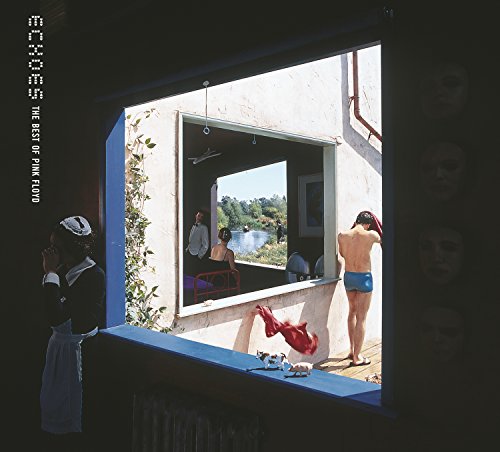
“Wish You Were Here” was written by David Gilmour and Roger Waters and recorded at Abbey Road Studios in London between January and July 1975. The song was produced by Pink Floyd members David Gilmour, Roger Waters, Richard Wright, and Nick Mason. Gilmour played a twelve-string acoustic guitar intro that was mixed to sound as if playing from a radio before the full band joined. The recording features David Gilmour on vocals and guitars, Roger Waters on bass guitar, Nick Mason on drums, and Richard Wright on keyboards. The song was released in 1975 as the title track from Pink Floyd’s ninth studio album Wish You Were Here. It also appeared on later compilations including A Collection of Great Dance Songs and Echoes: The Best of Pink Floyd.
Read More:Top 10 David Gilmour Pink Floyd Songs
Check out similar articles on ClassicRockHistory.com Just click on any of the links below……
10 Best Covers Of Pink Floyd Songs
Top 25 Pink Floyd Songs
10 Pink Floyd Album Covers We Love
Complete List Of Pink Floyd Band Members
Top 100 Pink Floyd Songs
Ultimate Pink Floyd Page: Complete History, Songs, Albums & More
Top 10 Syd Barrett Pink Floyd Songs
Top 10 Roger Waters Pink Floyd Songs
Top 10 David Gilmour Pink Floyd Songs
A Look Back At Pink Floyd’s Wish You Were Here Album
Complete List Of Pink Floyd Songs A-Z Plus Discography
Top 10 Pink Floyd Albums
Pink Floyd’s Live 8 Performance Proved Why They Should Have Never Broken Up
Best Pink Floyd Box Sets
Read More: Artists’ Interviews Directory At ClassicRockHistory.com
Read More: Classic Rock Bands List And Directory
Top 10 Pink Floyd Songs With David Gilmour On Lead Vocals article published on ClassicRockHistory.com© 2025
Classicrockhistory.com claims ownership of all its original content and Intellectual property under United States Copyright laws and those of all other foreign countries. No one person, business, or organization is allowed to re-publish any of our original content anywhere on the web or in print without our permission. All photos used are either public domain Creative Commons photos or licensed officially from Shutterstock under license with ClassicRockHistory.com. All photo credits have been placed at the end of the article. Album Cover Photos are affiliate links and the property of Amazon and are stored on the Amazon server. Any theft of our content will be met with swift legal action against the infringing websites.