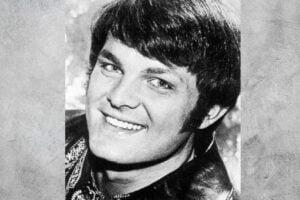
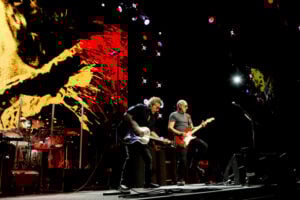
Feature Photo: Reprise Records, Public domain, via Wikimedia Commons
The Vogues formed in Pittsburgh, Pennsylvania, in the early 1960s, comprising Chuck Blasko, Hugh Geyer, Bill Burkette, and Don Miller. They began as a local vocal group performing at high school dances and regional venues, building a reputation for precise harmonies and a polished pop sound. Their early momentum came from consistent live performances rather than industry backing, and they gradually attracted attention beyond the Pittsburgh area through word of mouth and local popularity.
Their transition from a regional act to a nationally recognized group occurred after signing with Reprise Records in the mid-1960s. Their breakthrough arrived in 1965 with the release of “You’re the One,” a song written by Petula Clark and Tony Hatch. The single reached number four on the Billboard Hot 100, immediately establishing The Vogues as a major presence in American pop music. The success of the song set the tone for their identity, defined by smooth lead vocals supported by tightly arranged harmonies.
The Vogues followed their initial success with a string of hit singles that solidified their place on the charts. Songs such as “Five O’Clock World,” “Magic Town,” and “Turn Around, Look at Me” all reached the Top Ten on the Billboard Hot 100. “Five O’Clock World,” in particular, became one of their most enduring recordings, later gaining renewed exposure through film and television placements. These singles showcased the group’s ability to balance emotional sincerity with accessible pop songwriting during a period dominated by rapid changes in popular music.
During their most active chart years, The Vogues released multiple studio albums, including Meet the Vogues, The Vogues Sing the Good Old Songs and Other Hits, and Till. While albums were not the primary driver of their success, their singles consistently performed well, and their recordings became staples of mid 1960s American pop radio. Their sound remained distinct from heavier rock trends of the era, leaning instead toward melodic pop rooted in vocal harmony.
Although The Vogues did not accumulate major industry awards, their commercial success and longevity have secured their place in pop music history. They were frequent performers on television variety shows during the 1960s and became a reliable touring act. Over time, lineup changes occurred, but the group name continued through authorized versions that focused on preserving their original catalog and performance style. Their recordings have remained in rotation on oldies and classic pop formats for decades.
Outside of recording new music, The Vogues have remained active through touring and live performance, particularly on nostalgia and oldies circuits. Members of the group have participated in reunion appearances and special concerts celebrating 1960s pop music, helping preserve that era for newer audiences.
# 10 – Magic Town
We open our Vogues Songs list with the sensational track “Magic Town.” Everything we all loved about the Vogue is featured here in fresh colors and Cinemascope. Well, you know what I mean. This is big-sounding vocals that cut right through you. The chorus is spectacular. The song was released in 1966.
# 9 – No Not Much
Recorded during the sessions for the 1969 album Till, “No, Not Much” was The Vogues’ interpretation of a song written by Bob Yontz and originally recorded in 1951 by The Four Lads, whose version reached number two on the Billboard pop chart. The Vogues’ recording was produced by Dick Glasser and released on Reprise Records as an album track rather than as a commercial single, reflecting the group’s late 1960s shift toward reinterpretations of established pop standards. The album Till was recorded in 1968.
# 8 – Since I Don’t Have You
The Vogues recorded the song “Since I Don’t Have You” for their 1968 album Memories and later issued it as a single in December 1970 from The Vogues Sing the Good Old Songs and Other Hits, reaching number 8 on the Billboard Easy Listening chart. “Since I Don’t Have You” was first a 1958 single by the Skyliners, recorded in 1958 and released in December 1958 on Calico, reaching number 12 on the US Billboard Hot 100, number 3 on the Billboard R&B chart, and number 7 on the Cash Box Top 100, later generating multiple charting remakes, including Chuck Jackson’s 1964 version which reached number 47 on the Hot 100, Don McLean’s 1981 version which reached number 23 on the US Billboard Hot 100 and number 6 on the Adult Contemporary chart while peaking at number 2 on Canada’s Adult Contemporary chart, Art Garfunkel’s 1979 cover which reached number 38 on the UK singles chart and peaked at number 53 on the US Billboard Hot 100 and number 5 on the US Adult Contemporary chart, Ronnie Milsap’s 1991 version which reached number 6 on the US Billboard Hot Country Singles and Tracks chart, and Guns N’ Roses’ 1994 single from The Spaghetti Incident?, which reached number 69 on the US Billboard Hot 100 and made the UK top 10.
# 7 – Till
“Till” by The Vogues was released as a single in November of 1968 on Reprise Records with “I Will” as its B-side and was produced by Dick Glasser, appearing on the group’s 1969 album Till which was recorded in 1968, with the session overseen by Glasser for Reprise after the group had moved to that label following their earlier work on Co & Ce; the song was written by Charles Danvers and Carl Sigman, and The Vogues’ recording of the track reached number 27 on the Billboard Hot 100, also charting at number five on the Adult Contemporary chart in early 1969
# 6 – Please Mr. Sun
“Please Mr. Sun” was written by Sid Frank and Ray Getz and was originally recorded in 1959 by Johnnie Ray, whose version reached number three on the Billboard Hot 100, making it the best known earlier hit associated with the song. The Vogues recorded their version after signing with Reprise Records, and it was released as a single in 1969, produced by Dick Glasser during the same period as their album Till. Their recording was part of the group’s late 1960s Reprise era output and followed their earlier chart success with songs such as “You’re the One,” “Five O’Clock World,” and “Turn Around, Look at Me.” The Vogues’ version of “Please Mr. Sun” reached number forty two on the Billboard Hot 100, while also charting on the Adult Contemporary chart, continuing the group’s pattern of crossover pop success. The song’s history is notable for its multiple successful recordings across different eras, with Johnnie Ray’s original version remaining the most commercially successful interpretation, while The Vogues’ recording represents a later adaptation within their established pop vocal style.
# 5 – Earth Angel (Will You Be Mine)
The Vogues’ version of the classic Peguins hit. It was released by the group in 1960 on the album Memories. It was issued as a single and reached number 7 on the US Billboard Adult Contemporary Charts.
# 4 – My Special Angel
Released in 1968, “My Special Angel” was recorded by The Vogues as a cover of the song originally written by Jimmy Duncan and first made famous by Bobby Helms in 1957. The Vogues’ version was produced by Nick Cenci and released on the Reprise label, continuing the group’s successful run of polished pop singles during the late 1960s. The recording features Bill Burkette on lead vocals with Chuck Blasko, Hugh Geyer, and Don Miller providing backing vocals, maintaining the group’s established vocal arrangement style. The single reached number seven on the Billboard Hot 100 chart and also charted strongly in Canada, marking another Top Ten hit for the group following earlier successes such as “You’re the One,” “Five O’Clock World,” and “Turn Around, Look at Me.” The release reinforced The Vogues’ presence on American pop radio at the time and represented one of the final major charting singles of their original hit-making period.
# 3 –Turn Around, Look at Me
Upon release, “Turn Around, Look at Me” became a major commercial success, reaching number seven on the Billboard Hot 100 chart and further solidifying The Vogues’ run of Top Ten singles during the late 1960s. The song was later included on the album Till, contributing to the group’s sustained presence on American pop radio during that period. “Turn Around, Look at Me” was written by Jerry Capehart and Glen Campbell and was recorded by The Vogues for release in 1968 on the Reprise Records label. The song was produced by Nick Cenci, who worked closely with the group during their most commercially successful period. The recording sessions took place in Pittsburgh, Pennsylvania, where The Vogues regularly recorded their vocal tracks, with studio musicians handling the instrumental backing, consistent with the group’s production approach at the time. The lineup on the recording featured Bill Burkette on lead vocals, with Chuck Blasko, Hugh Geyer, and Don Miller providing harmony vocals. The arrangement followed the group’s established pop format, emphasizing layered vocal harmonies supported by orchestral instrumentation.
# 2 – You’re The One
“You’re the One” was written by Tony Hatch and first recorded by Petula Clark in 1965 before being covered later that same year by The Vogues, whose version was released on the Co & Ce label and produced by Nick Cenci. The Vogues recorded their vocals in Pittsburgh after the instrumental backing track had been completed, following the same production approach used on their other mid-1960s releases. The group lineup on the recording consisted of Bill Burkette on lead vocals with Chuck Blasko, Hugh Geyer, and Don Miller providing harmony vocals, reflecting the group’s established vocal configuration at the time. The single was released in 1965 with “Stay” as its B-side and became The Vogues’ first major national hit, reaching number four on the Billboard Hot 100 chart and charting strongly in several regional markets in the United States. The success of “You’re the One” established The Vogues as a commercially viable pop vocal group and led directly to additional charting singles and television appearances during the remainder of the decade.
# 1 –Five O’Clock World
“Five O’Clock World” was written by Allen Reynolds and recorded by The Vogues in 1965, with the instrumental track recorded at RCA Studio B in Nashville, Tennessee. Tony Moon produced the recording, and after the instrumental backing was completed, vocals were overdubbed at Co & Ce Studios in Pittsburgh, Pennsylvania, under the supervision of Nick Cenci. The original drum track was replaced with a new performance by drummer Rich Engler, and additional string overdubs arranged by Ernie Freeman were added after the group signed with Reprise Records.
The musicians on the recording included Bill Burkette on lead vocals, Don Miller, Hugh Geyer, and Chuck Blasko on backing vocals, Chip Young on twelve-string acoustic guitar, David Briggs on keyboards, Norbert Putnam on bass, and Jerry Carrigan and Rich Engler on drums. The song was released in October 1965 as a single backed with “Nothing to Offer You” and reached number four on the Billboard Hot 100 in January 1966, number one on the Canadian RPM Singles Chart, and number one on Chicago radio station WLS, where it held the top position twice. The song later appeared on the album The Vogues Sing the Good Old Songs and Other Hits, and its promotional appearances featured the group performing it on television during the height of its chart success.
Check out similar articles on ClassicRockHistory.com Just click on any of the links below……
Read More: Artists’ Interviews Directory At ClassicRockHistory.com
Read More: Classic Rock Bands List And Directory
Read More: Top 200 Songs About Food
Read More: 25 Best Classic Rock Live Albums Of All Time
Top 10 Vogues Songs article published on ClassicRockHistory.com© 2025
Classicrockhistory.com claims ownership of all its original content and Intellectual property under United States Copyright laws and those of all other foreign countries. No one person, business, or organization is allowed to re-publish any of our original content anywhere on the web or in print without our permission. All photos used are either public domain Creative Commons photos or licensed officially from Shutterstock under license with ClassicRockHistory.com. All photo credits have been placed at the end of the article. Album Cover Photos are affiliate links and the property of Amazon and are stored on the Amazon server. Any theft of our content will be met with swift legal action against the infringing websites.