

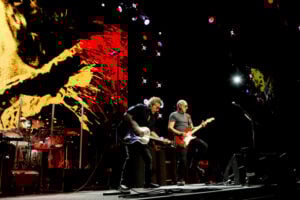
Feature Photo: Filipe B. Varela / Shutterstock.com
By exploring these songs, we dive into the myriad ways artists have used “white” as a metaphor, a statement, or a mood, proving the word’s versatility in shaping unforgettable musical moments. These ten tracks reveal the boundless creativity of artists who have used “white” as a gateway to explore profound ideas and emotions. From visceral rebellion to wistful longing, the word becomes a vessel for stories that resonate across generations, proving that in music, even a single word can carry infinite possibilities.
# 10 – White Wedding – Billy Idol

Billy Idol’s “White Wedding” is a cornerstone of his 1982 self-titled debut album, embodying his punk-rock roots fused with a polished new wave aesthetic. Recorded in 1981 and 1982 at Electric Lady Studios in New York City, the track was produced by Keith Forsey, whose expert touch helped shape Idol’s early sound. Idol himself provided the unmistakable snarling vocals, with Steve Stevens delivering iconic guitar riffs that have become synonymous with the song’s dark, rebellious energy. The rest of the lineup included Phil Feit on bass and Gregg Gerson on drums.
Read More: Billy Idol Rebel Yell 40th Anniversary Vinyl Review
# 9 – Dirty White Boy – Foreigner
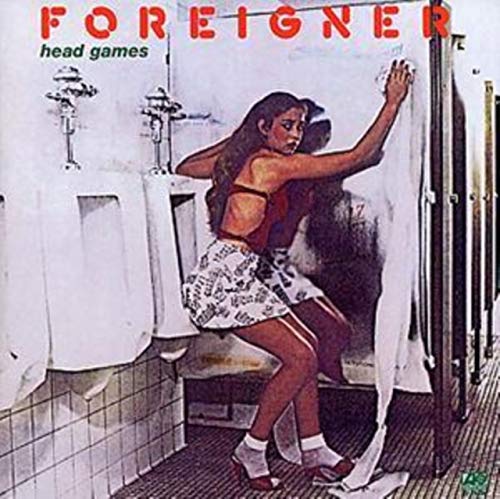
“Dirty White Boy” is the lead single from Foreigner’s third studio album, Head Games, released on September 1, 1979. Recorded earlier that year at Atlantic Studios in New York City, the song captures the hard-edged, rebellious spirit that defined much of the band’s late ’70s output. Produced by Roy Thomas Baker, known for his work with Queen and The Cars, the track highlights Foreigner’s ability to blend powerful guitar riffs with melodic sensibility. The lineup on this track includes Lou Gramm on vocals, Mick Jones on lead guitar and keyboards, Ian McDonald on rhythm guitar, Al Greenwood on synthesizers, Dennis Elliott on drums, and Rick Wills on bass.
Read More: 10 Most Rocking Foreigner Songs
# 8 – The Great White Buffalo – Ted Nugent’s Amboy Dukes

“The Great White Buffalo,” featured on the 1974 album Tooth, Fang & Claw by Ted Nugent’s Amboy Dukes, is a hard-hitting anthem that blends storytelling with Nugent’s signature ferocity on the guitar. Written by Nugent, this track showcases his ability to pair searing guitar riffs with evocative narratives rooted in environmental and cultural themes. The album was recorded at the Cleveland Recording Company in Ohio and was self-produced by Nugent.
Read More: Ted Nugent: The ClassicRockHistory.com Interview
# 7 – White Riot – The Clash

Released as the debut single by The Clash in March 1977, “White Riot” captures the fiery spirit of punk rock and the politically charged ethos of the band. Featured on their self-titled debut album, The Clash, the song was recorded in 1976 at CBS Studios in London. Produced by Mickey Foote, “White Riot” is a 1:58 burst of energy that encapsulates the raw and rebellious sound of the burgeoning punk movement.
Read More: Top 10 Clash Songs
# 6 – White Christmas – Bing Crosby
Hey! It’s almost Christmas; how could we not include this one? It’s one of the most widely covered songs of all time, but if we’re going to put one version on this list, it’s going to be Bing! Recorded on May 29, 1942, at Radio Recorders in Los Angeles, Crosby’s version quickly resonated with wartime audiences and became a cultural touchstone.
Read More: Top 10 Bing Crosby Songs
# 5 – White Light/ White Heat – The Velvet Underground

Read More: Top 10 Velvet Underground Songs
# 4 – Nights In White Satin – The Moody Blues
![Days Of Future Passed [2 CD/DVD Audio][50th Anniversary Deluxe](https://m.media-amazon.com/images/I/61TVY1ud1oL._SL500_.jpg)
The Moody Blues’ “Nights in White Satin” is a symphonic rock masterpiece that redefined the boundaries of popular music. Released as part of their 1967 album Days of Future Passed, the song was composed by Justin Hayward, who joined the band shortly before its creation. Its deeply emotional lyrics and orchestral arrangements encapsulate a sense of longing and introspection that resonated with audiences worldwide.
Read More: An Interview With John Lodge Of The Moody Blues
# 3 – White Rabbit – Jefferson Airplane

“White Rabbit” by Jefferson Airplane is a landmark in the psychedelic rock movement of the 1960s, drawing inspiration from Lewis Carroll’s Alice’s Adventures in Wonderland and Through the Looking-Glass. Written by Grace Slick, the song was recorded in late 1966 at RCA Victor’s Music Center of the World studios in Hollywood, California. It was included on Jefferson Airplane’s 1967 album Surrealistic Pillow and released as a single in June of the same year. Produced by Rick Jarrard, the song captures the experimental ethos of its time.
Read More: Top 10 Jefferson Airplane Songs
# 2 -White Room – Cream
![Wheels Of Fire [2 LP]](https://m.media-amazon.com/images/I/61Q2HH5gxkL._SL500_.jpg)
Cream’s “White Room” stands as one of the defining tracks of the late 1960s, showcasing the trio’s innovative blend of rock, blues, and psychedelia. Written by bassist Jack Bruce and lyricist Pete Brown, the song was recorded in July 1968 at Atlantic Studios in New York and released as a single in September 1968. It also appeared as the opening track of Cream’s third studio album, Wheels of Fire. Produced by Felix Pappalardi, the song highlights the band’s exceptional musicianship and creative synergy.
Read More: Top 10 Cream Songs
# 1 – A Whiter Shade of Pale – Procol Harum

Procol Harum’s “A Whiter Shade of Pale,” released as a single on May 12, 1967, is one of the most iconic songs of the 1960s. Written by band members Gary Brooker and Keith Reid, with contributions from organist Matthew Fisher, the track is celebrated for its haunting melody, poetic lyrics, and Baroque-inspired arrangement. The song’s release predates the band’s debut album, Procol Harum, which came out later in September 1967.
Read More: An Encore Interview With Robin Trower
Updated November 29, 2025
Read More: Artists’ Interviews Directory At ClassicRockHistory.com
Read More: Classic Rock Bands List And Directory
10 Best Songs With The Word ‘White’ In The Title article published on Classic RockHistory.com© 2025


















Another song for consideration, and one I don’t tire of hearing, is Dido’s “White Flag” from her 2003 L.P. “Life For Rent”, a consistently high quality L.P., from opening song (stated “White Flag”), to last cut.