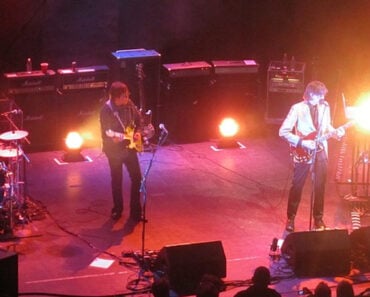
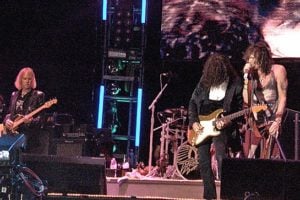
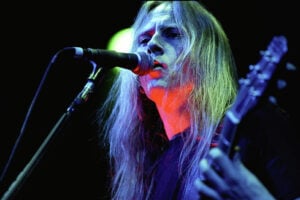
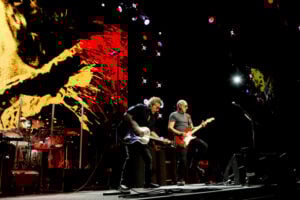
Feature Photo: Grywnn, CC BY-SA 4.0 <https://creativecommons.org/licenses/by-sa/4.0>, via Wikimedia Commons
From a modest gathering of musicians in Stockholm in 1990 to international acclaim, Opeth’s journey represents one of metal’s most intriguing musical evolutions. Founded by David Isberg in April 1990, the band underwent numerous lineup changes during its formative years before establishing the core partnership of Mikael Åkerfeldt and Peter Lindgren that would define their early sound. This Swedish collective has released fourteen studio albums spanning over three decades, each showcasing their remarkable ability to blend death metal’s aggression with progressive rock’s complexity and atmospheric beauty.
Opeth’s discography charts a fascinating trajectory from their death metal roots with “Orchid” (1995) and “Morningrise” (1996) to the watershed moment of “Blackwater Park” (2001), produced by Steven Wilson, which brought them broader recognition. The band continued its evolution with dual releases “Deliverance” and “Damnation” (2003), before making a dramatic stylistic shift with “Heritage” (2011), which largely abandoned death metal elements in favor of progressive rock influences. Their recent albums, including “Pale Communion” (2014), “Sorceress” (2016), “In Cauda Venenum” (2019), and “The Last Will and Testament” (2024), have further cemented this new direction.
Throughout their career, Opeth has achieved significant chart success, with “Heritage” reaching #19 on the Billboard 200 and subsequent albums performing similarly well internationally. They’ve been recognized with multiple awards, including the Swedish Grammy equivalent (Grammis) for Best Hard Rock/Metal Album for “Watershed.” The band has maintained a dedicated following despite major stylistic changes, performing at prestigious venues worldwide and influencing countless artists across the metal spectrum. While lineup changes have been numerous throughout their history, Mikael Åkerfeldt has remained the constant creative force guiding the band’s artistic vision since taking over as frontman in 1992.
Mikael Åkerfeldt
Mikael Åkerfeldt, the creative nucleus of Opeth, joined the band in 1990 when David Isberg recruited him as a bassist without informing the other members. This controversial entry ultimately led to the departure of the original lineup, with only Isberg and Åkerfeldt remaining. When Isberg left the band in 1992 due to creative differences, Åkerfeldt assumed the role of lead vocalist and primary songwriter, positions he has maintained for over three decades. His distinctive vocal style, seamlessly transitioning between death metal growls and clean singing, became one of Opeth’s defining characteristics until the band’s stylistic shift in 2011.
As the band’s constant member and creative director, Åkerfeldt has performed on all Opeth releases, contributing vocals, guitars, occasional bass (notably on 1998’s “My Arms, Your Hearse”), and keyboards. His songwriting has guided the band through its evolution from death metal to progressive rock. Particularly influential were albums like “Blackwater Park,” where his collaboration with Steven Wilson expanded the band’s sonic palette, and “Ghost Reveries,” which perfected the balance between heaviness and melody. With “Heritage,” Åkerfeldt made the controversial decision to abandon death metal vocals entirely, steering the band toward the vintage progressive rock sound that has characterized their recent work.
Beyond Opeth, Åkerfeldt has built an impressive career through various collaborations. He formed the project Storm Corrosion with Steven Wilson, releasing a self-titled album in 2012. He has produced albums for bands like Katatonia and Steel, contributed vocals to Ayreon’s progressive metal operas, and composed the soundtrack for the film “Frida – Forever.” His extensive knowledge of obscure progressive and jazz records has earned him recognition as a musical historian, and he occasionally serves as a guest DJ on radio programs. Åkerfeldt’s influence extends beyond his own music, as he’s mentored numerous musicians and continues to be respected for his willingness to follow his artistic vision regardless of commercial pressures.
Martín Méndez
Martín Méndez joined Opeth in 1997 following the departure of Johan De Farfalla, but his entry came too late to record bass parts for “My Arms, Your Hearse,” which were instead performed by Mikael Åkerfeldt. The Uruguayan-born bassist’s first recorded contributions appeared on 1999’s “Still Life,” and he has remained Opeth’s steady low-end foundation ever since, making him the second longest-serving member after Åkerfeldt. His understated yet sophisticated bass work has been an essential component of Opeth’s sound across nine studio albums and countless live performances over more than 25 years with the band.
Méndez’s bass playing adapts seamlessly to Opeth’s stylistic shifts, from the technical death metal of “Blackwater Park” and “Deliverance” to the jazz-inflected progressive rock of later albums like “Heritage” and “Pale Communion.” His fluid, melodic approach particularly shines on tracks like “The Drapery Falls” and “Burden,” where his tasteful bass lines add depth without overshadowing the compositions. Though typically maintaining a lower profile than frontman Åkerfeldt, Méndez’s consistent presence has been crucial to maintaining Opeth’s musical identity through numerous lineup changes and stylistic evolutions.
Outside Opeth, Méndez founded the progressive death metal project White Stones in 2019, releasing their debut album “Kuarahy” in 2020 followed by “Dancing Into Oblivion” in 2021. This project allows him to explore his death metal roots while showcasing his compositional skills. He has also collaborated with various musicians in the European metal scene, participating in guest appearances and session work. Méndez’s technical proficiency and versatility have earned him recognition as one of metal’s most respected bassists, known for his ability to bridge the gap between aggressive metal and sophisticated progressive rock.
Fredrik Åkesson
Fredrik Åkesson joined Opeth in 2007 as the replacement for longtime guitarist Peter Lindgren, bringing with him impressive technical credentials from his previous work with bands like Arch Enemy and Talisman. His arrival coincided with Opeth’s work on “Watershed,” an album that would mark a transitional point between their death metal past and progressive rock future. Since then, Åkesson has appeared on six studio albums with the band, becoming an integral part of their sound evolution while providing backing vocals to complement Åkerfeldt’s lead.
Åkesson’s virtuosic guitar playing added a new dimension to Opeth’s music, particularly evident on his debut recording with the band, “Watershed,” where his technical solos on tracks like “Heir Apparent” showcased a different approach than his predecessor. As the band transitioned to their vintage progressive rock sound with “Heritage,” Åkesson adapted his playing accordingly, embracing jazz-influenced phrasing and classic rock tones. His versatility has been particularly valuable during this era, allowing him to navigate complex arrangements on albums like “Pale Communion” and “In Cauda Venenum” while maintaining a cohesive sound with Åkerfeldt’s guitar work.
Beyond his contributions to Opeth, Åkesson has maintained an active career outside the band. Before joining Opeth, he gained recognition as a member of Talisman, performing alongside bass virtuoso Marcel Jacob, and briefly played with Arch Enemy. He’s been a member of the hard rock supergroup The Night Flight Orchestra since 2007 alongside Soilwork vocalist Björn Strid, releasing multiple albums that showcase his ability to play in a more straightforward 70s-inspired rock style. Åkesson has also performed with Swedish guitar icon Yngwie Malmsteen and participated in various session work. His technical proficiency and stylistic versatility have earned him recognition as one of Sweden’s premier guitarists.
Joakim Svalberg
Joakim Svalberg became Opeth’s official keyboardist in 2011, joining just in time to contribute to the recording of “Heritage,” the album that marked the band’s dramatic shift away from death metal toward vintage progressive rock sounds. Initially recruited to replace the departing Per Wiberg, Svalberg quickly established himself as more than a mere replacement, becoming an essential component of Opeth’s evolved sound. His keyboard work has featured prominently on five studio albums: “Heritage,” “Pale Communion,” “Sorceress,” “In Cauda Venenum,” and “The Last Will and Testament.”
Svalberg’s sophisticated keyboard playing has been instrumental in defining Opeth’s modern sound, which relies heavily on vintage tones from Hammond organs, Mellotrons, and pianos. His contributions to tracks like “Cusp of Eternity” from “Pale Communion” and “Heart in Hand” from “In Cauda Venenum” showcase both technical proficiency and atmospheric sensibility. Beyond his keyboard work, Svalberg provides backing vocals that help fill out the band’s increasingly complex vocal arrangements in their post-death metal era. His classical training and understanding of progressive rock history make him particularly well-suited to Opeth’s current musical direction.
Prior to joining Opeth, Svalberg built a diverse musical career in the Swedish rock and metal scenes. He performed with acts like Yngwie Malmsteen, contributing to the virtuoso guitarist’s work. He also played with the bands Mercury Twilight and Qoph, displaying his versatility across different musical styles. Since joining Opeth, Svalberg has participated in various side projects and session work, though his primary focus remains his role within the band. His classical influences and knowledge of 70s progressive rock keyboard techniques have proven invaluable as Opeth continues to explore their vintage-inspired sound.
Waltteri Väyrynen
Waltteri Väyrynen became Opeth’s newest member when he joined as the band’s drummer in 2022, following the departure of Martin Axenrot due to what was described as a “conflict of interests.” The Finnish drummer brought with him an impressive resume despite his relatively young age, having already established himself as a respected figure in the metal scene through his work with several notable bands. Väyrynen made his recording debut with Opeth on their fourteenth studio album, “The Last Will and Testament,” released in 2024.
Although Väyrynen’s contributions to Opeth’s discography are still developing, his technical precision and versatility were immediately evident on “The Last Will and Testament.” His drumming style combines the jazz-influenced approach needed for Opeth’s progressive rock direction with the power and precision required for their occasional heavier moments. In addition to his drumming, Väyrynen also contributes backing vocals to the band’s live performances, adding another layer to their sound. As the newest member, he has quickly integrated into Opeth’s complex musical framework while bringing his own distinctive flair to the rhythm section.
Before joining Opeth, Väyrynen had already built a substantial career playing with several influential metal bands. Most notably, he served as the drummer for British gothic doom metal pioneers Paradise Lost from 2016 to 2022, appearing on their albums “Medusa” (2017) and “Obsidian” (2020). He has also performed with the melodic death metal band Bodom After Midnight, formed by Children of Bodom’s Alexi Laiho, and recorded with the Finnish metal band Wheel. His diverse background across different metal subgenres provided excellent preparation for the technical demands of Opeth’s music, allowing him to step into the role vacated by longtime drummer Axenrot with confidence and skill.
David Isberg
David Isberg founded Opeth in Stockholm, Sweden in April 1990, assembling the original lineup that included Mikael Bergström, Dan Nilsson, Martin Persson, and Amirion “Rille” Evén. His controversial decision to invite Mikael Åkerfeldt to replace bassist Martin Persson without informing the other members led to a mass exodus, leaving only Isberg and Åkerfeldt. Together they rebuilt the band with new members, including Andreas Dimeo, Nick Döring, and Anders Nordin. Isberg fronted Opeth for approximately two years before departing in early 1992 due to what was described as “creative differences,” paving the way for Åkerfeldt to assume vocal duties.
Isberg’s tenure with Opeth predated their recording career, meaning he does not appear on any of the band’s official releases. However, his influence was crucial in establishing the band and particularly in bringing Åkerfeldt into the fold, a decision that would ultimately shape the future of Opeth. While Isberg did perform with early iterations of the band at a handful of shows, including their first performance in February 1991, he left before the band had developed the sound that would later define them on their debut album, “Orchid.”
After leaving Opeth, Isberg remained active in the Swedish extreme metal scene, though with a considerably lower profile than his former band would achieve. He performed with the death/thrash metal band Furbowl, which released material in the early 1990s. While his career never reached the heights that Opeth would eventually attain under Åkerfeldt’s leadership, Isberg’s place in metal history is secured through his role in founding a band that would go on to become one of the genre’s most influential and respected acts. Despite his brief involvement, his decision to recruit Åkerfeldt had a profound impact on the direction of progressive metal.
Anders Nordin
Anders Nordin joined Opeth in 1990 as part of the rebuilt lineup following the departure of the original members, serving as the band’s drummer for seven crucial years during their formative period. Recruited alongside Andreas Dimeo and Nick Döring to join Isberg and Åkerfeldt, Nordin remained through multiple lineup changes, including Isberg’s departure in 1992. His drumming appears on Opeth’s first two studio albums: “Orchid” (1995) and “Morningrise” (1996), where he established the foundation of Opeth’s rhythmic approach, blending death metal intensity with progressive rock complexity and even contributing piano parts to “Morningrise.”
Nordin’s departure from Opeth came in 1997 following tensions within the band after Åkerfeldt and Lindgren fired bassist Johan De Farfalla without consulting him. His distinctive drumming style, characterized by its technical proficiency and dynamic range, was an essential component of Opeth’s early sound. Particularly on “Morningrise,” Nordin’s ability to navigate complex arrangements and extended song structures helped establish Opeth’s reputation for musical sophistication. The album’s closing track, “Black Rose Immortal,” which remains the band’s longest composition at over 20 minutes, showcases Nordin’s versatility across its numerous sections.
Following his departure from Opeth, Nordin relocated to Brazil, where he largely stepped away from the metal scene. His post-Opeth musical activities have maintained a relatively low profile compared to the international success his former band would achieve in subsequent years. Nevertheless, his contributions to Opeth’s early development and first two albums remain significant, helping to establish the progressive elements that would become increasingly central to the band’s identity over time. Nordin’s drumming on “Orchid” and “Morningrise” continues to be respected by fans of technical extreme metal for its innovative approach to blending different stylistic elements.
Peter Lindgren
Peter Lindgren joined Opeth in 1991, initially as a bassist for one show before switching to guitar when previous guitarist Kim Pettersson departed. This began a sixteen-year tenure that would establish him as a crucial creative partner to Mikael Åkerfeldt during Opeth’s formative years and rise to prominence. Lindgren performed on six studio albums from “Orchid” (1995) through “Ghost Reveries” (2005), as well as the live album “The Roundhouse Tapes” (2007). His final recording with the band, “Ghost Reveries,” represented the culmination of the death metal-meets-progressive rock sound that he had helped develop over more than a decade.
As Åkerfeldt’s primary collaborator during Opeth’s early evolution, Lindgren’s guitar work was instrumental in crafting the band’s signature sound. His interplay with Åkerfeldt established the dual-guitar approach that would become a hallmark of Opeth’s music, with intricate harmonies and contrasting clean and distorted passages. While Åkerfeldt was the principal songwriter, Lindgren’s contributions to albums like “Still Life” and “Blackwater Park” helped define the band’s unique blend of extreme metal and progressive elements. His departure in 2007 marked the end of an era for Opeth, as he cited having “lost some of the enthusiasm and inspiration needed to participate in the band.”
Outside of Opeth, Lindgren has maintained a relatively low profile in the music industry. Unlike some former members who continued with high-profile musical projects, Lindgren largely stepped away from the public eye after leaving the band. His technical yet emotive guitar playing earned him respect among musicians and fans alike, particularly for his ability to navigate between aggressive metal riffs and delicate acoustic passages. Though he has been less visible than some of his former bandmates in recent years, Lindgren’s legacy as a founding architect of Opeth’s distinctive sound remains secure, with his work on albums like “Blackwater Park” and “Still Life” continuing to influence progressive metal guitarists.
Johan De Farfalla
Johan De Farfalla had two distinct periods with Opeth, first joining briefly in 1991 after his second show with the band and then returning in 1994 to record their debut album. His initial stint was short-lived, as he departed after just one performance, but his return proved more consequential. De Farfalla’s bass playing and backing vocals appear on the band’s first two studio albums, “Orchid” (1995) and “Morningrise” (1996), helping to establish Opeth’s early sound during this crucial developmental period.
De Farfalla’s contributions to Opeth’s early albums demonstrated his technical ability and feel for the band’s progressive death metal style. On “Orchid,” his fluid bass lines provide a strong foundation for the band’s complex arrangements, while on “Morningrise,” he navigates the album’s extended compositions with both precision and creativity. His backing vocals also added texture to the band’s sound, complementing Åkerfeldt’s lead vocals. However, his time with Opeth came to an end in 1997 when Åkerfeldt and Lindgren decided to fire him without consulting drummer Anders Nordin—a decision that ultimately led to Nordin’s departure as well.
After leaving Opeth, De Farfalla remained active in the Swedish music scene but with a lower profile than his former band. Before and during his time with Opeth, he was also a member of a band called Crimson Cat, described as playing “sleazy metal.” In the years following his departure from Opeth, he has occasionally performed with various projects but has not achieved the same level of recognition as his former band. Despite the circumstances of his departure, De Farfalla’s place in Opeth’s history is secured through his performances on their first two albums, which remain important documents of the band’s early sound and approach.
Martin Lopez
Martin Lopez joined Opeth in 1997 following the departure of founding drummer Anders Nordin, entering the band alongside bassist Martín Méndez. His arrival came at a pivotal moment for Opeth, as they regrouped after nearly disbanding due to the tensions surrounding the firing of Johan De Farfalla. Lopez’s drumming first appeared on 1998’s “My Arms, Your Hearse,” beginning a period that many fans consider the classic era of Opeth. Over eight years with the band, he performed on five studio albums, concluding with “Ghost Reveries” in 2005.
Lopez’s sophisticated drumming style, which blended death metal intensity with jazz influences and Latin rhythms, significantly expanded Opeth’s sonic palette. His contributions were particularly noteworthy on “Blackwater Park,” where his dynamic playing helped the band achieve new levels of atmospheric expression, and on “Deliverance,” which features some of his most technically demanding performances. The title track’s famous closing polyrhythmic section, known among fans as “the Deliverance shuffle,” exemplifies Lopez’s ability to incorporate complex patterns while maintaining musicality. His nuanced approach was equally suited to the band’s softer material, as demonstrated on “Damnation,” where his restrained playing complements the album’s melancholic mood.
Before joining Opeth, Lopez had performed with the death metal band Amon Amarth. After leaving Opeth in 2006 due to health issues that had already caused him to miss several tours, Lopez continued his musical career with various projects. Most notably, he formed the progressive metal band Soen in 2010 with former Willowtree vocalist Joel Ekelöf and bassist Steve DiGiorgio, later joined by guitarist Kim Platbarzdis. With Soen, Lopez has released several albums that showcase his distinctive drumming style in a different context than Opeth. His technical prowess, musical versatility, and innovative approach have established him as one of progressive metal’s most respected drummers.
Per Wiberg
Per Wiberg initially joined Opeth as a touring keyboardist in 2003 to support the band’s “Damnation” album, which featured more prominent keyboard parts than their previous work. After two years in this role, he was officially welcomed as a full member in 2005, becoming the first dedicated keyboardist in Opeth’s lineup. Wiberg’s official studio debut with the band came on 2005’s “Ghost Reveries,” though he had already appeared on the live DVD “Lamentations” from 2003. He remained with Opeth for six years, contributing to three studio albums before departing in 2011 prior to the recording of “Heritage.”
As Opeth’s keyboards became increasingly central to their sound, Wiberg’s contributions grew accordingly. On “Ghost Reveries,” his Hammond organ, Mellotron, and piano parts added new dimensions to the band’s sound, particularly evident on tracks like “Atonement” and “Harlequin Forest.” His playing on 2008’s “Watershed,” the band’s final album to feature death metal elements, helped bridge the gap between their heavy past and progressive future. Wiberg’s keyboard work complemented the band’s evolving sound, and his backing vocals added depth to their live performances and recordings.
Outside of his time with Opeth, Wiberg has maintained an active and diverse career in the Swedish music scene. Before and after his tenure with Opeth, he was a member of the doom metal band Spiritual Beggars, founded by Arch Enemy guitarist Michael Amott. He has also worked with bands including Kamchatka, Death Organ, and Switchblade, showcasing his versatility across different styles of heavy music. Following his departure from Opeth, Wiberg formed the band King Hobo with Clutch drummer Jean-Paul Gaster and released solo material that explores psychedelic and progressive rock sounds. His extensive experience and distinctive keyboard style have made him a sought-after collaborator in various rock and metal projects.
Martin “Axe” Axenrot
Martin “Axe” Axenrot first entered Opeth’s orbit in 2005 as a touring substitute for Martin Lopez, who was experiencing health issues that prevented him from performing live. After Lopez officially departed in 2006, Axenrot was named as his permanent replacement, beginning a 15-year tenure that would make him the band’s longest-serving drummer. His first studio recording with the band came on 2008’s “Watershed,” the album that began Opeth’s transition away from death metal elements. Axenrot would ultimately perform on five studio albums with Opeth, concluding with 2019’s “In Cauda Venenum.”
Axenrot’s technical precision and versatility proved crucial during Opeth’s stylistic evolution following “Watershed.” As the band moved toward a more vintage progressive rock sound with 2011’s “Heritage,” Axenrot adapted his playing accordingly, incorporating jazz-influenced patterns and focusing on dynamics rather than the blast beats and double bass drumming of earlier albums. His contributions to subsequent albums like “Pale Communion” and “Sorceress” showcased his ability to navigate complex arrangements while maintaining a warm, organic drum sound that complemented the band’s 1970s-inspired direction. After 15 years of recording and touring with Opeth, Axenrot departed in 2021 due to what was described as a “conflict of interests.”
Prior to and alongside his work with Opeth, Axenrot established himself as a respected figure in the Scandinavian metal scene. Most notably, he has been a member of the influential Swedish death metal band Bloodbath, which also featured Mikael Åkerfeldt at various points. He has also performed with bands including Witchery, Satanic Slaughter, and Nifelheim, demonstrating his versatility across different extreme metal styles. Following his departure from Opeth, Axenrot has continued his work with Bloodbath and other projects. His technical ability, versatility, and deep understanding of both extreme metal and progressive rock drumming traditions made him an ideal fit for Opeth during their period of most dramatic stylistic transformation.
Mikael Bergström, Dan Nilsson, Martin Persson, and Amirion “Rille” Evén
Mikael “Micke” Bergström, Dan Nilsson, Martin Persson, and Amirion “Rille” Evén constitute the original lineup of Opeth, assembled by David Isberg in April 1990 at the very genesis of the band in Stockholm. This initial configuration proved extremely short-lived, existing for only a matter of weeks before dissolution. The catalyst for their departure came when Isberg invited Mikael Åkerfeldt to join as the band’s new bassist, replacing Persson without informing the other members. This controversial decision led to the exit of all four musicians, effectively ending the first incarnation of Opeth before it had made any recordings or established its musical identity.
Given their brief involvement with Opeth, none of these founding members contributed to any official recordings, and their musical influence on the band’s eventual direction was minimal. Their departure cleared the way for Isberg and Åkerfeldt to rebuild the band with new musicians who would help shape Opeth’s early sound. While these original members represent an interesting historical footnote in Opeth’s formation, their brief tenure means they had little impact on the band’s musical development or the progressive death metal sound that would later bring the band recognition.
Andreas Dimeo and Nick Döring
Andreas Dimeo and Nick Döring joined the rebuilding Opeth in 1990 as guitarist and bassist respectively, following the departure of the original lineup. Their time with the band was exceedingly brief, as both musicians left after Opeth’s first show in February 1991, barely making a mark on the band’s early development. Their replacements came from the band Crimson Cat, with Kim Pettersson taking over guitar duties and Johan De Farfalla stepping in on bass, continuing the rapid personnel changes that characterized Opeth’s formative period.
Given their extremely short tenure and departure before Opeth began recording, neither Dimeo nor Döring appear on any official Opeth releases. Their brief involvement represents another chapter in the band’s tumultuous early years, when the lineup remained fluid as David Isberg and Mikael Åkerfeldt worked to establish a stable configuration. Like the original members who preceded them, their musical impact on Opeth’s eventual sound was minimal, as they departed long before the band developed the progressive death metal approach that would define their early recordings.
Kim Pettersson, Mattias Ander, and Stefan Guteklint
Kim Pettersson joined Opeth in 1991 as a guitarist, replacing Andreas Dimeo after the band’s first performance. Coming from the band Crimson Cat alongside bassist Johan De Farfalla, Pettersson’s time with Opeth was brief, lasting only until the band’s second show when he departed, prompting Peter Lindgren to switch from bass to guitar. Mattias Ander had an even shorter tenure, briefly occupying the bassist position in 1992 after the band had reduced to a three-piece following David Isberg’s departure. Stefan Guteklint succeeded Ander later that same year, remaining with the band for approximately two years before being dismissed by Åkerfeldt and Lindgren in 1994, leading to De Farfalla’s return for the recording of “Orchid.”
Despite not appearing on the original release of “Orchid,” Guteklint’s bass playing can be heard on a bonus track included in the 2000 reissue of the album, as well as on a bonus track for the “Morningrise” reissue, representing his only official recordings with the band. These tracks provide a glimpse of what might have been had he remained with Opeth during their crucial early recording period. While Pettersson and Ander left no recorded legacy with the band, they represent important links in the chain of Opeth’s evolving lineup during the pre-recording years when the band was still defining its identity.
Gene Hoglan and Sami Karppinen
Gene Hoglan, widely respected as “The Atomic Clock” for his precision and technical prowess, briefly served as a substitute drummer for Opeth in 2004 when Martin Lopez was unable to perform due to health issues. Though his time with the band was extremely limited and he does not appear on any official Opeth recordings, Hoglan’s involvement represents a notable moment in the band’s history, as his reputation as one of metal’s premier drummers brought additional attention to Opeth during their tours supporting “Deliverance” and “Damnation.”
Sami Karppinen, drummer for the band Therion, took on a similar role as a touring substitute in 2021-2022 following Martin Axenrot’s departure from Opeth. Like Hoglan, Karppinen does not appear on any studio recordings with the band, as his temporary position was ultimately filled by permanent replacement Waltteri Väyrynen in 2022. Karppinen’s contribution to Opeth came during a transitional period as the band adjusted to the loss of their longtime drummer while maintaining their touring commitments.
Outside of their brief associations with Opeth, both drummers have established impressive careers. Hoglan is known for his work with numerous influential bands including Death, Strapping Young Lad, Testament, Fear Factory, and Dethklok, earning him legendary status in the metal community for his versatility and technical skill. Karppinen has been a member of the symphonic metal band Therion since 2012, appearing on albums including “Les Fleurs du Mal,” “Beloved Antichrist,” and “Leviathan.” While their tenures with Opeth were limited to substitute roles, their involvement speaks to the band’s stature within the metal community, attracting accomplished musicians even for temporary positions.
Through over three decades of evolution, Opeth has maintained artistic integrity while constantly pushing boundaries, creating a legacy defined by musical excellence and fearless innovation. From death metal origins to progressive rock explorations, the band’s journey continues to inspire musicians across the heavy music spectrum, with each lineup change bringing new dimensions to their ever-expanding sound.
Check out similar articles on ClassicRockHistory.com Just click on any of the links below……
Complete List Of Opeth Songs From A to Z
Complete List Of Opeth Albums And Discography
Top 10 Opeth Songs
Read More: Artists’ Interviews Directory At ClassicRockHistory.com
Read More: Classic Rock Bands List And Directory
Complete List Of Opeth Band Members article published on ClassicRockHistory.com© 2025
Classicrockhistory.com claims ownership of all its original content and Intellectual property under United States Copyright laws and those of all other foreign countries. No one person, business, or organization is allowed to re-publish any of our original content anywhere on the web or in print without our permission. All photos used are either public domain Creative Commons photos or licensed officially from Shutterstock under license with ClassicRockHistory.com. All photo credits have been placed at the end of the article. Album Cover Photos are affiliate links and the property of Amazon and are stored on the Amazon server. Any theft of our content will be met with swift legal action against the infringing websites.