Feature Photo: Bruce Alan Bennett / Shutterstock.com
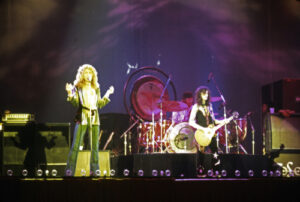
I had always been a Led Zeppelin fan growing up in the 1970s, but after seeing them play Madison Square Garden in 1977, they became more than just my favorite band. They became my religion. I think I’m not alone in that statement, as there was never a band like Led Zeppelin to have witnessed live in concert. Yeah, some people will say they were sloppy and all that, but those are people who are just kind of missing the point and, sadly, just didn’t get it. Led Zeppelin was indeed a religious experience. They were rockers unlike any other band ever in history. No band ever came close to the impact that those guys had on the concert stage and in our lives as teenagers in the 1970s.
I read all the time how people say they’re overrated and all that. Once again, those people just don’t get it. This list that I’ve put together here is a showcase of some of their best material. Even for a band that had only released eight studio albums, nine if you count the outtakes album Coda, picking 25 songs to present their music still doesn’t seem enough. And, of course, it isn’t. But for people who never really listened to their music or don’t really know much about them, this is a great place to start. One more thing: this list is in chronological order, so when you see “Fool in the Rain” at number one and you’re a longtime fan, don’t blow a brain gasket. It’s chronologically written.
# 25 – Good Times Bad Times – Led Zeppelin
“Good Times Bad Times” opens Led Zeppelin’s groundbreaking debut album with a thunderous declaration of intent, setting the stage for the band’s seismic impact on rock music. Recorded in 1968 at Olympic Studios in London and produced by Jimmy Page, the track features Robert Plant on vocals, Page on guitar, John Paul Jones on bass, and John Bonham on drums. As the band’s first track on its first album, it introduced listeners to a revolutionary fusion of hard rock, blues, and innovative studio techniques. The interplay between Page’s layered guitar work and Bonham’s famous bass-drum triplets is still electrifying. Released as Led Zeppelin’s first U.S. single, “Good Times Bad Times” reached number 80 on the Billboard Hot 100. Its energy and musicianship make it a perfect place to begin this chronological list.
# 24 – Babe I’m Gonna Leave You – Led Zeppelin
Few songs showcase the emotional intensity and musical dexterity of Led Zeppelin like “Babe I’m Gonna Leave You,” the folk classic they transformed on their 1969 debut album. Anne Bredon wrote the original song, and the current Led Zeppelin credit recognizes Bredon, Jimmy Page, and Robert Plant. Recorded at Olympic Studios in 1968 and produced by Page, the track features Plant on vocals, Page on acoustic and electric guitars, John Paul Jones on bass, and John Bonham on drums. The band was inspired by Joan Baez’s recording but turned the song into something unmistakably their own. Page moves between delicate fingerpicking and explosive amplified passages while Plant’s vocal rises from vulnerability into anguish. That constant tension between acoustic beauty and hard-rock power made “Babe I’m Gonna Leave You” one of the defining performances on the debut.
# 23 – Dazed And Confused – Led Zeppelin
Few songs encapsulate the raw, experimental edge of Led Zeppelin’s early days as vividly as “Dazed and Confused.” Jake Holmes wrote and recorded the original song in 1967, and modern Led Zeppelin releases credit the band’s version to Jimmy Page as inspired by Jake Holmes. Recorded at Olympic Studios in 1968 under Page’s production, the track showcases Page’s guitar bowing, Plant’s anguished vocals, Jones’ brooding bass, and Bonham’s ferocious drumming. The song moves between slow, ominous passages and explosive crescendos, giving the music a sense of psychological turmoil. It became a cornerstone of Led Zeppelin’s live performances, where the band often stretched it into enormous improvisational journeys. The studio recording remains one of the clearest early examples of Zeppelin turning blues and psychedelia into something much heavier and stranger.
# 22 – Whole Lotta Love – Led Zeppelin II
From its very first riff, “Whole Lotta Love” demands attention as one of Led Zeppelin’s most audacious and influential tracks. The opener to Led Zeppelin II was recorded during the band’s relentless 1969 touring schedule and produced by Jimmy Page. The current writing credit includes John Bonham, Willie Dixon, John Paul Jones, Jimmy Page, and Robert Plant, reflecting the song’s debt to Dixon’s blues writing as well as the band’s original music. Page’s unforgettable riff drives the track, complemented by Bonham’s explosive drumming, Jones’ bass, and Plant’s electrifying vocal. The experimental middle section pushes the record far beyond a conventional blues-rock single. “Whole Lotta Love” reached number four on the Billboard Hot 100 and became Led Zeppelin’s biggest U.S. singles-chart hit.
# 21 – Heartbreaker – Led Zeppelin II
“Heartbreaker,” from Led Zeppelin II, launches the album’s second side with a blistering riff and the raw intensity that defined the band’s early power. Recorded during the scattered sessions that produced the album, the track features Plant’s vocals, Page’s guitar, Jones’ bass, and Bonham’s thunderous drumming under Page’s production. The song tells a story of betrayal and emotional turmoil, but the instrumental performance is what makes it unforgettable. Page’s unaccompanied guitar solo was recorded separately from the main track and remains one of the most famous solo breaks of the era. On the original album, “Heartbreaker” flows directly into “Living Loving Maid (She’s Just a Woman),” making the two songs feel almost inseparable for generations of listeners. Even on its own, “Heartbreaker” is one of the great examples of Led Zeppelin turning a simple riff into an entire musical event.
# 20 – Thank You – Led Zeppelin II
“Thank You,” from Led Zeppelin II, offers a rare glimpse into the softer side of the band’s dynamic repertoire. Jimmy Page and Robert Plant wrote the song, with Plant composing the lyric as a tribute to his then-wife. Page’s acoustic guitar anchors the track, while John Paul Jones’ Hammond organ and John Bonham’s restrained drumming give the arrangement warmth and space. Plant’s vocal performance is unusually direct and sincere compared with the band’s more aggressive material. Positioned among the heavier songs on Led Zeppelin II, “Thank You” proves how naturally the group could move from raw blues-rock into something tender and reflective. It remains one of the band’s most enduring declarations of devotion.
# 19 – Moby Dick (Live Version) – The Song Remains The Same Soundtrack
If there’s one thing that anyone who is just discovering Led Zeppelin should realize, it is the importance of John Bonham to the band’s sound. This is the sole reason why the band could not continue after his passing. Every single song on this list is a showcase of Bonham’s power, but “Moby Dick” is one of his greatest moments, and every kid who sat behind a drum kit in the 1970s wanted to play this song. The live version on The Song Remains the Same soundtrack was recorded during Led Zeppelin’s July 1973 Madison Square Garden concerts and expands the Led Zeppelin II instrumental into a massive drum showcase. Page and Jones frame the piece with the familiar blues-based riff before Bonham takes over and turns rhythm into the main event. The soundtrack was produced by Jimmy Page and released in 1976, preserving one of the clearest examples of why Bonham was irreplaceable.
# 18 – Hey, Hey, What Can I Do – B-Side / Later Reissued on Coda Deluxe
“Hey, Hey, What Can I Do” stands as a unique entry in Led Zeppelin’s catalog, offering a rare glimpse of the band’s acoustic storytelling side. Originally released in 1970 as the B-side to “Immigrant Song,” the track was notably absent from the original studio albums. It was recorded at Olympic Studios during the Led Zeppelin III period and produced by Jimmy Page. Plant’s vocal, Page’s acoustic guitars, Jones’ bass and mandolin, and Bonham’s drums create a folk-influenced arrangement very different from the band’s heaviest material. The song later reached a wider audience through box sets and was included on the companion disc of the 2015 deluxe edition of Coda. Its combination of lyrical intimacy and musical warmth has made it one of Led Zeppelin’s most beloved non-album recordings.
# 17 – Since I’ve Been Loving You – Led Zeppelin III
“Since I’ve Been Loving You” is a blues-rock masterpiece from Led Zeppelin III, capturing the band at its most emotionally raw and musically virtuosic. Jimmy Page, Robert Plant, and John Paul Jones wrote the song, which was recorded largely live in the studio with very little overdubbing. Page’s guitar solos, Plant’s impassioned vocal, Bonham’s intricate yet restrained drumming, and Jones’ Hammond organ come together in one of the band’s most dramatic performances. Jones uses the organ’s bass pedals rather than a conventional bass-guitar part, giving the arrangement its unusual weight and space. The song lives inside heartbreak, devotion, exhaustion, and frustration without ever losing the blues tradition at its core. Few Led Zeppelin recordings show the chemistry among all four musicians as clearly as this one.
# 16 – Immigrant Song – Led Zeppelin III
“Immigrant Song” explodes into Led Zeppelin III with a primal energy that redefined the band’s possibilities. Jimmy Page and Robert Plant wrote the song, and Page produced it during the 1970 album sessions. An important recording session for the track took place at Olympic Studios on May 29, 1970, with engineer Andy Johns. Plant’s lyrics were inspired by the band’s trip to Iceland and turn Norse imagery into one of rock’s most recognizable battle cries. Page’s aggressive guitar riff and Bonham’s pounding rhythm make the song feel enormous despite its compact running time. Released as a U.S. single with “Hey, Hey, What Can I Do” on the B-side, “Immigrant Song” became one of Led Zeppelin’s most enduring anthems.
# 15 – Stairway To Heaven – Untitled (Led Zeppelin IV)
“Stairway to Heaven” remains one of Led Zeppelin’s most ambitious compositions, embodying the mystical character of the band’s untitled fourth album. Jimmy Page and Robert Plant wrote the song, and Page produced it during sessions that included work at Island Studios and Headley Grange before the final mix at Sunset Sound. The arrangement moves seamlessly from acoustic guitar and recorders into full-band rock, with John Paul Jones, John Bonham, and Robert Plant joining the gradual rise in intensity. Plant’s words remain deliberately open to interpretation, while Page’s guitar solo became one of the most celebrated performances in rock history. The song was never released as a conventional single during the band’s original run, yet it became a defining staple of FM radio and Led Zeppelin concerts. Its slow build from intimacy to overwhelming power still makes it feel less like a normal song than a complete journey.
# 14 – When The Levee Breaks – Untitled (Led Zeppelin IV)
“When the Levee Breaks,” the closing track of the untitled fourth album, captures Led Zeppelin’s ability to transform deep blues roots through monumental studio production. The song draws from the 1929 recording by Memphis Minnie and Kansas Joe McCoy, but Led Zeppelin rebuilt it around an entirely different rhythmic and sonic attack. Recorded at Headley Grange, the track is dominated by John Bonham’s legendary stairwell drum sound, captured by engineer Andy Johns and shaped under Jimmy Page’s production. Plant’s vocal and harmonica carry the despair of the original theme while Page’s guitar and John Paul Jones’ bass make the arrangement feel almost immovable. Tape manipulation, echo, and layered production give the recording a strange, massive atmosphere unlike anything else on the album. Its influence can be heard far beyond classic rock in the generations of artists who have sampled, studied, and chased that drum sound.
# 13 – Rock And Roll – Untitled (Led Zeppelin IV)
“Rock and Roll” captures Led Zeppelin’s ability to channel the raw energy of early rock and blues into a modern powerhouse anthem. The song emerged spontaneously during a jam at Headley Grange when John Bonham began playing a drum pattern inspired by Little Richard’s “Keep A-Knockin’.” John Bonham, John Paul Jones, Jimmy Page, and Robert Plant share the writing credit, and Page produced the track with Andy Johns engineering. Plant’s vocal celebrates the liberating spirit of early rock while Page’s guitar and Jones’ bass keep the arrangement driving forward. Bonham’s opening remains one of the most instantly recognizable drum entrances in the band’s catalog. It is Led Zeppelin paying tribute to rock and roll’s roots while sounding completely like themselves.
# 12 – Black Dog – Untitled (Led Zeppelin IV)
“Black Dog” opens Led Zeppelin’s untitled fourth album with one of the most complicated riffs ever turned into a massive rock song. John Paul Jones developed the stop-start musical figure, while Jimmy Page, Robert Plant, and Jones share the writing credit. The basic track was recorded during the album sessions that began at Island Studios in late 1970 and continued into 1971. Plant’s unaccompanied vocal phrases create a call-and-response effect against the band, making each return of the riff hit even harder. Bonham’s drumming anchors the shifting accents without making the song sound mathematical or stiff. “Black Dog” became a major U.S. hit and remains one of the clearest demonstrations of Zeppelin making difficult music sound completely natural.
# 11 – The Ocean – Houses Of The Holy
“The Ocean,” which closes Houses of the Holy, is a testament to Led Zeppelin’s playful creativity and connection with its audience. The title came from the image of the sea of fans facing the band from the stage, and the song turns that idea into a swaggering live-minded rocker. Recorded during the 1972 sessions for the album and produced by Jimmy Page, the track is built around Page’s riff, John Paul Jones’ bass, John Bonham’s drums, and Plant’s vocal. Bonham’s count-in remains part of the recording and adds to its loose, immediate feel. The song moves through sharp rhythmic turns before ending in an unexpected doo-wop-influenced section. That shift from heavy riffing to old-school rock and roll is pure Led Zeppelin and one of the reasons “The Ocean” remains such a fun album closer.
# 10 – The Rain Song – Houses Of The Holy
“The Rain Song” stands as one of Led Zeppelin’s most poignant and elegantly composed works, a centerpiece of Houses of the Holy. Jimmy Page and Robert Plant wrote the song, and the recording was made at Stargroves in May 1972 under Page’s production. Page’s unusual guitar tuning creates the song’s delicate harmonic movement, while John Paul Jones adds bass, piano, and Mellotron. Bonham enters with remarkable restraint, giving the arrangement room to grow before the band reaches its dramatic peak. Plant delivers one of his most heartfelt vocals, exploring love, renewal, and the changing emotional seasons of a relationship. The song’s orchestral sweep shows just how far Led Zeppelin could travel from the hard-rock attack that first made them famous.
# 9 – No Quarter – Houses Of The Holy
Mysterious and haunting, “No Quarter” is one of Led Zeppelin’s most atmospheric pieces and one of the great John Paul Jones showcases. Jones, Page, and Plant wrote the song, with the basic track recorded at Island Studios during the early Houses of the Holy sessions and produced by Page. Jones’ Wurlitzer electric piano and keyboards dominate the mood while Page’s guitar and Bonham’s restrained drumming keep a constant sense of tension underneath. Plant delivers the lyric with an almost ghostly calm that perfectly suits the track’s images of endurance and danger. The studio version was slowed through varispeed, deepening its already ominous character. “No Quarter” became an essential live vehicle because its open spaces gave the band enormous room to expand the arrangement onstage.
# 8 – The Song Remains the Same (Live Version) – The Song Remains The Same Soundtrack
If you have ever heard someone say Led Zeppelin didn’t sound good in concert, play them this. The live version of “The Song Remains the Same” was captured during the band’s July 1973 Madison Square Garden performances that supplied the concert film and soundtrack. With Page’s soaring guitar lines, Plant’s vocals, and the rhythm section of Jones and Bonham driving the performance, the studio composition turns into a towering live experience. The song had originally begun as an instrumental idea before developing into the opening track of Houses of the Holy. Onstage, Page’s layered guitar parts become more physical and dangerous while Bonham pushes everything forward with controlled power. This performance is exactly the kind of evidence longtime fans point to when they talk about what Led Zeppelin could do in front of an audience.
# 7 – Trampled Under Foot – Physical Graffiti
“Trampled Under Foot” is a pulsing, groove-heavy masterpiece from Physical Graffiti, showcasing Led Zeppelin’s ability to channel funk energy into hard rock. Recorded at Headley Grange during the 1974 sessions and produced by Jimmy Page, the track is anchored by John Paul Jones’ electric Clavinet riff. Page’s guitar, Bonham’s drums, and Plant’s vocal lock into that groove with almost mechanical force without ever sounding stiff. Plant’s lyrics use automotive imagery in the tradition of old blues songs, matching the relentless drive of the music. The track demonstrates how adventurous the band still was even after five previous studio albums. It remains one of the most rhythmically distinctive recordings in the entire Led Zeppelin catalog.
# 6 – Ten Years Gone – Physical Graffiti
“Ten Years Gone” from Physical Graffiti is one of Led Zeppelin’s most introspective and emotionally charged compositions. Jimmy Page built the track around layers of guitar parts that create a huge, cascading arrangement while Jones and Bonham provide a remarkably sensitive foundation. Plant’s lyric reflects on choices made and paths not taken, giving the song a sense of longing and memory very different from the band’s harder material. The gradual build from delicate opening chords into a powerful full-band section is one of the finest examples of Page’s arranging instincts. Compared with the immediate funk of “Trampled Under Foot,” this song takes its time and lets every layer breathe. The result demonstrates the brilliance of my man, Jimmy Page, while still depending on all four musicians to make the emotion land.
# 5 – The Rover – Physical Graffiti
“The Rover,” featured on Physical Graffiti, channels wanderlust and self-discovery into one of Led Zeppelin’s grittiest rock tracks. The song was developed during the 1972 Houses of the Holy sessions, with significant work at Stargroves, before later overdubs helped prepare it for Physical Graffiti. Produced by Jimmy Page, the track features one of his great guitar riffs, supported by Jones’ bass and Bonham’s relentless drumming. Plant’s vocal gives the song a reflective quality even while the band keeps pushing forward. The lyric moves between freedom, companionship, travel, and the hope that people might find some kind of unity. “The Rover” feels both restless and grounded, which is exactly what makes it such a standout on the massive double album.
# 4 – Kashmir – Physical Graffiti
“Kashmir” is one of Led Zeppelin’s defining compositions and perhaps the clearest expression of how enormous the band could sound without relying on a conventional blues-rock structure. Jimmy Page, Robert Plant, and John Bonham wrote the song, which was developed over several years and completed for Physical Graffiti. Page’s hypnotic riff and Bonham’s massive drums form the foundation, while John Paul Jones’ orchestral arrangements expand the track into something almost cinematic. Plant’s words were inspired by travel through Morocco even though the title points toward the Himalayan region. The song moves with a sense of constant forward motion, less like a normal rock song than a procession across a huge landscape. “Kashmir” remains one of the best arguments for Led Zeppelin as a band that could transcend every category people tried to place them in.
# 3 – Nobody’s Fault but Mine – Presence
“Nobody’s Fault but Mine,” from Presence, shows Led Zeppelin blending deep blues and gospel roots with the full-throttle intensity of hard rock. The song draws from Blind Willie Johnson’s 1927 recording but was transformed into a completely different electric arrangement by Page and Plant. Recorded at Musicland Studios in Munich in late 1975 and produced by Page, the track features Page on guitar, Plant on vocals and harmonica, Jones on bass, and Bonham on drums. Plant’s harmonica adds another voice to the record while Page’s riff and Bonham’s stop-start power create a sense of constant tension. Compared with the elaborate scale of “Kashmir,” the production is leaner and more confrontational. Its blues core and relentless energy make it one of the unquestioned high points of Presence.
# 2 – Achilles Last Stand – Presence
“Achilles Last Stand,” the epic opening track from Presence, is a towering testament to Led Zeppelin’s ambition and power during a difficult period in the band’s history. Recorded at Musicland Studios in Munich in late 1975 and produced by Jimmy Page, the song is built from layers of Page’s overdubbed guitars. Bonham’s thunderous drumming drives the track with relentless energy while Jones anchors the composition with a hypnotic bass line. Plant’s lyrics draw from travel, mythology, and his experiences during recovery from the serious car accident that preceded the album sessions. The extended structure and galloping rhythm give the song a constant sense of movement and struggle. For more than ten minutes, Led Zeppelin sounds like a band refusing to surrender any of its power.
# 1 – Fool in the Rain – In Through the Out Door
“Fool in the Rain,” from In Through the Out Door, represents a band still willing to move into unexpected musical territory near the end of its original run. Recorded at Polar Studios in Stockholm in late 1978 and produced by Jimmy Page, the song was written by John Paul Jones, Page, and Robert Plant. The lyric tells the story of a man waiting for a lover at the wrong meeting place, giving the song a lighter and more human touch than many Zeppelin epics. Jones’ piano plays a central role, while Bonham’s famous half-time shuffle gives the verses an unmistakable rhythmic character. The sudden samba-influenced middle section proves how far the band could stretch without losing its identity. As the last song on this chronological list, “Fool in the Rain” is a reminder that Led Zeppelin was still experimenting and surprising listeners right up to the end.
Check out more Led Zeppelin articles on ClassicRockHistory.com. Just click on any of the links below.
Top 10 Led Zeppelin Deep Tracks List
Top 10 Led Zeppelin Album Covers
Complete Led Zeppelin Discography, CDs, Vinyl, Compilations & Songs
Led Zeppelin Houses Of The Holy Album Review
Led Zeppelin In Through The Out Door Album Review
What It Was Like To Experience A 1970’s Led Zeppelin Concert
The Story Behind Led Zeppelin’s “Travelling Riverside Blues”
Why Led Zeppelin’s Blueberry Hill Show Was One Of Their Best
Read Why Led Zeppelin By Led Zeppelin Book Is So Worth Owning
50 Years Later, Led Zeppelin Is Still The Best Ever
9 Classic Rock Bands That Did Great Led Zeppelin Covers
How Led Zeppelin’s “Hey Hey What Can I Do,” Surprised Everyone
Don’t Miss Led Zeppelin’s Brilliant Performance of Kashmir in 2007
Best Cover Versions of Led Zeppelin’s Black Dog
Best Cover Versions Of Led Zeppelin’s “Rock and Roll.”
Sitting On Stage With Led Zeppelin 1969
Why Led Zeppelin Won the Trial
A Bonham Blast on Led Zeppelin’s Sick Again at Kneborth 1979
Led Zeppelin’s Reimagining Of The Blues Began With Whole Lotta Love
Why Black Dog Was Led Zeppelin’s Greatest Song
Top 10 Led Zeppelin Love Songs
Complete Meanings Behind The Lyrics To Stairway To Heaven
10 Cool Cover Versions Of Led Zeppelin’s Misty Mountain Hop
John Bonham’s Best Opening Drum Beats
10 Most Underrated Led Zeppelin Songs
Complete List Of Led Zeppelin Songs From A to Z
20 Best Led Zeppelin Songs To Turn Up To Eleven
Led Zeppelin’s Best Song On Each Of Their Studio Albums
Top 10 Jimmy Page Projects Post Led Zeppelin
Top 20 Jimmy Page Guitar Solos
Why “Wasting My Time,” Was Jimmy Page’s Best Post Led Zeppelin Song
Jimmy Page Plans To Tour Again Soon
Robert Plant Revisits Led Zeppelin Voice On “The May Queen.”
Pictures at Eleven: A Look Back at Robert Plant’s Solo LP Debut
Robert Plant & Alison Krauss Set To Release New CD Nov 19th
Robert Plant Intends To Keep Releasing New Music
Robert Plant And Alison Krauss Perform Live In Nashville Studio
Complete List Of Robert Plant & Alison Krauss Albums And Songs
Complete List Of Robert Plant Albums And Discography
Read More: Classic Rock Bands List And Directory
Read More: Artists’ Interviews Directory At ClassicRockHistory.com
Updated September 18, 2026
25 Classic Led Zeppelin Songs Everyone Should Know article published on ClassicRockHistory.com © 2026