Photo: Larry Miller, CC BY-SA 2.0 <https://creativecommons.org/licenses/by-sa/2.0>, via Wikimedia Commons
Our Top 10 Jackson Browne Albums list looks back at the extraordinary career of one of the defining singer-songwriters in classic rock history. Browne’s finest records balance private emotion with larger questions about responsibility, time, love, politics, and the world people leave behind.
Writing about an artist of Jackson Browne’s stature can feel intimidating, but this is a fan’s ranking rather than an attempt to declare a permanent critical order. These are the ten albums we return to most often and the reasons they continue to matter.
Browne released his self-titled debut in 1972 after establishing himself as a gifted songwriter whose work had already been recorded by other artists. Over the following decades, he developed a body of work that could move from intimate confession to political protest without losing the clear melodies and emotional precision at the center of his writing.
Downhill from Everywhere, released in 2021, remained his most recent studio album in August 2026. Browne continued performing, with three November 2026 concerts announced for the Hollywood Pantages Theatre in Los Angeles.
#10 – Downhill from Everywhere


We open our Top 10 Jackson Browne Albums list with his fifteenth studio album, Downhill from Everywhere. Released in July 2021, the record arrived seven years after Standing in the Breach and demonstrated that Browne’s ability to connect personal reflection with social concern had not diminished.
“Still Looking for Something” could have existed naturally beside his classic 1970s material. Browne’s voice had deepened, but the curiosity and moral urgency remained. “My Cleveland Heart,” co-written with Val McCallum, adds humor and a bright rock arrangement to the wish that a damaged human heart could be replaced with a more reliable mechanical one.
The album also addresses immigration, racial justice, environmental destruction, and the responsibilities people owe one another. Browne wrote or co-wrote every song, making the record a focused continuation of the themes that had shaped his work for five decades.
#9 – Looking East


Looking East was released in 1996 and became Jackson Browne’s final studio album of the decade. After the intensely personal heartbreak of I’m Alive, Browne again widened his focus to examine media, labor, politics, community, and the search for meaning in a culture built around consumption.
The title track, “Information Wars,” and “The Barricades of Heaven” approach those subjects from different directions. The latter remains one of Browne’s most vivid songs about youth, musicianship, memory, and the people left behind as a life in music moves forward.
The album featured a large circle of musicians and vocalists, including David Crosby, Bonnie Raitt, Ry Cooder, and members of Browne’s longtime recording band. The performances give the socially conscious material warmth and momentum rather than allowing it to become a collection of lectures.
#8 – Lives in the Balance


Lives in the Balance marked one of the clearest political turns in Jackson Browne’s catalog. Released in 1986, the album challenged American foreign policy, military intervention, economic inequality, and the emotional distance between political decisions and the people forced to endure their consequences.
Browne’s activism was not new. He had already played a major role in the Musicians United for Safe Energy movement and the 1979 No Nukes concerts. On Lives in the Balance, that public commitment moved directly into the center of the songwriting.
The title track, “Lawless Avenues,” “For America,” and “Soldier of Plenty” remain among his strongest political recordings. The record also includes “In the Shape of a Heart,” a devastating personal song whose emotional detail prevents the album from being defined by politics alone.
#7 – I’m Alive


I’m Alive returned Jackson Browne to the personal and romantic writing that had defined his earliest records. Released in 1993, it examines the collapse of a relationship without hiding behind abstraction or turning the songs into accusations.
The title track, “My Problem Is You,” “Everywhere I Go,” “Too Many Angels,” and “Sky Blue and Black” follow different stages of loss, longing, anger, memory, and acceptance. Browne’s gift is not merely that he describes heartbreak, but that he captures the contradictory thoughts that survive after two people know a relationship has ended.
The arrangements are polished without becoming distant. David Lindley, Waddy Wachtel, Jeff Young, Kevin McCormick, Mauricio Lewak, and other longtime collaborators create room around Browne’s voice, allowing the emotional weight to remain with the songs.
#6 – Hold Out


Hold Out occupies the number-six position on our list. Released in 1980, it became the only Jackson Browne album to reach number one on the Billboard 200.
The record has a larger, more commercial production than the albums that preceded it, but that accessibility does not make the songwriting shallow. “Boulevard” became one of Browne’s most recognizable rock songs, while “That Girl Could Sing” balances admiration, regret, and self-awareness.
“Of Missing Persons” was written for Inara George after the death of her father, Lowell George. The closing “Hold On Hold Out” moves from a full-band arrangement into a long spoken declaration, ending the record with one of Browne’s most vulnerable and openly idealistic performances.
#5 – Jackson Browne

The first half of our list closes with Jackson Browne’s 1972 debut. The album is officially titled Jackson Browne, although the water-bag artwork led generations of listeners to call it Saturate Before Using.
Before releasing the record, Browne was already known as a songwriter whose work had traveled through the Los Angeles music community. The debut allowed listeners to hear those songs in the voice that had created them.
“Doctor My Eyes” became his breakthrough hit, while “Rock Me on the Water,” “Jamaica Say You Will,” “Something Fine,” and “Song for Adam” established the combination of searching lyrics, memorable melodies, piano, acoustic guitar, and carefully chosen instrumental color that would define his career.
The album gave Jackson Browne a permanent artistic identity. Listeners who first encountered his songs through other performers could now hear the restraint, uncertainty, and emotional detail of the original versions.
#4 – Running on Empty


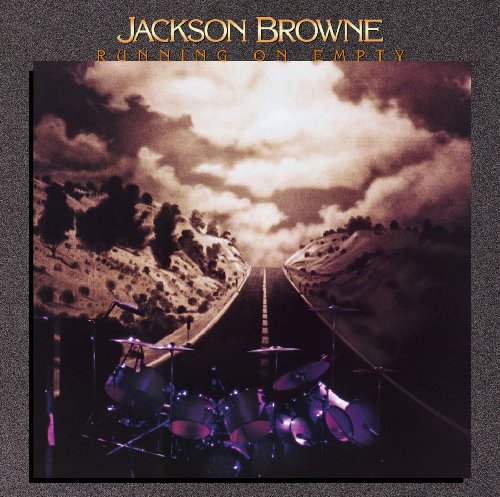
Following The Pretender would have been difficult under ordinary circumstances. Instead of making another conventional studio album, Jackson Browne created a record about touring while he and his band were actually living on the road.
The performances were recorded onstage, backstage, in hotel rooms, and on a tour bus. That concept turned Running on Empty into something more revealing than a normal live album. It documents not only the concert but also the waiting, distance, exhaustion, humor, loneliness, and temporary communities surrounding the performance.
The title track begins the album at full speed. “The Road,” “Rosie,” “You Love the Thunder,” and “Nothing but Time” explore different parts of touring life before “The Load-Out” and “Stay” bring the record to a communal finish.
Running on Empty became Browne’s biggest-selling album, reached number three on the Billboard chart, and earned seven-times-platinum certification in the United States.
#3 – For Everyman


Landing at number three is For Everyman, released in 1973. Browne’s second album sounds more assured than the debut without losing the openness that made the first record so striking.
His version of “Take It Easy,” co-written with Glenn Frey, restores the additional verse that did not appear on the Eagles’ recording. “These Days,” written by Browne while he was still a teenager, became one of the defining songs of his career.
“Redneck Friend,” “Our Lady of the Well,” “Sing My Songs to Me,” and the title track broaden the album’s emotional and musical range. The guest list includes David Crosby, Joni Mitchell, Bonnie Raitt, Don Henley, Glenn Frey, Elton John, and several musicians who helped define the Southern California sound.
What makes For Everyman endure is the tension between private withdrawal and collective hope. Browne acknowledges fear and uncertainty while continuing to ask whether people can build a more humane way of living together.
#2 – Late for the Sky


Late for the Sky is a favorite among Jackson Browne listeners for good reason. Released in 1974, the album contains eight songs that examine relationships, mortality, communication, and the distance between the life a person imagines and the life that actually unfolds.
The title track begins with two people confronting the possibility that love is no longer enough. “Fountain of Sorrow” searches memory for the moment when affection and regret became inseparable. “For a Dancer” addresses death with compassion and uncertainty rather than easy reassurance.
Browne’s writing had grown more patient and structurally ambitious. He allows each song time to reveal its questions instead of rushing toward simple conclusions.
David Lindley’s guitar, lap steel, and violin deepen the emotional atmosphere throughout the record. His playing never merely decorates Browne’s songs; it often sounds like a second voice responding to what the lyrics cannot fully express.
#1 – The Pretender


Our number-one Jackson Browne album is The Pretender. Released in 1976, the record continues the emotional and philosophical depth of Late for the Sky while surrounding the songs with broader arrangements and a heavier sense of mortality.
“The Fuse” opens with time moving forward whether anyone is prepared for it or not. “Your Bright Baby Blues” and “Sleep’s Dark and Silent Gate” confront grief, loneliness, and the limits of escape. “Here Come Those Tears Again” succeeds as a polished single without surrendering the emotional complexity at the center of Browne’s best writing.
Lowell George, David Crosby, Graham Nash, Bonnie Raitt, David Lindley, Fred Tackett, Leland Sklar, Russ Kunkel, and other remarkable musicians support Browne across the album. Jon Landau’s production gives the record greater scale while preserving the intimacy of the songs.
The title track brings everything together. Browne examines work, love, family, compromise, consumption, and the daily performance of a life that may no longer resemble the dream that created it. The arrangement rises patiently until the song feels both deeply personal and universal.
The Pretender contains only eight songs, but every one serves the complete emotional movement of the album. Its writing, performances, production, and arrangements make it our favorite Jackson Browne record.
Jackson Browne Albums
Jackson Browne (1972)
For Everyman (1973)

Late for the Sky (1974)

The Pretender (1976)

Running on Empty (1977)
Hold Out (1980)

Lawyers in Love (1983)

Lives in the Balance (1986)

World in Motion (1988)

I’m Alive (1993)

Looking East (1996)

The Naked Ride Home (2002)

Time the Conqueror (2008)

Standing in the Breach (2014)

Downhill from Everywhere (2021)

Updated August 2, 2026.
Top 10 Jackson Browne Albums article published on ClassicRockHistory.com © 2026
ClassicRockHistory.com claims ownership of all its original content and intellectual property under United States copyright laws and those of all other countries. No person, business, or organization is allowed to republish any of our original content on the web or in print without permission. All photos used are either public-domain Creative Commons images or officially licensed from Shutterstock for ClassicRockHistory.com. Photo credits appear in the article. Album-cover images used in affiliate links are the property of their respective owners and are stored on third-party servers. Unauthorized reproduction of this content may result in legal action against the infringing website.